

Climate change threatens the crucial storage of carbon in Aussie forests. Victoria’s national parks alone store almost 1 billion tonnes of carbon dioxide equivalent.
Articles on Fire
Displaying 101 - 120 of 241 articles
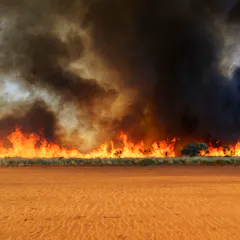
Fires in arid Australia are extensive, largely unmanaged, often destructive and significantly under-reported.
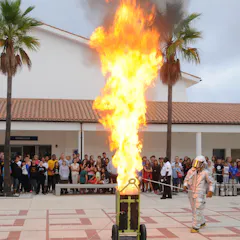
Deep-fried turkeys are delicious, but making one can be dangerous. The scientific reason for fiery Thanksgiving mishaps? A difference in the densities of ice, water and oil.
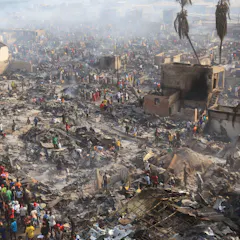
While promoting better risk reduction is always sensible, it leads to a tendency for disaster management systems to lean heavily on experience and systems designs of other countries
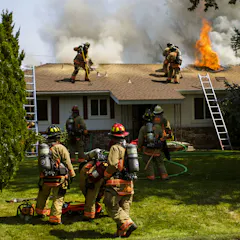
Last year, 3,500 Americans were killed by house fires. A former fire and explosion investigator has 10 tips to keep you and your children safe this holiday season.
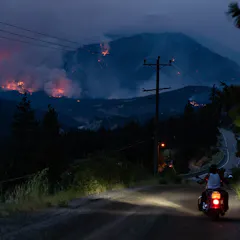
While climate migration may be on the rise in Canada, it has been disproportionately impacting Indigenous people and communities for years.

This article was based on research that has been retracted. See editor’s note.
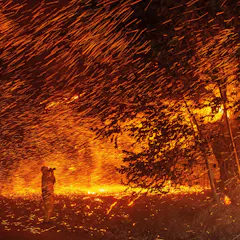
A fire scientist explains the risk of flying embers that can travel over a mile from a wildfire and how people can protect their homes.
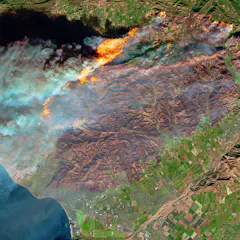
Satellites can already spot a new fire within minutes, but the information they beam back to Earth isn’t getting to everyone who needs it or used as well as it could be.
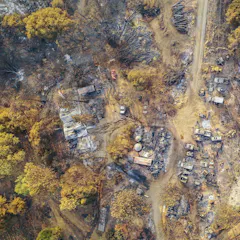
Drought conditions are so bad, fish hatcheries are trucking their salmon to the ocean and ranchers are worried about having enough water for their livestock.
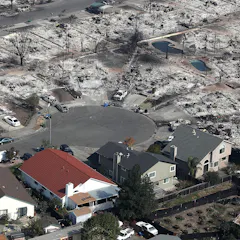
An increasing number of communities are discovering dangerous contamination in their water systems weeks or months after fires.

Combining evidence from archaeology, geochronology and paleoenvironmental science, researchers identified how ancient humans by Lake Malawi were the first to substantially modify their environment.
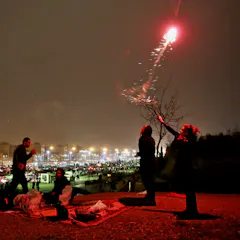
The Iranian new year, Nowruz, being celebrated on March 20, is a time to forgive, heal and live in harmony with the Earth.
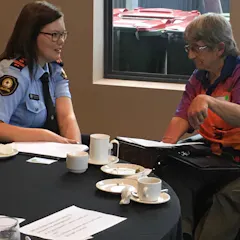
One interviewee told us: ‘It would’ve been lovely if somebody had cared.’
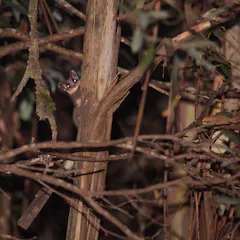
A major new research paper reveals which species are most at risk from changing fire regimes around the world.
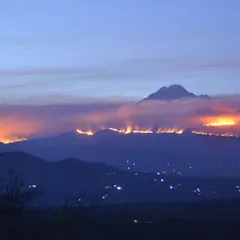
There have been several severe fires on Kilimanjaro over the last few decades that have dramatically changed land cover.

Last week, much of the Midwest and eastern US experienced hazy skies and red sunsets. The cause was smoke transported from the Western US by the jet stream and spread as far as Boston and even Europe.
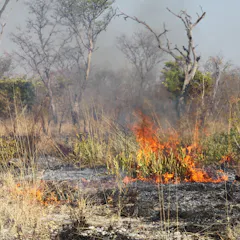
Understanding fire history is crucial to designing effective fire management in order to maintain biodiversity and support the livelihoods of people.
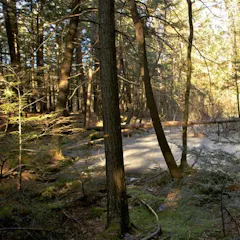
Evidence shows Native Americans in New England lived lightly on the land for thousands of years. It wasn’t until Europeans arrived that the landscape experienced major human impacts.
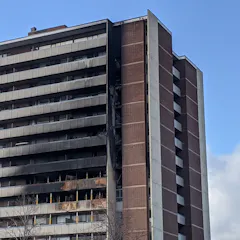
A fire in Toronto’s Black Creek neighbourhood displaced hundreds of people. One person died of smoke inhalation. The after-disaster response reveals some of the challenges faced by urban communities.
Top contributors
-

Professor of Pyrogeography and Fire Science, University of Tasmania
-
Research Fellow in Environmental Science, University of Tasmania
-
Adjunct professor, UNSW
-
Associate Professor of Geography, University of Colorado Boulder
-
Professor of Geography and Director of the Centre for Wildfire Research, Swansea University
-
Professor of Science Communication and Chemistry, University of Hull
-
Associate Professor in Quantitative Ecology, The University of Melbourne
-
Emeritus professor, University of Wollongong
-
Senior research fellow, Charles Darwin University
-
Postdoctoral researcher, University of Tasmania
-
Professor, Hawkesbury Institute for the Environment, Western Sydney University
-
Professor in Digital Construction and Fire Engineering, Te Kunenga ki Pūrehuroa – Massey University
-
Professor of Law, Deakin University
-
Distinguished Research Professor and Australian Laureate, James Cook University
-
Associate Professor, Hawkesbury Institute for the Environment, Western Sydney University