
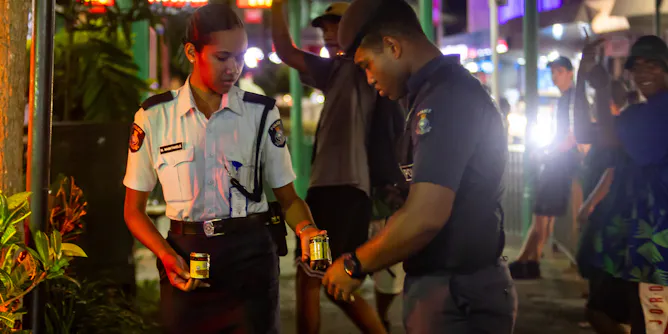
Prison sentences for drug offences in Fiji sometimes surpass those for rape and murder and are out of line with penalties in Australia and New Zealand.
Articles on Fiji
Displaying 1 - 20 of 70 articles

Vijay Mishra changed forever when a cinema opened in his Fijian town, in 1951. He traces Bollywood’s shift from multicultural fantasy to Hindu nationalism.
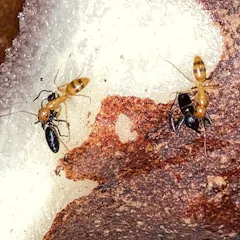
Squamellaria plants grow special structures to host the ants they symbiotically rely on for nutrients. Distinct compartments help different ant colonies live peacefully side by side.
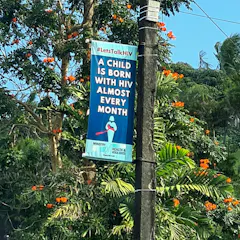
Australian and New Zealand aid and support will be crucial in containing Fiji’s serious HIV outbreak – including combating the drug trade that is fuelling it.
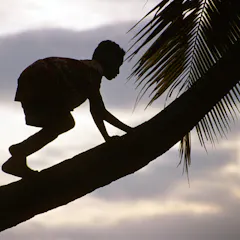
Sugar: An Ethnographic Novel is an elegant and intimate portrayal of everyday life in Fiji, deeply honest about the struggles and inequalities beneath the image of a tourist paradise.
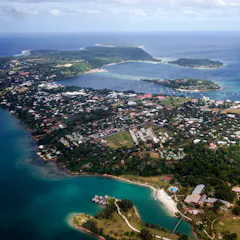
Our new research shows weak infrastructure and climate events such as cyclones and floods make sanitation conditions even poorer for many people living in the Pacific Islands.
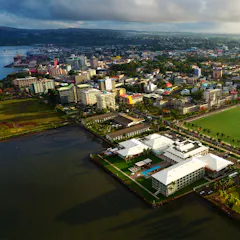
Drug cartels selling drugs in NZ and Australia are using Fiji as a waypoint – where kids as young as nine are being treated for meth addiction, while crime and HIV rates are climbing. What can be done?
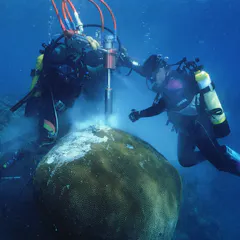
Our work shows the ocean around Fiji is the hottest it has been in at least the past 653 years.

What do you know about your national currency? How about the cash used overseas? We studied wildlife imagery on banknotes around the world. Here’s what we found.

For Preeti Maharaj, growing up Fiji-Indian in Australia has meant living with threats of violence.
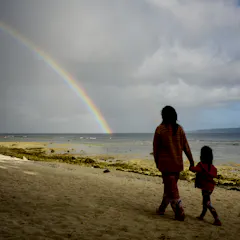
We reviewed evidence on traditional knowledge in the Pacific for coping with climate change, and found much of it was scientifically plausible.
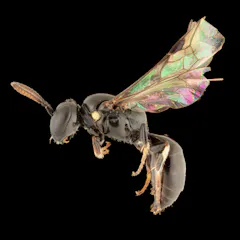
By lifting their gaze to the treetops rather than poking around on the ground, researchers discovered eight new species of masked bees.
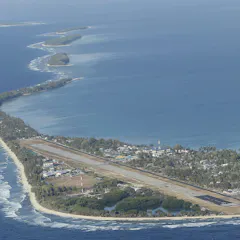
The climate migration deal has been dubbed as offering Tuvaluans a lifeline, but others say it is a neocolonial arrangement that does not tackle rising ocean levels.

Pacific Island nations face disproportionate threats from climate change. Rural Fijians are seeing the effects now and are worried for the future.

The new $100 million Blackrock peacekeeping training facility in Fiji has high ambitions, but will need Australia’s ongoing support to succeed.
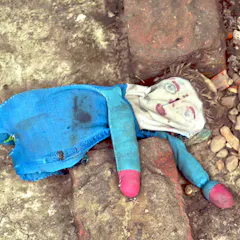
Though hard to quantify, the social consequences of climate change are vast.

Many ‘myths’ are authentic memories of human pasts, told by people who passed down precise accounts of their history.

Examining how military coups unfold is crucial to understanding a country’s path back to democracy.
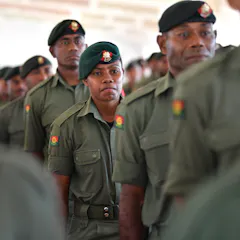
Many Pacific islanders would likely not feel exploited serving in a foreign army; they would see it as an honourable duty that comes with economic benefits to improve their lives.
By reflecting on the violent origins of the Canadian sugar industry, we can bring wider attention to the exploitation underpinning the history of Canadian cuisine.
Top contributors
-

Honorary Research Associate, Te Kunenga ki Pūrehuroa – Massey University
-
Professor of Development Studies, Te Kunenga ki Pūrehuroa – Massey University
-
Professor of Geography, School of Law and Society, University of the Sunshine Coast
-
Adjunct Professor, Stout Research Centre, Victoria University of Wellington and Auckland University of Technology, Professor of Political Science, Charles Sturt University
-
Research Fellow, School of Architecture and Built Environment, Queensland University of Technology
-
Senior Research and Teaching Fellow, School of Health, Te Herenga Waka — Victoria University of Wellington
-
Associate Professor, School of Earth and Environmental Sciences, The University of Queensland
-
Research Associate, Institute for Climate Risk and Response, UNSW
-
Associate Professor of International Relations, Department of Politics, Media and Philosophy, La Trobe University
-
Adjunct Research Fellow in Geography and Social Sciences, University of the Sunshine Coast
-
Founding Editor, Pacific Journalism Review / Te Koakoa, Auckland University of Technology
-
Associate professor, Griffith University
-
Postdoctoral Research Associate, Institute on the Environment, University of Minnesota
-
Professor, Crawford School of Public Policy and Director, Centre for Climate and Energy Policy, Australian National University
-
Chief Scientific Advisor, Notre Dame Global Adaptation Initiative, University of Notre Dame