
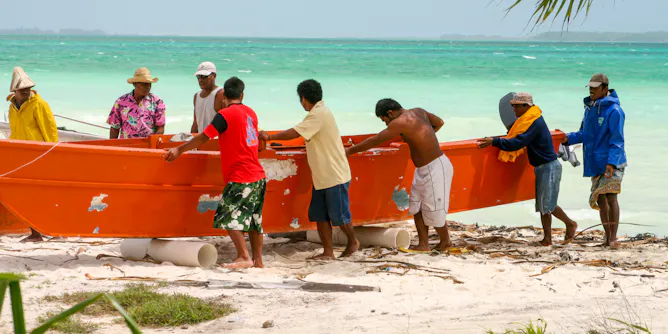
Households that relied on groundwater and rainwater consumed 381–406 grams more sugary drinks per week than those with access to a piped water system.
Articles on Kiribati
Displaying 1 - 20 of 27 articles
The US and Australia are increasingly attaching defence and security conditions to aid for Pacific nations – but that aid is not seeing any real progress on development goals.

Manchester mayor Andy Burnham suggests the treatment of nuclear test veterans will be the next major UK public scandal to emerge. But how do the local people of Kiritimati recall these tests?
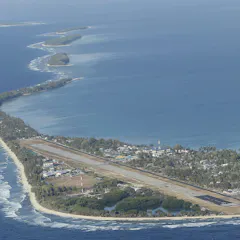
The climate migration deal has been dubbed as offering Tuvaluans a lifeline, but others say it is a neocolonial arrangement that does not tackle rising ocean levels.
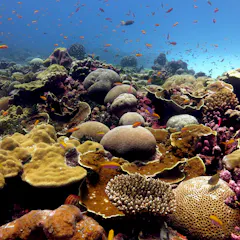
Exploring the often unseen, and poorly understood, nuances of diversity within coral reefs may prove essential for ensuring the long-term health of Earth’s oceans.
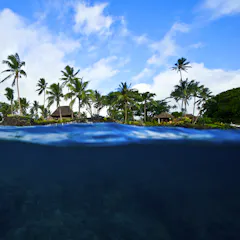
Big resorts, cruise ships and visitor numbers are all up for debate across the Pacific, but economic pressure may test how post-pandemic reality lives up to the sustainability rhetoric.
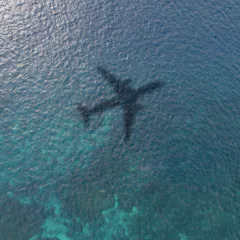
When Pacific Forum economic ministers meet today in Vanuatu, the region’s troubled airline sector should be high on their agenda.
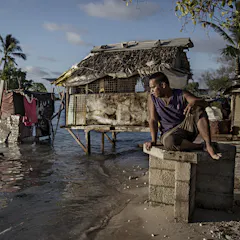
If Australia plans to sell as much of its fossil fuels as possible, the least it can do is help us in Kiribati survive the rising seas.
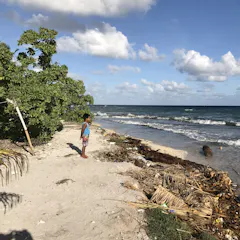
The president of Kiribati plans to raise its low-lying islands to fight, not flee, sea level rise. Here’s why it’s an expression of human dignity.

Pacific communities have always been resilient, surviving on islands in the middle of oceans for more than 3,000 years. But climate change is an unprecedented challenge.
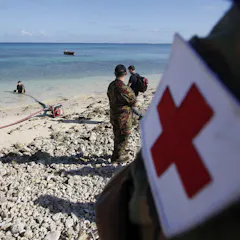
A recent ruling by the UN’s Human Rights Committee recognized that climate refugees do exist, and acknowledged a legal basis for protecting them when their lives are threatened by climate change.
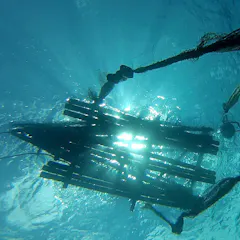
Fishers who hunt wild tuna use fish’s natural attraction to floating objects to lure them to known positions near GPS-equipped rafts. However, these rafts are attracting increasing concern.
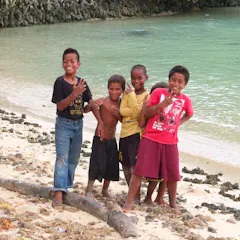
Cuba is offering a compelling example of how we can take care of each other during the climate crisis with its work training doctors on Kiribati, a nation that is being devastated by climate change.
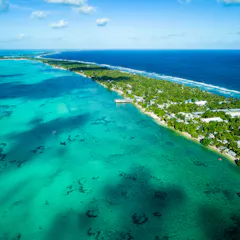
The British nuclear weapon tests on Kiritimati (or Christmas) Island had profound and lasting cultural consequences for both atomic veterans and local islanders.
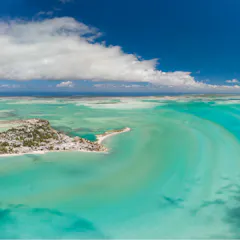
Migration offers a fix for the islands ‘drowning’ as a consequence of the climate crisis – but are there better alternatives?
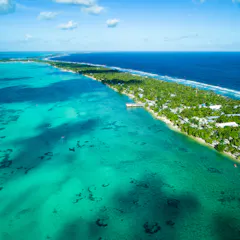
Island nations composed of low-lying atolls are at risk of being wiped out by rising sea levels in the era of climate change. Yet the international community is doing next to nothing to help them.

At a time when the future of many Pacific islands is under threat, a little compassion is in order, not barbs at their expense.
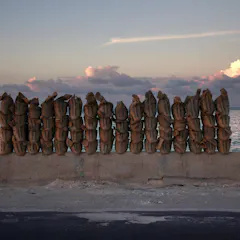
New Zealand’s plan to create the world’s first humanitarian visa for climate refugees has to consider ways people from Pacific Island nations actually want to be assisted.

Although climate change threatens the world’s small island nations, many can find ways to adapt and preserve their homes and cultures – especially if wealthy countries cut emissions and provide support.
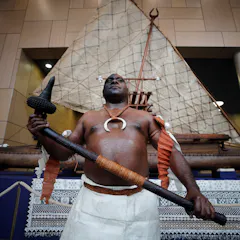
To many people, island nations such as Tuvalu, Kiribati and the Marshall Islands are synonymous with climate catastrophe. But prophesies of doom aren’t all that helpful.
Top contributors
-

Professor of Geography, School of Law and Society, University of the Sunshine Coast
-
Lecturer in Peace Studies and International Development, University of Bradford
-
Honorary Research Associate, Te Kunenga ki Pūrehuroa – Massey University
-
Adjunct Research Fellow in Geography and Social Sciences, University of the Sunshine Coast
-
Visiting professor, Harvard University
-
Associate professor, Johns Hopkins University
-
Chief Scientific Advisor, Notre Dame Global Adaptation Initiative, University of Notre Dame
-
Professor, University of Wollongong
-
Professor, School of Geography, The University of Melbourne
-
Professor of Ecology, Evolution, and Behavior; Director, Institute on the Environment, University of Minnesota
-
Laureate Professor Emeritus, The Peter Doherty Institute for Infection and Immunity
-
Postdoctoral Research Associate, Institute on the Environment, University of Minnesota
-
Associate Professor in Ocean Stewardship, Stockholm University
-
Liber Ero Postdoctoral Fellow, University of Waterloo
-
Soil Scientist, Australian Centre for International Agricultural Research