
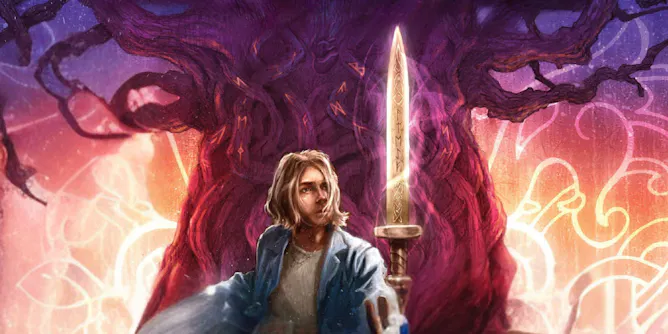
A should book features three concepts for rethinking masculinity: relationality, vulnerability, and inclination.
Articles on Fiction
Displaying 41 - 60 of 384 articles

In her latest novel, Merlinda Bobis envisions the past not as a grand narrative, but an organic process – entangled, living and mutable.
At the centre of this novel is a lonely man, the son of a Greek migrant cafe-owning family, who finds a home in a newsroom at a time of turbulence.

Jane Harper’s novels do not include any significant First Nations characters or perspectives. Nor do they acknowledge the deeper meaning and consequence of their Gothic conventions.
With Shadow Ticket, Pynchon reminds us the line between chaos and order, corruption and truth, remains as thin, porous and perilous as ever.
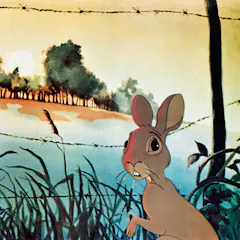
The fragility of life and the terror of loss is terrifyingly exposed through this tale about rabbits.
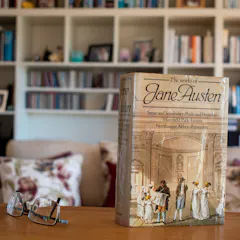
Jane Austen’s interconnected webs of thought and feeling help readers to better understand other people.
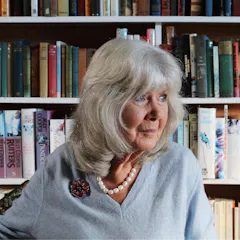
Many of Cooper’s depictions of sex are very funny. However, there is a clear message throughout.

What can a grisly meth-fuelled murder in northern Minnesota’s Iron Range tell us about post-industrial decline and the malaise of contemporary America?

Vineland is set in Reagan’s America: an era of conservative backlash and retreat from progressive ideals. Paul Thomas Anderson’s adaptation reflects similar trends now.
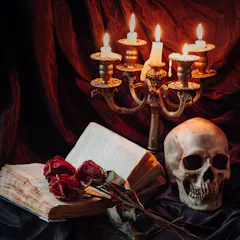
Students in this literature course read a range of novels, short stories and more on grave robbing, murder, terror and grief.

Written in Kelly’s vernacular, this Booker Prize- winning novel is a masterclass in mimicry. But in exploring injustice, there are telling erasures.

The genre of migrant autofiction, especially coming-of-age work, is blooming, but Raaza Jamshed’s book stands out.

In his thoughtful new novel about people turning into trees, Rhett Davis puts postmodernism and myth through the figurative woodchipper.

In Desolation, inexplicable elements, often in the form of coincidence, disrupt and distort causal chains. Dreams and imagination have a subversive role.
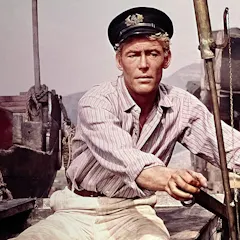
Conrad suggests our sense of being good derives from our belonging – yet that to which we belong is not necessarily good.
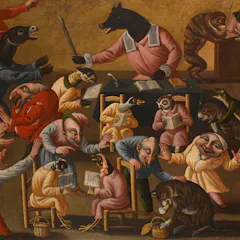
The inventive fictions of Michael Farrell, Lucy Nelson and Alex Cothren display flashes of brilliance and humour.

New crime novels by Mark Brandi and Jennifer Trevelyan are enthralling dramas about the loss of innocence and the possibility of redemption.
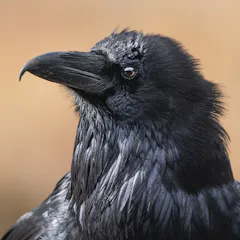
Max Porter’s stories of people on the margins are told in fragments, flickering images, surprising swirls of language and wit.

In Never Let Me Go, Kazuo Ishiguro summons our liberal sentiments only to turn them against us.
Top contributors
-

Distinguished Professor Emerita of Creative Practice, Faculty of Arts and Design, University of Canberra
-
Professor of English Literature, University of Southern Queensland
-
Professor, Chair of Australian Literature, The University of Western Australia
-
Associate Professor in Literary Studies, RMIT University
-
Lecturer in English Literature, Adelaide University
-
Lecturer, Creative Writing, Adelaide University
-
Professor of English, Institute for Humanities and Social Sciences, ACU, Australian Catholic University
-
Senior Lecturer, Writing, Department of Media and Communication, Swinburne University of Technology
-
Adjunct Lecturer, English and Creative Writing, UNSW Canberra, UNSW
-
Senior Lecturer in Humanities, University of Southern Queensland
-
Dean of Research (Creative), Adelaide University
-
Director of Creative Writing, Macquarie University
-
Senior Lecturer in Writing, Literature and Culture, Deakin University
-
Professor, English and Creative Writing, Adelaide University
-
Professor of Creative Writing, University of Technology Sydney