

Canada is a major US supplier of fertilizer ingredients that could get pulled into Trump’s trade war. Farms can go without fertilizer for a while, but not long.
Articles on Fertilizer
Displaying 1 - 20 of 47 articles
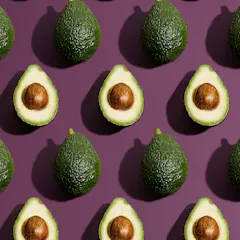
Pressure from trade agreements can clean up sources of environmental harm, leading to cleaner rivers in the case of Mexico’s much-loved avocados.

Long before synthetic fertilizers, the global guano trade reshaped farming, fueled American expansion and exposed the hidden human costs of feeding the modern world.
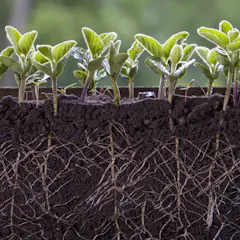
Too much fertilizer disrupts the hidden world of soil-dwelling microbes that were sustaining healthy crops long before synthetic fertilizer was invented.
Scientific and engineering breakthroughs are allowing us to make ammonia from pollution rather than fossil fuels.

Decades of farmers using more fertilizer than they needed have quietly built up large reserves of nutrients in the soil.
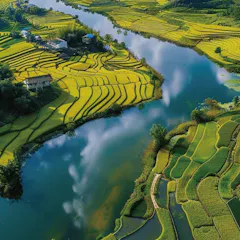
There are ways to reduce emissions without sacrificing yield. A new study shows how, and looks at a technique billed as ‘climate-friendly’ that makes emissions worse.
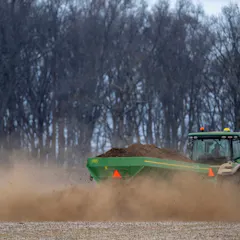
Fertilizer is more expensive and in shorter supply. Without the right amounts of fertilizer at specific times, yields drop, food prices increase and food shortages result.

Without adequate fertiliser, crops such as wheat and barley produce lower yields with lower protein content.

Rather than generating climate-warming emissions and wasting nutrients and energy, food waste can become a resource if processed in sewage treatment plants.
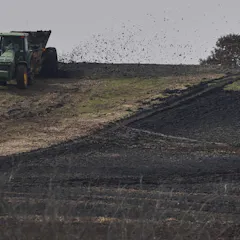
Plants need phosphorus, and other nutrients, to grow. But soil tests can’t tell if there’s too much.

Just a few years ago, agricultural drones were expensive, small and difficult to use, limiting their appeal to farmers. No longer.
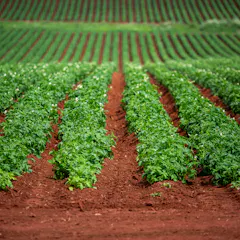
Researchers have developed a tool that allows farmers to quickly and affordably test soil samples, get results in real-time, and obtain fertilizer recommendations.
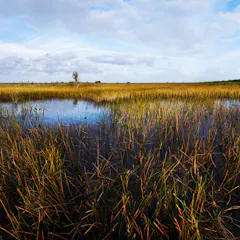
Changes to the landscape and pollution have harmed this vital ecosystem known as the ‘river of grass.’

Manatees along Florida’s coast are eating less seagrass and more algae than they did a few decades ago. This dietary shift could pose a new threat to the survival of the beloved species.

Kenyans and Malawians are paying high prices for maize: regional markets aren’t working well.
The most comprehensive assessment yet of a powerful greenhouse gas shows which countries are driving the increase, and which ones are successfully cutting emissions.

Did the Green Revolution, which brought high-tech agriculture to developing nations in the 1960s, prevent famine? Recent research takes a much more skeptical view.

The ideal of perfect turf – a weed-free, supergreen monoculture – is a relatively recent phenomenon.
The key to reducing green hydrogen costs in the future lies mainly in technological improvements.
Top contributors
-

Chief Research Scientist, CSIRO Environment; Executive Director, Global Carbon Project, CSIRO
-
Professor Emeritus of Environment and Sustainability, University of Michigan
-
Director and Institute Professor, Center for Earth System Science and Global Sustainability, Boston College
-
Professor, University of Maryland Center for Environmental Science
-
Associate Professor of Economics, University of Oklahoma
-
Senior Scientist, Norwegian Institute for Air Research
-
Executive Director, Swette Center for Sustainable Food Systems, Arizona State University
-
Research Fellow, Tegemeo Institute, Egerton University
-
Professor emeritus, Colorado State University
-
Instructor of English, Florida Atlantic University
-
Professor of Marine Biology and Ecology, University of Miami
-
Associate Professor, Department of Entomology; African-American Studies, University of Illinois Urbana-Champaign
-
Director, Food and Agriculture Institute, University of The Fraser Valley
-
International Institute for Applied Systems Analysis (IIASA)
-
Chairman, Department of Energy, Environmental and Chemical Engineering, Washington University in St. Louis