

The emission reduction targets outlined for Canadian fertilizer use will not lead to food shortages and food insecurity.
Articles on Fertilizer
Displaying 21 - 40 of 47 articles
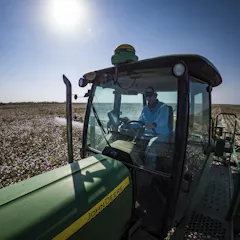
Bringing advanced technologies to the ancient practice of farming could help feed the world’s growing population, but it could also open the door for people looking to disrupt the global food system.
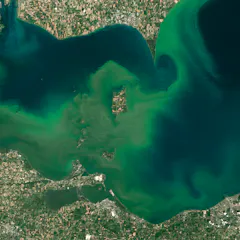
Nutrient pollution fouls lakes and bays with algae, killing fish and threatening public health. Progress curbing it has been slow, mainly because of farm pollution.
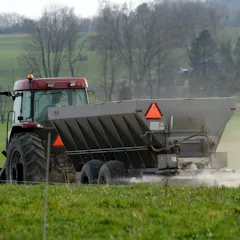
Farmers are contending with huge spikes in fertilizer prices. The Biden administration is paying US companies to boost synthetic fertilizer production, but there are other, more sustainable options.

The world is facing one of the century’s biggest challenges: How to nutritiously feed the growing population, address climate change and not destroy the ecosystems on which we all depend for life.
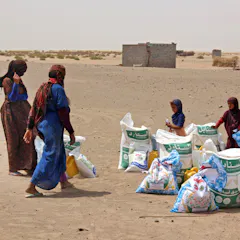
Grain and fertilizer shortages, higher shipping costs and a strong dollar are all pushing food prices up and increasing hunger in dozens of vulnerable countries.
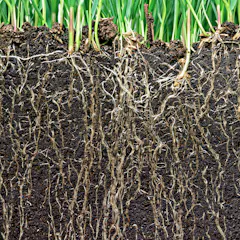
Plants communicate with the fungi on their roots, but the effects on the ecosystem of deliberately adding fungi as a fertilizer are unknown — and might be harmful.
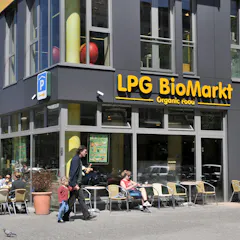
An expert on organic agriculture argues that the US is missing an economic and environmental opportunity by not working to scale up organic production.

Harmful algae blooms are an increasing problem in Florida. Once nutrients are in the water to fuel them, little can be done to stop the growth, and the results can be devastating for marine life.
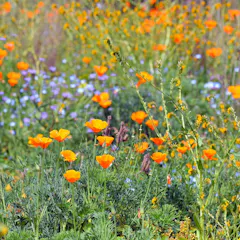
Looking for a new gardening challenge? Turning your yard into an insect-friendly oasis could mean less work and more nature to enjoy.

New research shows that one-third of yearly nitrogen runoff from Midwest farms to the Gulf of Mexico occurs during a few heavy rainstorms. New fertilizing schedules could reduce nitrogen pollution.
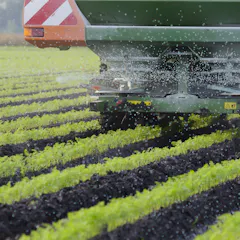
Agriculture is the dominant cause for the increasing N₂O concentrations. Emissions must be reduced if we hope to stabilise Earth’s climate.
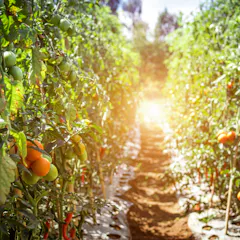
This transformation provides lessons for the rest of world, for shifting away from chemical agriculture towards a healthier system for people and the planet.
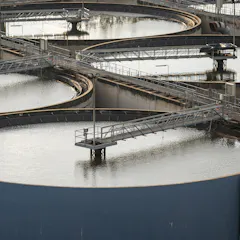
The solids from wastewater plants are usually dumped into landfills because they are contaminated with heavy metals. Now there is a way to remove the metals so the waste can be used as fertilizer.
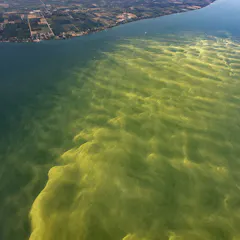
The Great Lakes contain reservoirs of legacy contaminants, mostly in their sediments, that are vulnerable to resuspension.
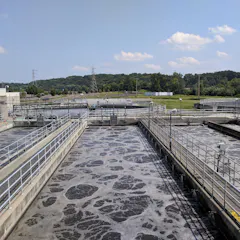
The ‘used water’ that flows from our showers, dishwashers and toilets isn’t a waste to engineers – it contains valuable materials. The challenge is recovering them and turning them into products.
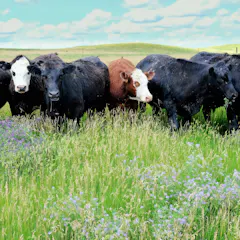
US agriculture is dominated by large farms that rely on chemical inputs. In contrast, regenerative farming makes land and water healthier by mimicking nature instead of trying to control it.
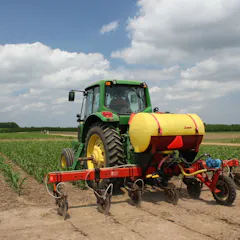
Fertilizer is a key source of nitrogen pollution which fouls air and water worldwide. Current regulations target farmers, but focusing on producers could spur them to develop greener products.

Did Rachel Carson catalyze the organic farming movement, as many advocates claim? Or would she reject their ban on synthetic fertilizer and see organic as an inefficient way to feed the world?
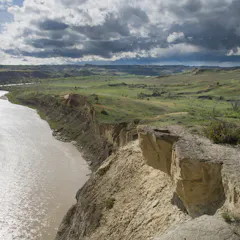
Recent research shows that US rivers are becoming saltier and more alkaline. Salt pollution threatens drinking water supplies and freshwater ecosystems, but there is no broad system for regulating it.
Top contributors
-

Chief Research Scientist, CSIRO Environment; Executive Director, Global Carbon Project, CSIRO
-
Professor Emeritus of Environment and Sustainability, University of Michigan
-
Director and Institute Professor, Center for Earth System Science and Global Sustainability, Boston College
-
Professor, University of Maryland Center for Environmental Science
-
Associate Professor of Economics, University of Oklahoma
-
Senior Scientist, Norwegian Institute for Air Research
-
Executive Director, Swette Center for Sustainable Food Systems, Arizona State University
-
Research Fellow, Tegemeo Institute, Egerton University
-
Professor emeritus, Colorado State University
-
Instructor of English, Florida Atlantic University
-
Professor of Marine Biology and Ecology, University of Miami
-
Associate Professor, Department of Entomology; African-American Studies, University of Illinois Urbana-Champaign
-
Director, Food and Agriculture Institute, University of The Fraser Valley
-
International Institute for Applied Systems Analysis (IIASA)
-
Chairman, Department of Energy, Environmental and Chemical Engineering, Washington University in St. Louis