
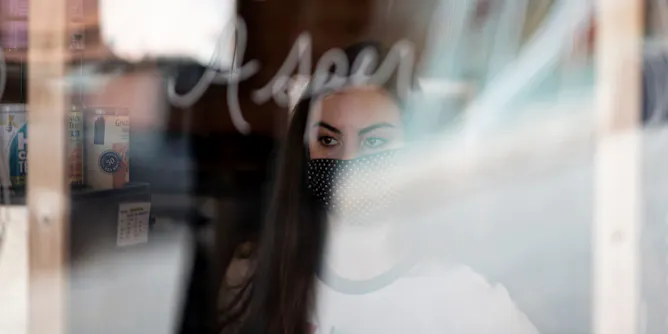
Coronavirus cases have risen sharply across the Mountain West, Midwest and plains. Over 70% of nonmetropolitan counties are now “red zones,” suggesting viral spread is out of control.
Articles on Face masks
Displaying 61 - 80 of 144 articles
It’s draining and depressing to stay on high alert month after month after month. Understanding pandemic fatigue better might help you strengthen your resolve.
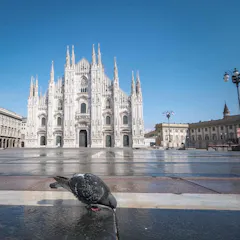
A senior World Health Organisation envoy caused consternation by proclaiming lockdowns are not a good long-term strategy against COVID-19. But it’s true, and other subtler tactics are better in the long run.
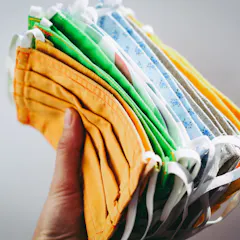
Epidemiologists reviewed 25 studies of cloth face masks. Here’s what they found out about how well they work, why they work, who they protect and why the mosquito and chain-link fence analogy is wrong.
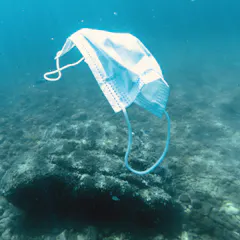
From a purely environmental perspective, owning multiple reusable face masks, and machine-washing them together, is the best option.
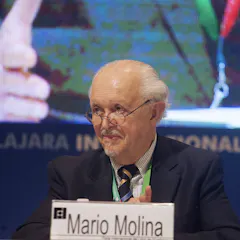
Molina, who died on Oct. 8, ‘thought climate change was the biggest problem in the world long before most people did.’ His research on man-made depletion of the ozone layer won the 1995 Nobel Prize.
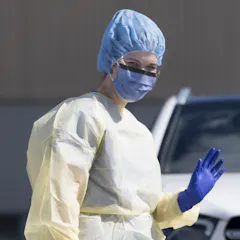
Health-care workers’ access to personal protective equipment, along with appropriate infection control procedures, affected their mental health during the first wave of the COVID-19 pandemic.

Despite taking different approaches, both countries have won praise for their handling of the coronavirus outbreak. So what can we learn from that?
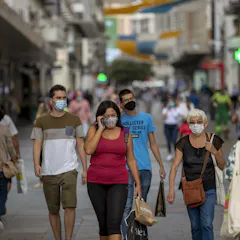
Wearing face masks may allow a tiny number of viral particles to slip through, possibly allowing our body to gain some sort of immunity.
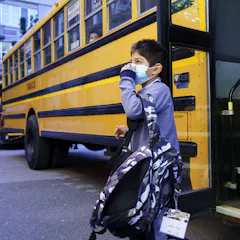
Back-to-school routines under COVID-19 look a little different than previous years. For one thing, kids need to wear masks. Which means many parents have mask questions.
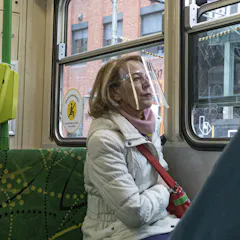
Many people in Victoria are opting to wear face shields instead of face masks. It’s allowed – but are they as effective at preventing the spread of COVID-19?
The 6-foot rule for social distancing doesn’t account for all risks, particularly indoors. Here’s what everyone needs to understand as cooler weather moves more activities inside.
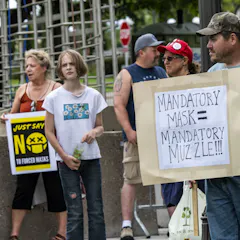
A political science scholar explains how political beliefs inform the way we process scientific information.
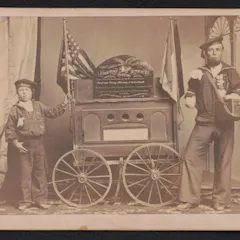
Lessons from history make clear that the federal government can spur medical innovation in a crisis, including this pandemic. Providing certainty and clarity is critical.
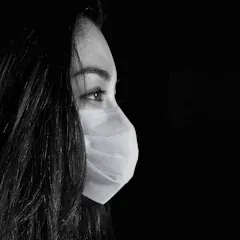
With face masks now compulsory or recommended in various parts of the country, how are facial recognition systems functioning?
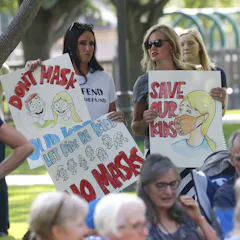
Are masks a religious matter, or is religion being used to suit people’s political agendas? A scholar of Christian conservatism and culture argues both can be true.
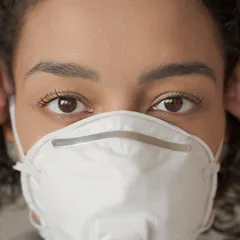
Your mouth might be obscured, but science shows you say a huge amount with your eyes.
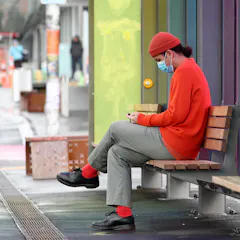
As Auckland prepares to ease restrictions from Monday, active COVID-19 cases almost certainly remain in the community. Masks will become compulsory on public transport to avoid new outbreaks.
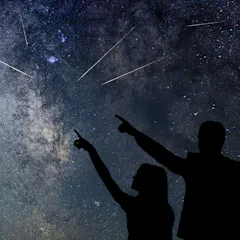
COVID-19 may have messed up school and shut down a lot of entertainment venues. But you can still brighten things up by doing a little stargazing at night, an astronomer says.
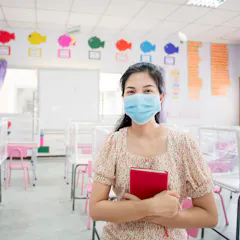
Children up to age five get a lot of cues from facial expressions. That makes teaching in a mask challenging, but teachers can learn from strategies developed by masked pediatric nurses.
Top contributors
-

Professor of Medicine, Epidemiologist, Physician, McMaster University
-
Professor of Global Biosecurity, NHMRC L3 Research Fellow, Head, Biosecurity Program, Kirby Institute, UNSW
-
Senior Lecturer, Infectious Diseases Epidemiology and Control, UNSW
-
Associate Professor, Chemical Engineering, McMaster University
-
Associate Professor, Epidemiology, Deakin University
-
Professor, Biology, York University, Canada
-
PhD Student, Chemical Engineering, McMaster University
-
Professor of Primary Care Health Sciences, University of Oxford
-
Professor, Director of Research, Nursing and Midwifery, Monash University
-
Professor of Epidemiology, Karolinska Institutet
-
Professional Research Fellow, Victoria University
-
PhD Candidate, Department of Engineering, University of Cambridge
-
University of Iowa Distinguished Chair, Professor of Environmental Health, University of Iowa
-
Professor, Great Lakes Institute for Environmental Research and Director of the School of the Environment, University of Windsor
-
Professor of Public Health, Bond University