
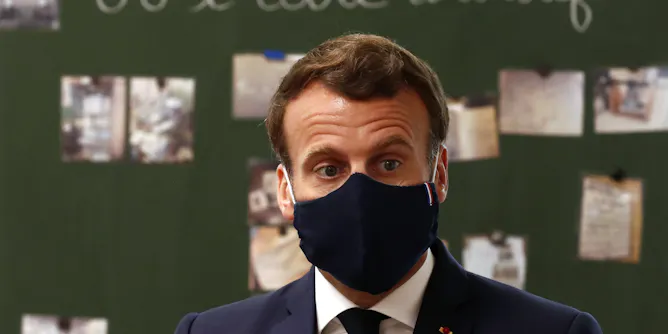
There are two principles governments use to make public health decisions, and on mask-wearing they’re in direct conflict.
Articles on Face masks
Displaying 121 - 140 of 144 articles
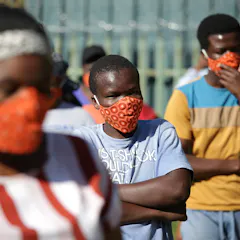
Wearing masks is being introduced in conjunction with maintaining a physical distance of at least 1.5 metres and following hygiene measures such as hand washing.
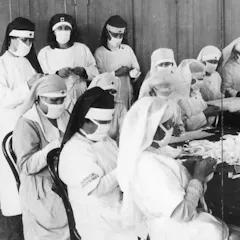
Over 30 countries today are making people wear masks in public, despite serious doubts from scientists.
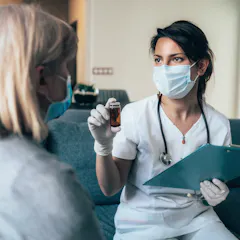
Audiologists recommend enhanced communication strategies in the time of coronavirus to help the nearly 60 million Americans living with hearing loss in one or both ears.
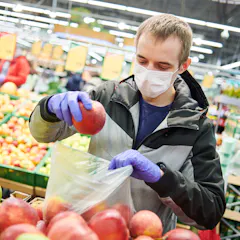
Frequently-touched surfaces including trolley handles and card readers carry the highest number of virus particles.

Globalisation does not look so clever when everyone wants the same medical equipment.
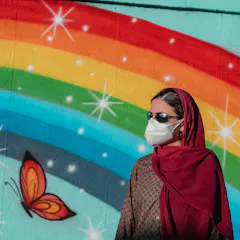
Now that face masks are being used to help fight the spread of COVID-19, it has caused some to look anew at discrimination against Muslim women who wear niqabs.

Understanding that germs can cause illness was an important step in learning how to stop the spread of disease

The COVID-19 outbreak presents many opportunities for students to develop needed solutions to real-life problems, says a researcher overseeing school project to produce personal protective equipment.
The 3M face mask dustup between the U.S. and Canada, although quickly resolved, starkly illustrated that Canada must find compromises with its southern neighbour about the trade of COVID-19 products.

As people everywhere don face masks, scarves and bandanas to protect against coronavirus, Muslim women who wear the niqab, or Islamic veil, are feeling a lot less conspicuous.
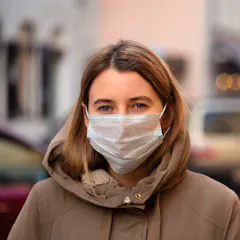
While there may be benefits to wearing face masks in some situations, the evidence doesn’t support wearing them all the time.
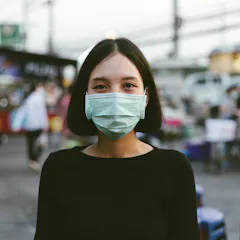
Many governments and health organisations have been reviewing their advice on face masks – here’s why.
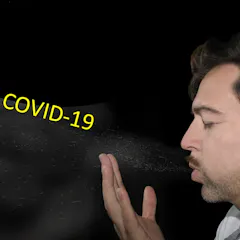
The CDC now recommends that everyone wear a face covering when they go into a public place. But there’s confusion about why and if this protects the wearer, people around them or both.

U.S. health officials flipped their advice and now recommend everyone wear cloth masks in public to reduce the spread of coronavirus to others. Some cities have fines for going without masks.
As the cases of coronavirus spread across the world, China is keen to position itself as a charitable country through “mask diplomacy” internationally, while showing a different face at home.
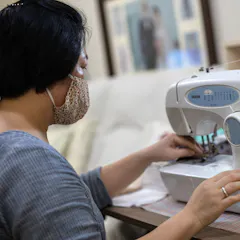
As hospitals face a global shortage of personal protective equipment, crafting communities are once again stepping up to the plate.
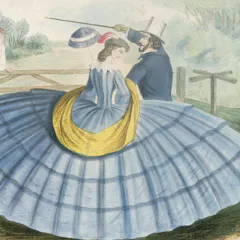
In the past, maintaining physical distance was an important aspect of public life – and clothes played a big role.
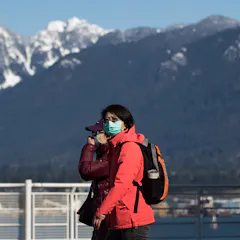
The face mask shortage shows how governments can either work together with global supply chains in positive ways or revert to state-centric policies that prevent us from dealing with COVID-19.
How do we develop new drugs quickly yet safely? How prepared are we to give up some personal freedoms? And how do we allocate scarce resources? These are just some of the tough questions we face.
Top contributors
-

Professor of Medicine, Epidemiologist, Physician, McMaster University
-
Professor of Global Biosecurity, NHMRC L3 Research Fellow, Head, Biosecurity Program, Kirby Institute, UNSW
-
Senior Lecturer, Infectious Diseases Epidemiology and Control, UNSW
-
Associate Professor, Chemical Engineering, McMaster University
-
Associate Professor, Epidemiology, Deakin University
-
Professor, Biology, York University, Canada
-
PhD Student, Chemical Engineering, McMaster University
-
Professor of Primary Care Health Sciences, University of Oxford
-
Professor, Director of Research, Nursing and Midwifery, Monash University
-
Professor of Epidemiology, Karolinska Institutet
-
Professional Research Fellow, Victoria University
-
PhD Candidate, Department of Engineering, University of Cambridge
-
University of Iowa Distinguished Chair, Professor of Environmental Health, University of Iowa
-
Professor, Great Lakes Institute for Environmental Research and Director of the School of the Environment, University of Windsor
-
Professor of Public Health, Bond University