

Your faithful companion sees the world differently than you do, but it’s a mistake to assume dogs only see black, white and shades of grey.
Articles on Eyes
Displaying 41 - 60 of 91 articles

An ophthalmologist explains how important tears are to keeping your eyes feeling good and working well – whether you’re on dry land or swimming in a body of water.

Don’t look up. A solar eclipse may be an incredible spectacle – but you must take care of your eyes.

Some parts of North America will witness a total solar eclipse in April 2024. This may seem far away, but you should think about preparing for this rare and fascinating phenomenon.
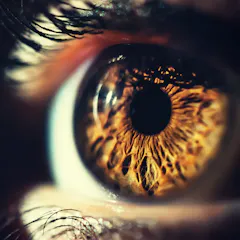
Our DNA contains the information that determines the colour of our eyes.
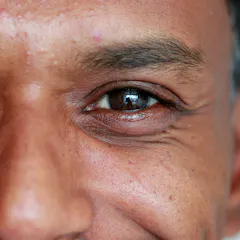
Eye movement studies can track where someone is at in their thinking process.

A new study shows that a time stamp can be put on mercury that accumulates in fish eyes, offering a window into their lifetime exposure.

The impact of using electronic devices is critical during the first years of life, both visually and on the cognitive and social development of the child.

Why is it so difficult to swat a fly? A team of insect experts explains how a fly’s sophisticated vision allows it to quickly react to visual cues.
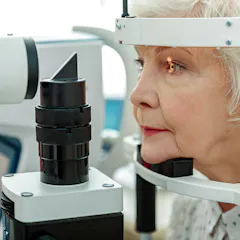
Don’t skip your next eye exam – it could be important for your overall health.

New research verifies 50 year old theory about memory.
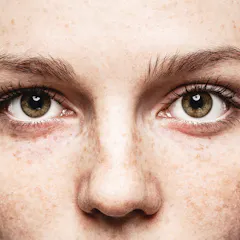
The eyes can reveal many health problems, from high cholesterol to thyroid disease.
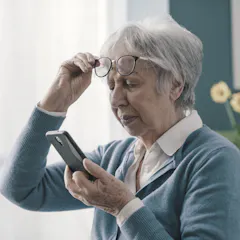
As people age, their eyes lose the ability to focus on close objects. A new eye drop treatment called Vuity can improve vision without the need for glasses, contacts or surgery.
The brain is basically a time machine that ensures what we see is stable and continuous
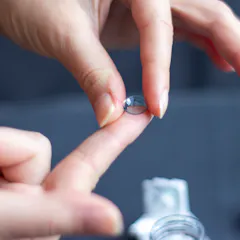
Orthokeratology involves wearing a specially designed rigid contact lens overnight. There’s good evidence it can help slow the progression of myopia. But like all treatments, there are risks, too.

New research has created robot eyes that are similar human eyes to improve how robots interact with people.

To tell you the truth, nobody really knows. But it’s probably got to do with the fact that signals from your nose and your eyes arrive in the same area of your brain.

Blame your ears, your eyes and your brain. But mainly your ears!

Staring at screens for long periods of time — as we are during the pandemic — can reveal previously undiagnosed eye problems.

It’s a sensation of light that isn’t caused by real light. And don’t worry, it’s totally normal.
Top contributors
-

Professeur Titulaire. École d'optométrie. Expertise en santé oculaire et usage des lentilles cornéennes spécialisées, Université de Montréal
-
Professor of Anatomy, Lancaster University
-
Professor of Eye Health and New Technologies for Sight Improvement, Anglia Ruskin University
-
Professor of Pediatrics and Ophthalmology, West Virginia University
-
Clinical Associate Lecturer, University of Sydney
-
Postdoctoral Research Associate, Florida International University
-
Associate Professor of Dermatology, Bond University
-
Professor, Director of the Centre for Robotics, Queensland University of Technology
-
Professor of Clinical Ophthalmology & Eye Health, Central Clinical School, Save Sight Institute, University of Sydney
-
PhD student, The University of Queensland
-
Ecologist, bee researcher and stingless bee keeper, The University of Queensland
-
Professor in Psychology, University of Florida
-
Assistant Professor of Ophthalmology, University of Pittsburgh
-
Professor of Psychology, University of California, Berkeley
-
Professor of Ophthalmology, The University of Western Australia