
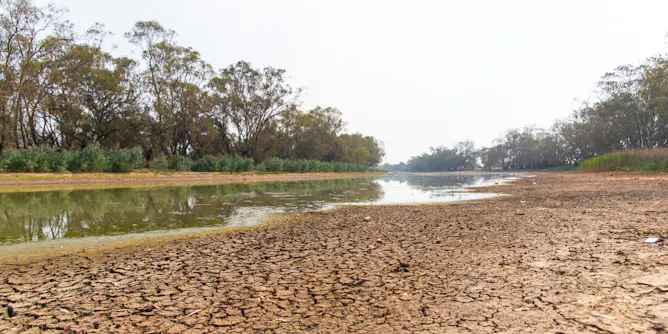
On land, Australia has already passed 1.5°C of warming, bringing lower streamflows, more fire weather and marine heatwaves.
Articles on Extreme heat
Displaying 61 - 80 of 172 articles

We examined how households in Victoria cope with, adapt to and endure summer heatwaves. Most took a short-term view. A more sophisticated, long-term approach to managing heatwaves is needed.
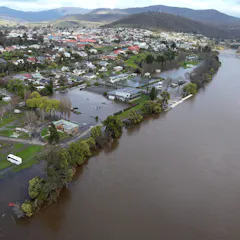
Australia is facing climate hazards on all fronts this spring and summer. Climate scientist Andrew King walks us through the Bureau of Meteorology’s new national outlook.

Builders knew how to keep people cool in hot, dry climates thousands of years ago. It’s time to get that knowledge back.

As summer temperatures rise, finding ways to build cities that don’t hold in the heat and can provide some cooling is increasingly important.

Heat-related deaths are increasing. People at greatest risk in extreme heat include older people, those with chronic conditions and those without air conditioning.
The global call to action aims to protect the most vulnerable, protect workers, boost resilience and limit further warming to stave off an era of ‘global boiling’.

Determining the global average temperature on any given day is complex. It involves thousands of observations, high-tech equipment and sophisticated computer models.

The 2024 Summer Games are going all in on renewable energy, recycled materials and more to shrink their carbon footprint. They’re a test bed for how big events can do better for the environment.

An athletic trainer explains why bodies need time time to acclimatize, and the risks to watch out for.

A landmark report has clearly attributed the June heat wave in Canada to climate change. The lessons from this report can help inform climate policy in a changing Canada.
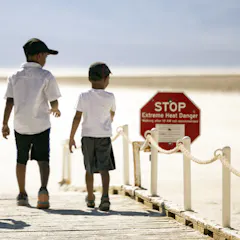
Global temperatures have averaged at least 1.5 degrees Celsius warmer than preindustrial times for over a year. Two scientists explain what that means and what humanity can do.

The June heat wave triggered warnings of a flash drought and caused a surge in ER visits. Many other countries have been facing extreme heat at the same time.
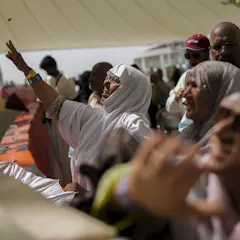
Hajj has grappled with public health and safety risks such as crowd crushes and infectious diseases in the past. It’s now facing an emerging risk: climate extremes.

The answer depends in part on where you live. If it’s extremely hot and humid, the health risks are much higher.

Here’s how to reduce heat-related health risks during major sporting events, from the Summer Olympics to test cricket. Athletes, officials, spectators and volunteers all need to take responsibility.
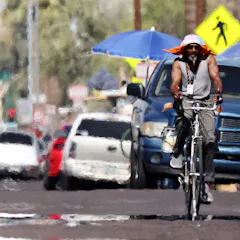
A risk expert explains how to read the heat index and interpret extreme heat warnings, and how to stay safe.

When extreme heat arrives, people can seek safety in air-conditioned buildings. Are wild animals doomed?
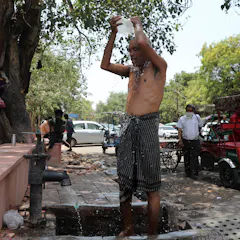
A record-breaking heatwave hit Delhi this week, hot on the heels of heat in Asia and Africa. Australians take note, we are not safe here. We need to prepare for heat to hit us just as hard.

Extreme heat will continue to affect Canada, but the negative impacts on the most vulnerable, including those living with mental illness, can be reduced by taking steps to ensure healthier cities.
Top contributors
-

ARC Future Fellow and Associate Professor in Climate Science, ARC Centre of Excellence for 21st Century Weather, The University of Melbourne
-
Associate Professor and Principal Fellow in Urban Risk and Resilience, The University of Melbourne
-
Research Fellow, The ARC Centre of Excellence for the Weather of the 21st Century, Australian National University
-
Postdoctoral Researcher, Climate Science, University of Oxford
-
Director - Research Institute for Sport and Exercise, University of Canberra
-
Professor of Economics, University of Arizona
-
NHMRC Research Fellow, School of Population Health and Co-founder UNSW Beach Safety Research Group, UNSW
-
Professor of Heat & Health; Director of Heat & Health Research Incubator; Director of Thermal Ergonomics Laboratory, University of Sydney
-
Honorary Associate Professor in Environmental Health, Australian National University
-
Professor of Atmospheric Science, Colorado State University
-
Professor of Geology and Environmental Geosciences, University of Dayton
-
Professor of Global Health and Environmental and Occupational Health Sciences, University of Washington
-
Associate, Institute for Climate Change & Adaptation, University of Nairobi
-
Professor, University of the Witwatersrand
-
Professor of Ecology and Associate Director, Hawkesbury Institute for the Environment, Western Sydney University