
AI systems can appear to be black boxes – often, even experts don’t know how systems reach their conclusions. The nascent field of “explainable AI” aims to address this problem.
Articles on Explainable AI
Displaying all articles
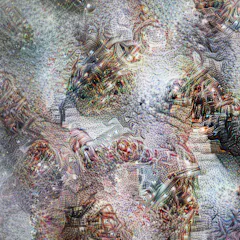
Researchers fed an advanced AI algorithm with satellite photographs to see if it could identify areas of poverty and it interpreted the data through abstract images.
People can trust each other because they understand how the human mind works, can predict people’s behavior, and assume that most people have a moral sense. None of these things are true of AI.

AI models are increasingly being used to make important decision about people’s lives – just take Robodebt. Yet the complexity of these systems means we hardly understand them.
Our research on a recent Australian court case shows how experts and lawyers can overcome opaque AI technology. But regulators could make it even easier, by making AI companies document their systems.

AI algorithms can solve hard problems and learn incredible tasks, but they can’t explain how they do these things. If researchers can build explainable AI, it could lead to a flood of new knowledge.

Having robots and other AI systems tell people what the AIs are doing makes them more trustworthy. A study finds that how a robot explains itself matters.
Top contributors
-

Assistant Professor of Computer Science, University of South Carolina
-
Professor, School of Information Technology, Halmstad University
-
PhD Candidate, Queensland University of Technology
-
Senior Research Fellow in AI Accountability, Queensland University of Technology
-
Ph.D. Candidate in Computer Science, University of California, Los Angeles
-
Professor, Philosophy of Science, The University of Melbourne
-
Law Lecturer, Queensland University of Technology
-
Head of the Department of Human Geography, Lund University
-
Assistant Professor, School of Information Technology, Halmstad University
-
Assistant Professor, Peking University
-
Faculty Member and Chair, Cyber Intelligence and Data Science, National Intelligence University
-
professeur in Responsible AI, University of Antwerp
-
Postdoctoral Scholar, University of Antwerp