

A hit 1983 movie illustrates what computer scientists have long known: If you give an AI agent a goal but don’t control what it can and can’t do, you shouldn’t be surprised by what it does.
Articles on Computer science
Displaying 1 - 20 of 112 articles
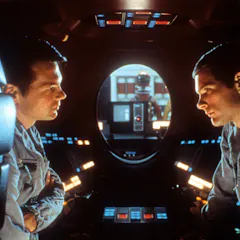
In tests, some AI systems resisted being shut down. But an instinct to stay “alive” isn’t the reason they behaved that way.

Data science and machine learning algorithms can help us form probabilistic forecasts of things like sporting events.

AI’s apparent inability to generate interesting and unique images and videos is becoming harder to ignore.
A new book for scholars, students, and curious readers invites readers to think critically about the promises and perils of language tech and examines AI’s impact on poetic practice.

Measuring the actual effects of using AI systems is no easy task.

It takes a supercomputer weeks to output the properties of one stellar binary. A new study shows AI can do it in a fraction of the time.

There’s a lot that AI can’t do, but hype and misinformation are driving prospective students away from Computer Science.
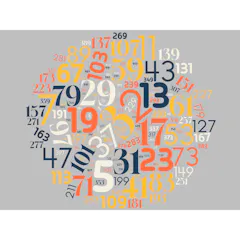
Today, people use complex computing networks to search for prime numbers with millions of digits. But early mathematicians were running these calculations by hand.

New research uses firefly flashing patterns to identify species and what they’re communicating.

In this course, eight professors share their disciplinary perspectives to help students analyze proposed interventions for increasing wildfire risks.
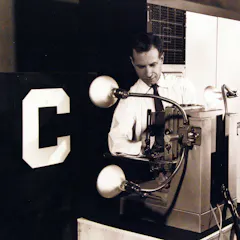
The psychological study of the mind was crucial to the creation of AI – and will remain an essential part of the technology’s future.

Writing computer code is helpful for people in many disciplines, but learning to program is hard. Large language models can help nonprogrammers skip the difficult details.

Women in these fields are almost at parity with men at the most selective schools, but the gender gap doubled at many of the least selective universities.
OpenAI’s o3 model scored at human level on a benchmark test for artificial general intelligence – far higher than any results before.
AI systems can appear to be black boxes – often, even experts don’t know how systems reach their conclusions. The nascent field of “explainable AI” aims to address this problem.
AI systems more intelligent than humans in some ways already exist – but general-purpose superhuman intelligence is probably still a long way off.
Two researchers whose work has led to the AI revolution won the 2024 Nobel Prize in physics. A materials physicist explains statistical mechanics, the physics field behind their discoveries.
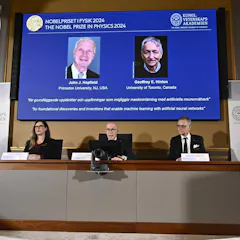
John Hopfield and Geoffrey Hinton, the 2024 Physics Nobel laureates, developed computer systems that can memorise and learn from patterns in data.

We can celebrate the vision and ambition of the Dartmouth Conference. But we must also learn from its mistakes.
Top contributors
-

Professor of Computer Science and Director of the Art & AI Lab, Rutgers University
-
A/Prof, UTS Chancellor's Postdoctoral Research and ARC DECRA Fellow, University of Technology Sydney
-
Assistant Professor of Education, University of Houston
-
Professor of Policy Impact, University of Leeds
-
Professor of Risk and Information Management, Queen Mary University of London
-
Professor of Psychology, University of Washington
-
Associate professor in Computer Science, University of Cape Town
-
Professor of Education (Innovation in Schooling & Educational Technology), University of Newcastle
-
Educator, Researcher, Mentor, Kenya Methodist University
-
Pro Vice-Chancellor, research portfolio, The University of Melbourne
-
Professor in Computer Science and Statistics, Queen Mary University of London
-
Postdoctoral Researcher in Computer Science, Queen Mary University of London
-
Adjunct professor, Swinburne University of Technology
-
Senior Scientist at the Center for Scientific Studies in the Arts and Research Associate Professor of Materials Science and Engineering, Northwestern University
-
Professor of Mathematical and Evolutionary Computer Science, University of Hertfordshire