

In her Quarterly Essay, Anna Goldsworthy treats AI as a mirror rather than a monster. Is humanity wise enough to live with a technology that amplifies our weaknesses?
Articles on Existential risk
Displaying 1 - 20 of 28 articles
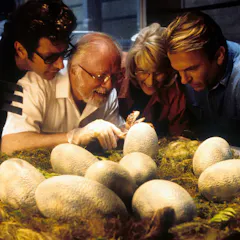
We all know science influences books, movies and TV – but the influence goes both ways.

We are not ready for AI more intelligent than ourselves. Here’s why.
Too many people still believe AI safety is a future problem that can be fixed with simple laws – but the truth is very different.
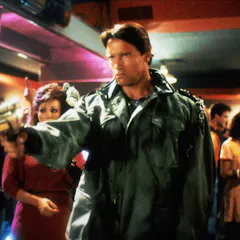
The original 1984 film’s vision of rogue AI turning on humanity remains hugely influential.
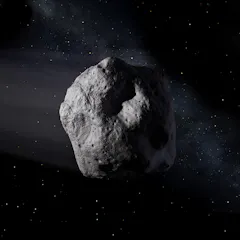
This month, they spotted just the ninth asteroid to be detected before impact with Earth.
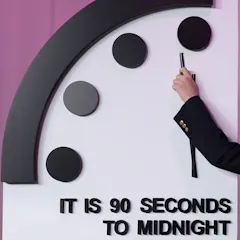
The Doomsday Clock is not a precise risk assessment, it’s a flawed but powerful metaphor for the catastrophic risk humanity faces
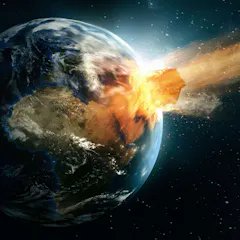
What are the odds of the end of humanity? There’s no real way to know.

Researchers simulated thousands of scenarios of an ancient pathogen being released into modern ecosystems. In the worst cases, up to one-third of host species were destroyed.

Is it possible to ‘align’ AI systems to human interest? A new plan to build an AI system to solve this problem highlights the limits of the idea.
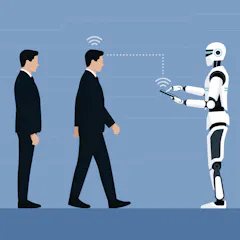
From open letters to congressional testimony, some AI leaders have stoked fears that the technology is a direct threat to humanity. The reality is less dramatic but perhaps more insidious.
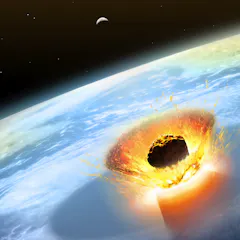
NASA has only mapped 40% of the potentially dangerous asteroids that could crash into Earth. New projects will boost that number, and upcoming missions will test tech that could prevent collisions.
We need long-term solutions, but the idea has been hijacked by a worldview that downplays climate risks.

There’s no need to panic about the asteroids heading ‘close’ to Earth in January.

Will Don’t Look Up wake people up? Here’s what the research on climate communication says.
When people think about how AI might ‘go wrong’, most probably picture malevolent computers trying to cause harm. But what if we should be more worried about them seeking pleasure?

Hearing about climate change prompts people to buy more stuff, which increases their environmental footprint. Rituals that inspire gratitude for nature can help reduce the desire to over-consume.
The US mustn’t make the mistake of tackling these threats separately – or of trying to take a unilateral approach.
Imagine an advanced artificial intelligence took over from Santa. What could go wrong?
Other existential risks include the decline of natural resources (particularly water), human population growth beyond the Earth’s carrying capacity, and nuclear weapons.
Top contributors
-

Visiting Researcher, University of Oxford
-
James Martin Research Fellow, Future of Humanity Institute & Oxford Martin School, University of Oxford
-
Professor of Human Factors, University of the Sunshine Coast
-
Assistant Professor of Space and International Relations, Johns Hopkins University
-
Research Associate, Centre for the Study of Existential Risk, University of Cambridge
-
Research Associate, Centre for the Study of Existential Risk, University of Cambridge
-
Professor in Earth Sciences, Nanyang Technological University, Singapore, and Emeritus Professor of Mineral Physics, University of Cambridge
-
Adjunct Research Fellow, University of the Sunshine Coast
-
Senior Research Fellow in Human Factors & Sociotechnical Systems, University of the Sunshine Coast
-
Adjunct Associate Professor, Centre for Human Factors and Sociotechnical Systems, University of the Sunshine Coast
-
Assistant Director of the Global Systems Institute, University of Exeter
-
Postdoctoral Research Associate in Existential Risk, University of Cambridge
-
ANU Human Futures Fellow; Cardiologist and Physician., Australian National University
-
Research Associate in Existential Risk, University of Cambridge
-
Director of Research, Future of Humanity Institute, University of Oxford