
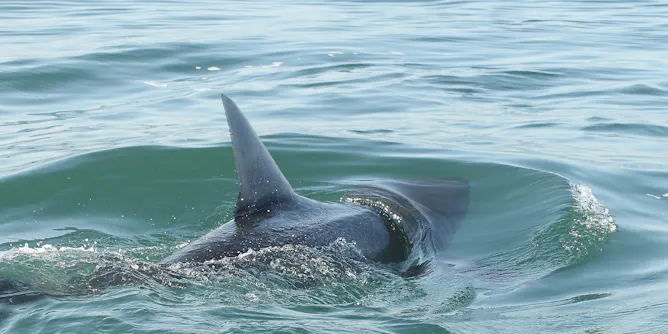
Humans often look to nature for the solutions to complex problems – here are five times where biological processes have inspired innovation.
Articles on Future of humanity
Displaying all articles

The US mustn’t make the mistake of tackling these threats separately – or of trying to take a unilateral approach.

Humanity is destroying Earth’s ability to support complex life. But coming to grips with the magnitude of the problem is hard, even for experts.

Other existential risks include the decline of natural resources (particularly water), human population growth beyond the Earth’s carrying capacity, and nuclear weapons.

Of the countries we looked at, all have seen an increase in subjective happiness since the 1970s.

We urgently need to contemplate the myths we tell about ourselves and technology as a way of evaluating the relationship between the two.

Charles Dickens imagined a robot theme park way back in 1838.
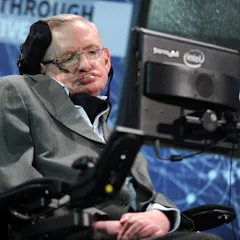
Despite his fears artificial intelligence might one day overtake humanity, Stephen Hawking knew from his own life how profoundly AI could improve humans’ daily lives.
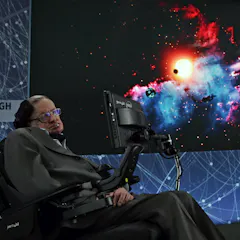
We need a positive vision for humanity, not tech-driven life on Mars.

NASA says there are ten “potentially hazardous” asteroids close to Earth. Good reason to make sure we have a backup plan should any catastrophic event wipe of much of life on Earth.

Surely no super intelligence would be that cruel.

People rate the risks of global threats to humanity surprisingly high. We need to understand the impacts of a loss of faith in notions of material progress and scientific and technological fixes.

In the daily hubbub of current “crises” facing humanity, we forget about the many generations we hope are yet to come. Not those who will live 200 years from now, but 1,000 or 10,000 years from now. I…
The Conversation organised a public question-and-answer session on Reddit in which Anders Sandberg and Andrew Snyder-Beattie, researchers at the Future of Humanity Institute at Oxford University, explored…
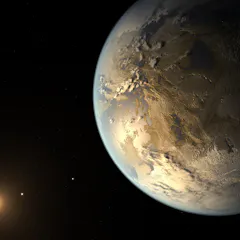
Last week, scientists announced the discovery of Kepler-186f, a planet 492 light years away in the Cygnus constellation. Kepler-186f is special because it marks the first planet almost exactly the same…

Talent is unfair. One can quibble about what it actually is. But there is little doubt that it is something that emerges not just from the genes but also from their interaction with the environment. Different…
Top contributors
-

James Martin Research Fellow, Future of Humanity Institute & Oxford Martin School, University of Oxford
-
Director of Research, Future of Humanity Institute, University of Oxford
-
Alec Cairncross Professor of Applied Economics and Econometrics, University of Glasgow
-
Professor in Robotics, Queensland University of Technology
-
Associate Professor of Psychology, University of Warwick
-
Professor of Economics, University of Warwick
-
Visiting researcher, Alan Turing Institute
-
Lecturer in Organisation Studies, University of Sheffield
-
Associate Professor of Marketing, University of Wollongong
-
Associate Professor in Political and Social Theory, University of East Anglia
-
Research Associate, Centre for the Study of Existential Risk, University of Cambridge
-
Research Associate in Existential Risk, University of Cambridge
-
Senior Research Associate in Environmental Governance, Lancaster University
-
Matthew Flinders Professor of Global Ecology and Node Leader in the ARC Centre of Excellence for Indigenous and Environmental Histories and Futures, Flinders University
-
Professor of Ecology and Evolutionary Biology, Institute of the Environment and Sustainability, University of California, Los Angeles