
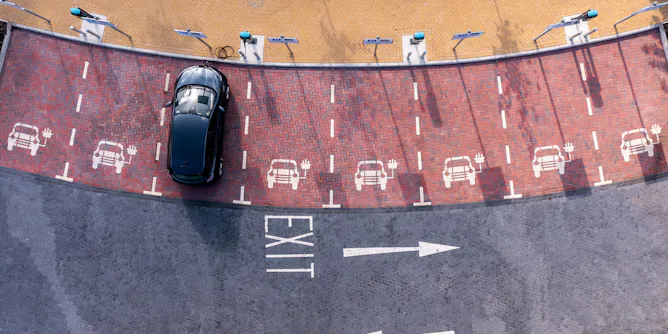
Tighter regulation and careful planning will ensure our public chargers actually work.
Articles on EV charging
Displaying all articles
Climate change, biodiversity loss and water conservation are often framed as problems in need of national policies. However, there is an often more important level of governance: the neighborhood.
Interest-free loans are hoped to expand NZ’s electric vehicle charging network. But without wider changes, EV uptake may remain slow and uneven.

Nearly two-thirds of Australian towns have no public EV charger within 5 km – and that’s just the start of the gap.
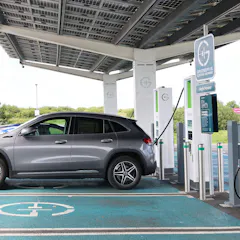
It’s not only the appearance of petrol stations and fuel pumps that has been imitated. The basic principles of charging and refuelling are very similar.
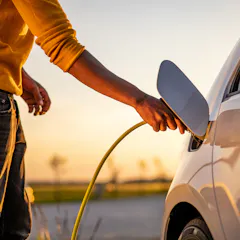
It’s cheaper to charge an EV than fuel a petrol car. But while charging can be dirt cheap, it’s not always the case.
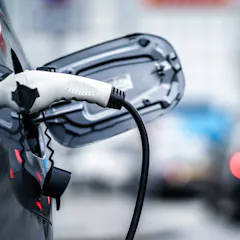
Electric vehicle sales are racing ahead in the UK – but the switch to heat pumps is lagging behind.
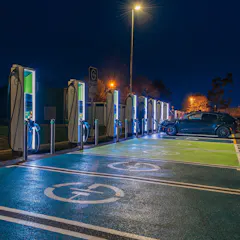
Government investment in neighbourhood EV chargers cannot replace investment at motorway services.
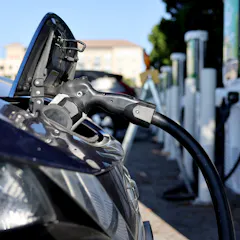
The issue isn’t just the number of chargers – it’s also the quality of drivers’ experiences with them.
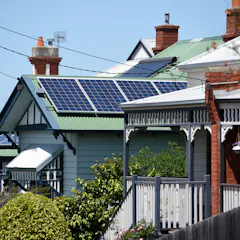
Think of single-phase power as a single-lane road. It’s enough to handle regular household appliances. Three-phase power is more like a three-lane highway. It’s designed to handle much heavier loads.
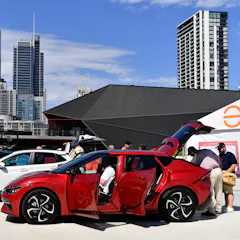
You’ve probably heard the arguments against electric cars, but most of them are getting weaker as the technology, markets and infrastructure mature.
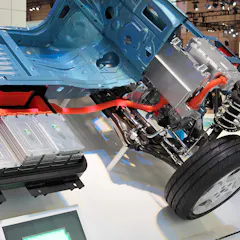
Lithium-ion battery fires are becoming increasingly common as electric vehicles spread, and are hard to extinguish. A new approach uses an electrolyte based on a commercial fire extinguisher.

Lithium-ion batteries power many electric cars, bikes and scooters. When they are damaged or overheated, they can ignite or explode. Four engineers explain how to handle these devices safely.
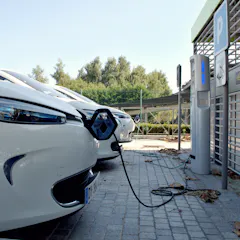
There is already a blueprint for a reliable network of charging stations. The industry can learn a lot from the petrol station giants – plus its chargers can harness the powers of digital technology.

What the BBC Radio 4 drama gets right (and wrong) about rural opposition to the energy transition.

A study of 230 electric vehicles found only 25% of charging happens during peak demand periods. Their patterns of use also mean spare battery capacity could be fed into the grid at these times.
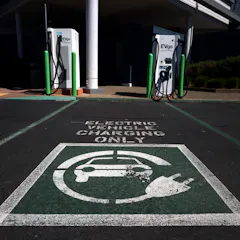
If the EV transition focuses exclusively on drivers in privately owned cars, it won’t meet many Americans’ mobility needs, particularly in underserved communities.
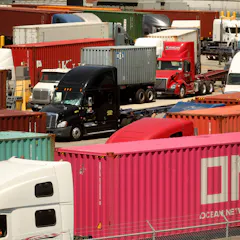
As California goes on regulating air pollution, other states often follow – including the Golden State’s ambitious goals for cleaning up emissions from trucking.
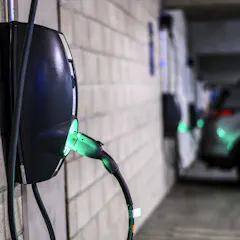
Reducing air pollution from cars and light trucks would pay big health dividends for low-income and minority communities. A new survey shows how to get more drivers of color into electric vehicles.
Top contributors
-

Lecturer, School of Electrical Engneering and Computer Science, The University of Queensland; The University of Western Australia
-
Professor of Transport Technology and Sustainability, Swinburne University of Technology
-
Professor of Physics, Clemson University
-
Associate Professor of Physics and Electronics, Hunan University
-
Distinguished Blue Planet Prize Professor of Civil and Environmental Engineering and Founding Director, Institute of Transportation Studies, University of California, Davis
-
Senior Lecturer, School of Geographical Sciences, University of Bristol
-
Postdoctoral Fellow in Physics and Astronomy, Clemson University
-
Associate professor, Deakin University
-
Professional Researcher, Electric Vehicle Research Center, University of California, Davis
-
Adjunct Lecturer in Urban Studies, The New School
-
E-Mobility Doctoral Researcher, The University of Queensland
-
Senior Development Engineer, institute of Transportation Studies, University of California, Davis
-
Assistant Professor of Mechanical Engineering, University of Michigan
-
Co-director, STEPS (Sustainable Transportation Energy Pathways), University of California, Davis
-
Lecturer in Physical Geography, University of Bristol