

Ethical consumption does not fail because consumers are indifferent or hypocrites, but because ethical choices often feel financially out of reach.
Articles on Ethical shopper
Displaying all articles

The real cost of what we buy is often hidden but demanding greater transparency from brands is one of the most powerful climate actions available to citizens.
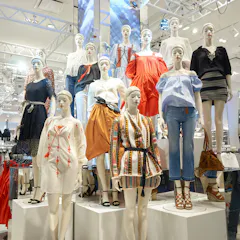
A psychological mechanism called ‘motivated reasoning’ helps us justify the ethical burden away.

Every state and territory has its own rules when it comes to the kinds of gifts teachers can receive. But there are general principles to consider that are the same everywhere.

After several decades in which many housewives turned their backs on slave sugar, it suddenly made a comeback.

If you find help messages from factory and delivery workers in your presents this season, how should you respond?

’Tis the season for online shopping – which means a month of shipping. Here’s how to reduce your delivery footprint.
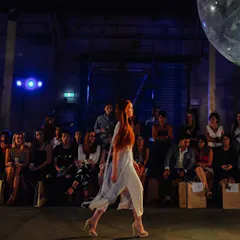
A study has revealed shoppers’ harsh attitudes to those who prefer to buy ethical fashion. But the headlines will only entrench the divide.

In the drive to cut costs on food, Australians often overlook the real impact of food choices.
One moment: one recent Saturday afternoon, I was sitting on the top deck of a red London bus, watching a sea of shoppers flood over Oxford Circus. The cream of the British high street have their flagship…

Oxfam has announced the latest set of results from its Behind the Brands project to influence ten leading food and beverage companies to reform their supply chains. The charity’s efforts are only the most…

Stop press! Actress Julia Roberts has been spotted in a Prius and is reportedly into reusable coffee cups and solar panels. According to media reports, it was the birth of her twins, rather than her Oscar-winning…
Local shops serve an integral role in the lives of older people as a key part of their social network. Researchers studied…
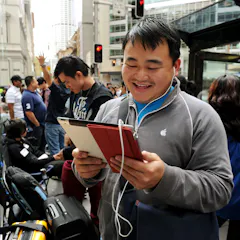
The recent news out of the RIO+20 summit is dire. No collective pre-agreement, no institutional change, no investment. The difference between RIO+20 and Kyoto was that at least Kyoto created an agreement…
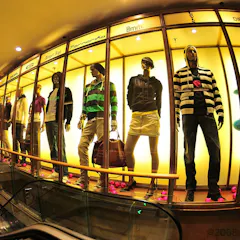
Melbourne’s myriad laneways are at one turn dark and lifeless cul-de-sacs, and at another, splendid window-front galleries. Exhibits of colourful ceramics, velvet tiers of artisan jewellery and delicate…
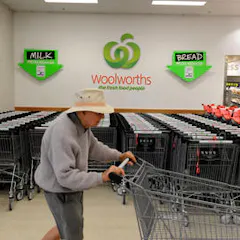
In 1954, American consumer behaviour academic, Gregory Stone identified four different types of consumers. Consisting of 150 in-depth interviews, Stone’s research found there was an “economic” shopper…
Top contributors
-

Professor of Marketing and Consumer Behaviour, Queensland University of Technology
-
Professor in environmental psychology, School of Ecosystem and Forest Sciences, The University of Melbourne
-
Lecturer in Enterprise, University of Manchester
-
Research Fellow, Institute for Social Participation, La Trobe University
-
Professor of Cultural Studies, The University of Melbourne
-
Director, Centre of Excellence in Sustainable Fashion + Textiles, University of Technology Sydney
-
Associate at Melbourne Sustainable Society Institute, The University of Melbourne
-
Chair & Professor of International Business, University of Manchester
-
Professor of Cultural Geography, University of Exeter
-
Teaching Fellow, University of Sydney
-
Professor and Director Food Systems Program, Global Change Institute, The University of Queensland
-
Subject Area Coordinator - Entrepreneurship & Innovation, Queensland University of Technology
-
Professor of Management, University of Bristol
-
Associate Professor of Marketing, Tasmanian School of Business and Economics, University of Tasmania
-
Daniella J. Forster is a Friend of The Conversation.
Senior Lecturer, Educational ethics and philosophies, University of Newcastle