

The Victorian community is seeing a worsening epidemic of flesh-eating bacteria that causes Buruli ulcer. But how can we prevent this disease if we don’t know where it comes from and how it spreads?
Articles on Epidemics
Displaying 141 - 160 of 184 articles

One hundred years after a strange and devastating pandemic, researchers comb for clues in dusty libraries, church records and long- forgotten books.
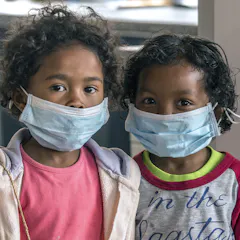
Where do plague bacteria go between outbreaks? Research demonstrates that they can survive and replicate inside amoebae that are widely present in soil and water worldwide.
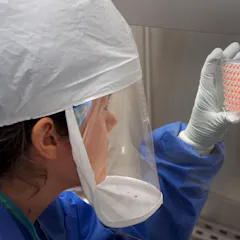
Science has come a long way in the 100 years since the worst flu pandemic in history. But that doesn’t mean that the country is ready for another health disaster.

In a series of experiments, we showed the high value we place on happiness is not only associated with increased levels of depression, it may actually be the underlying factor.

Cold War, dictators and cover-ups – Ebola’s secret history.
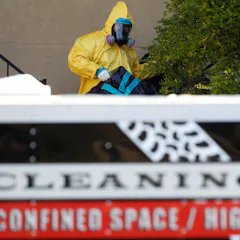
President Trump wants to slash global health funding at a time when more investment is needed, not less. This spending can protect Americans – as well as foreigners – from deadly diseases.
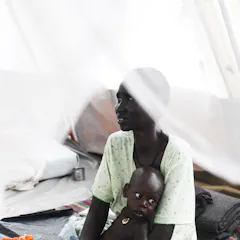
Tuberculosis transmitted from animals to humans is a growing concern in poor countries. As we observe World Tuberculosis Day, it’s worth asking why.

When governments delay releasing information about disease outbreaks, algorithms come to the rescue.
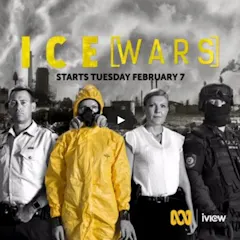
Without doubt, crystal methamphetamine, like many drugs (including alcohol) is capable of causing immense harm. But when facts are distorted to create fear and stigma it helps no one.
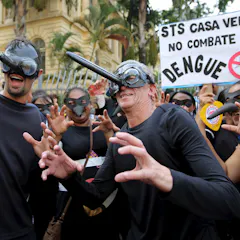
Emerging research suggests that preexisting immunity to dengue virus, which is endemic in South America, could make a subsequent Zika infection worse.
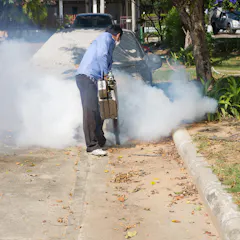
Emerging diseases on which the experts are keeping a close eye.

We need better surveillance systems to detect epidemics early. But while social media has been flagged as a potential solution, we’re not quite there yet.
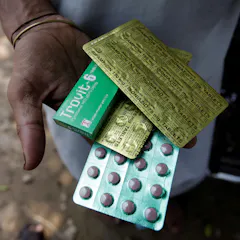
In the future, consumers in the developed world could choose to purchase products from the companies that do the most to promote global health.
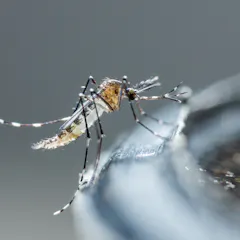
A virologist gives the low-down on chikungunya.
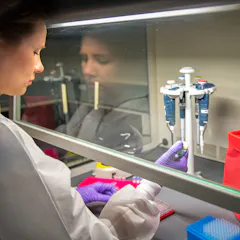
A computer model suggests that while more cases of Zika can be expected in the continental U.S. outbreaks will probably be small and are not projected to spread.

What could we do if a real-life zombie disease started to spread?

Public health experts enlist the molecular biology tools that create genetically modified organisms – as well as the GMOs themselves – in the fight against emerging infectious diseases.

The chance the someone at the Rio games will import the virus to their home country is low.
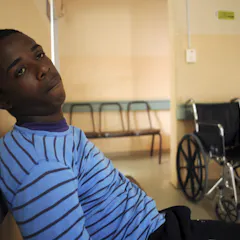
There is no vaccine to prevent or medicine to treat the chikungunya virus infection. The only available method of prevention is through shielding people from mosquito bites.
Top contributors
-

Professor of Global Biosecurity, NHMRC L3 Research Fellow, Head, Biosecurity Program, Kirby Institute, UNSW
-
Director of the School of Journalism & Strategic Media, Professor of Media Studies, Middle Tennessee State University
-
Assistant Professor of History, University of Pittsburgh
-
Fellow, Nigerian Academy of Science
-
Principal Visiting Fellow & Former Deputy Director, International Institute for Global Health (UNU-IIGH), United Nations University
-
Professor of Political Studies, University of Johannesburg
-
Research Scientist, African Population and Health Research Center
-
Director, Scowcroft Institute of International Affairs and Executive Professor, Texas A&M University
-
Associate Professor of Epidemiology, Texas A&M University
-
Assistant Professor, Texas A&M University
-
Lecturer, Biomedical and Life Sciences, Lancaster University
-
Associate Professor of Biology, Penn State
-
Professor of Clinical Microbiology, University of Lagos
-
Associate Professor, Epidemiology, Deakin University
-
Lecturer in Virology, Queen's University Belfast