
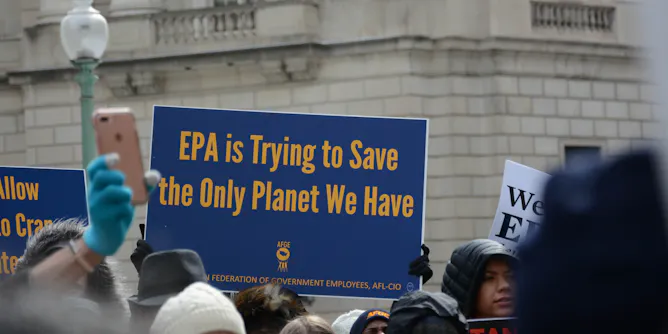
The EPA served as a conduit between the federal government and at-risk communities. Communications scholars look at how environmental justice issues could be set back in scaled-down EPA.
Articles on Environmental justice
Displaying 101 - 120 of 122 articles
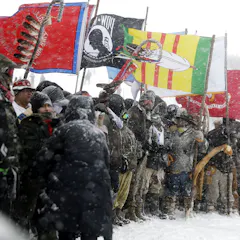
A Native American scholar explains why so little has changed despite the apparent victory of protesters opposing the North Dakota Access Pipeline protest.

Low-income residents in Puerto Rico are fighting disposal of toxic coal ash in their communities. They’re also campaigning to shift from coal energy – the source of the problem – to solar power.
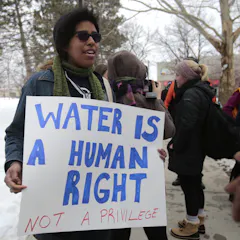
The hostility of Scott Pruitt, Trump’s nominee to head the EPA, toward climate change rules is well-known. But his anti-regulatory stance could easily set back years of work on environmental justice.
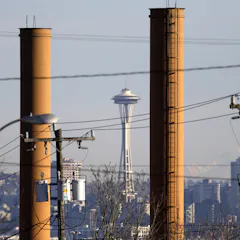
Washington state’s plan to create a carbon tax would make it a climate leader, but local environmental groups are fighting it. What gives?
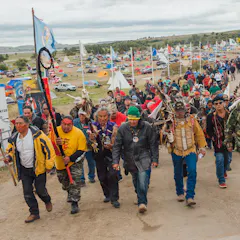
What is the months-long North Dakota Access Pipeline protest really about? A Native American scholar connects the dots to environmental justice and the legacy of U.S. colonialism.
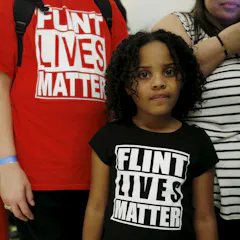
Hillary Clinton has elevated environmental justice to a high level as a presidential nominee, but as the Flint water crisis demonstrates, the deeper problem lies in ineffective government agencies.
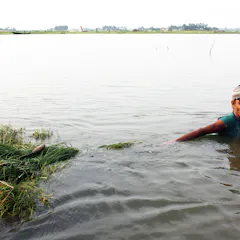
Despite the fanfare of signing the Paris Agreement on climate, little progress has been made on compensating poor countries for irreparable damages from climate change.

Australian cities should be made to work for all inhabitants. This involves evenly spreading the disadvantages of industrial and commercial activities as well as the advantages of good access to services.

A new model of citizen-led science is emerging – as in the case of Flint, Michigan’s poisoned water. Rather than simply supporting scientists, citizens ask their own questions and set the research agenda.

If Flint, Michigan were an affluent suburb, would residents have been exposed as long to drinking toxic water? Pioneering scholar Robert Bullard calls Flint’s crisis a classic case of environmental discrimination
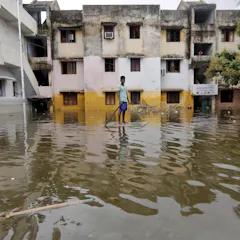
How to ensure rich countries will live up to their promises of money and carbon emissions cuts? Developing countries need to look to the Allies’ unified strategy in World War II.
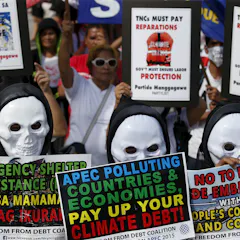
A narrow debate of what countries should pay to respond to climate change obscures a bigger moral discussion that touches on economics, ethics and people’s relationship to the natural world.
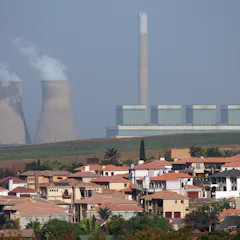
Environmental racism remains a reality in South Africa. It is poor, black citizens who live on the most damaged land and in the most polluted neighbourhoods.

Yes, environmental racism is still a problem, but recent research shows that minority groups care about protecting the environment because of the positive experiences they’ve had.

The pope’s encyclical Laudato Si’ tells us to protect nature and act on climate change for more than reasons of self interest.

The pope’s encyclical challenges the belief in markets to solve social ills – a difficult message for Catholic Republican presidential candidates to accept.
By equating human rights to the protection of nature, the pope’s encyclical opens up an international debate with broad political implications.

For people who take the Bible seriously – not only Catholics – the pope’s encyclical on climate change and the environment will change minds.

The pope’s encyclical turns climate change into a moral discussion by focusing on the disproportionate impact of climate change on poor countries and regions.
Top contributors
-

Lynton K. Caldwell Professor of Public Affairs, Indiana University
-
Associate Professor of Sociology; Co-Founder, Center for Environmental Justice at CSU, Colorado State University
-
Associate Professor of Environmental and Occupational Health Sciences, University of Washington
-
Professor of Geography and Environmental Science, Memorial University of Newfoundland
-
Adjunct Lecturer in Urban Studies, The New School
-
Professor of Environmental Science, Policy and Management and of Public Health, University of California, Berkeley
-
Assistant Professor of Economics, University of Virginia
-
Professor, Technoscience studies + History, University of Toronto
-
Assistant Professor of Environmental Health Sciences, Fielding School of Public Health, University of California, Los Angeles
-
Associate Professor of Environmental and Occupation Health, University of California, Irvine; University of Southern California
-
Associate Professor, Honorary Principal Fellow, Informal Urbanism Research Hub (InfUr-), University of Melbourne, The University of Melbourne
-
Assistant Professor of Applied Environmental Health , University of Maryland
-
York Research Chair in Environmental Law & Justice in the Green Economy, York University, Canada
-
Assistant Professor of Environmental Policy and Sustainability Management, The New School
-
Professor of Environment and Sustainability, University of Michigan