

Elephants were found to gesture intentionally when they wanted humans to give them apples. This trait was thought to exist mainly in primates.
Articles on African elephants
Displaying 1 - 20 of 30 articles

Maintaining current elephant numbers, let alone reversing declines, requires new thinking and conservation innovation.
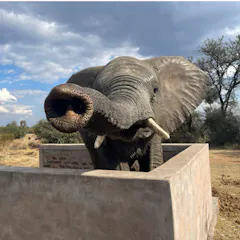
African savannah elephant numbers are surging. But for farmers in elephant territory, that can spell disaster. To solve human-elephant conflict, we might need to use smell.
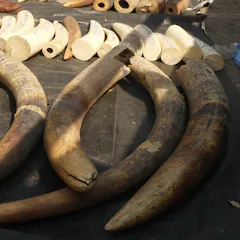
Forest elephants are endangered in Nigeria. Habitat protection, community awareness campaigns, research and stronger regulations could save them from going extinct.

Elephants can be viewed as geological engineers that create minor tectonic forces on the substrate they walk on.
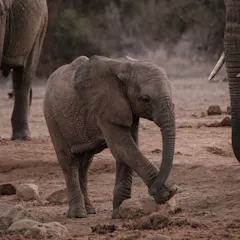
The findings suggest that poaching rates are lower where there is strong national governance and levels of local human development are higher.
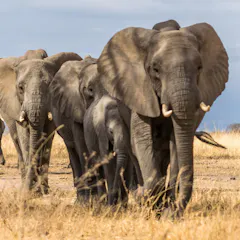
If the situation doesn’t change, Africa – indeed, the world – may lose one of its most iconic animal species.
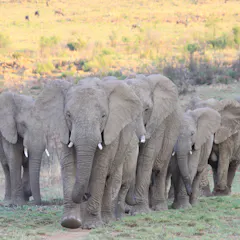
We showed for the first time that social disruption and trauma - such as culling of older elephants - has a lasting impact on the behaviour of African elephants.
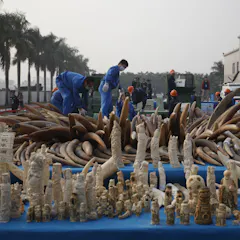
A new study reveals the major players and routes involved.
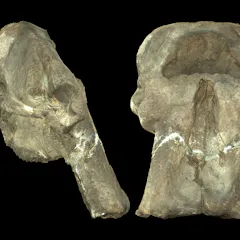
The anatomy of the teeth in the cranium and its bones show that it belongs to an extinct cousin of the living African savanna and forest elephants.
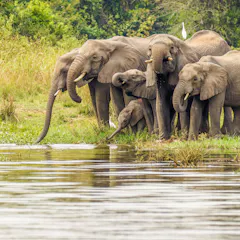
There are no body fossils of elephants from this time period, so the available information of how these gigantic animals moved through the ancient landscapes depends entirely on the track record.

CC BY-NC-ND13.1 MB (download)
Is Botswana allowing the hunting of elephants a good or a bad thing? Two academics weigh in.
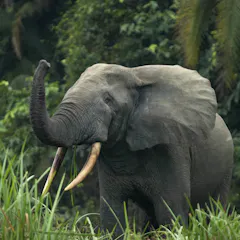
A new review of the status of African elephants finds scientific grounds for dividing them into two species, and reports that both have suffered drastic population declines since 1990.
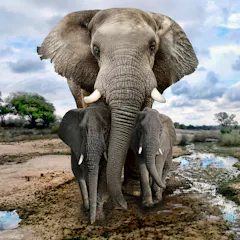
Poaching of African elephants has fallen, but the species is still at risk. Law enforcement and ivory bans help, but tackling poverty is key to stopping poaching at the source.
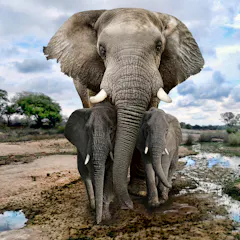
Drone technology plays a vital role in gathering accurate wildlife data. But this alone isn’t enough to save Africa’s elephants.
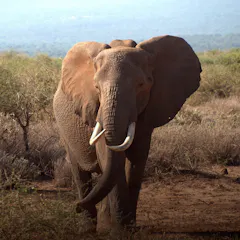
As the Maasai people of Kenya seek to expand their agricultural developments, the lives of one of Africa’s greatest creatures are being severely disrupted.
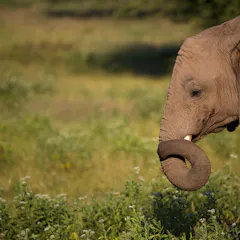
There is indeed merit to using beehives to keep elephants from eating and destroying crops.
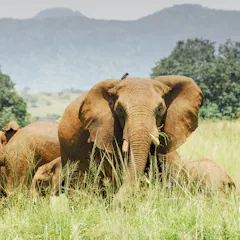
Locations like border towns as well as people acting as middlemen provide key insights into Uganda’s ivory trade.
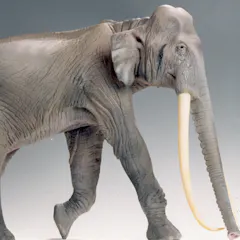
DNA studies reveal that African elephants belong to a very successful and widespread family.
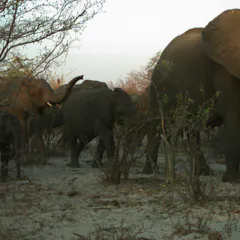
If we can keep elephants away from farms then farmers might be more inclined to help conservation efforts.
Top contributors
-

Research Associate, Department of International Relations, University of the Witwatersrand; Chief Research Officer, Good Governance Africa; Managing Director, Harvey Economics Pty Ltd.
-
Professor of Fish, Wildlife and Conservation Biology, Colorado State University
-
Research Associate, African Centre for Coastal Palaeoscience, Nelson Mandela University
-
PhD Researcher, Bangor University
-
Professor of Comparative and Evolutionary Neurobiology, University of the Witwatersrand
-
Adjunct, Mammal Research Institute Polish Academy of Sciences, University of Warsaw
-
Professor of Pediatrics, University of Utah
-
Pediatrics - Visiting Instructor, University of Utah
-
PhD Candidate, University of Stirling
-
Visiting Professor, University of Kent
-
Associate Professor in Landscape Ecology & Conservation, Chinese Academy of Sciences
-
Conservation Director, Wildlife Ecologist and Microbiologist at the African Conservation Foundation. Lecturer and board member at the Institute of Biodiversity and Non-Profit Studies, University of Buea
-
PhD Candidate, School of Animal, Plant and Environmental Sciences, University of the Witwatersrand
-
Professor in International Development, University of Antwerp
-
Senior lecturer PhD, Monash University