
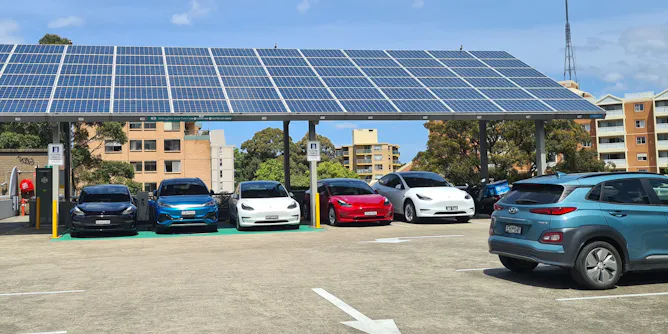
Australia’s transition to electric vehicles has been much slower than in many other developed nations. But the country is actually well placed to catch up fast.
Articles on Electric vehicles (EVs)
Displaying 201 - 220 of 474 articles
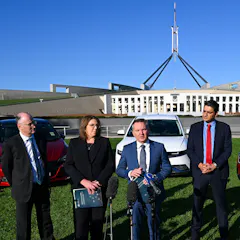
The strategy is long overdue but falls short of meeting the urgent need to accelerate the uptake of electric vehicles.
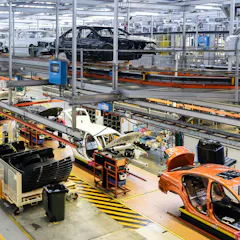
Soaring electric vehicle production is giving new life to old manufacturing plants that were all but written off in the United States. Australia is also in a position to revive its carmaking industry.
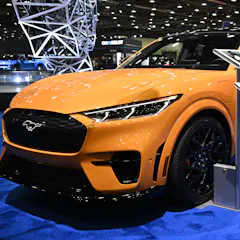
An EV industry expert offers five reasons to be optimistic that the government’s ambitious proposed rules to clean up auto emissions can succeed.

What the BBC Radio 4 drama gets right (and wrong) about rural opposition to the energy transition.

For the kind of money the federal and Ontario governments probably spent for a Volkswagen EV battery plant in southwestern Ontario, Canada might have been able to launch its own EV maker.
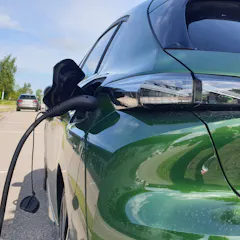
If electric cars are useful for the energy transition, they’re not without flaws and drawbacks and should not make us forget the need to reduce car use.

A study of 230 electric vehicles found only 25% of charging happens during peak demand periods. Their patterns of use also mean spare battery capacity could be fed into the grid at these times.
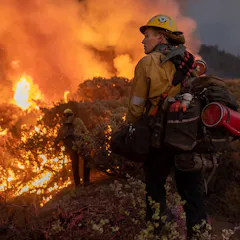
The final report in the IPCC’s sixth assessment series says countries will have to cut their greenhouse gas emissions 60% in the next 12 years to keep global warming in check.
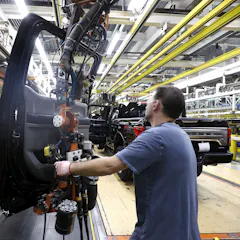
Results already in from the first direct leadership election in the UAW’s 88-year history present a sharply divided leadership.

Today it’s smart technology that will defend drivers and pedestrians. Over a century ago, it was the Klaxon horn.
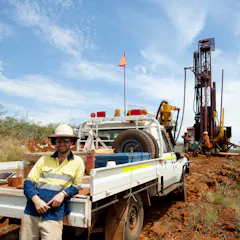
Electric cars are now appearing on Australian roads. But can electric utes meet the more exacting needs of our tradies?
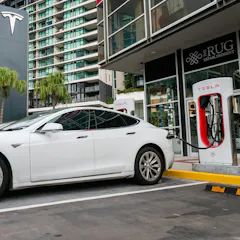
The rest of the nation should follow the ACT’s lead. Incentives to boost the transition to electric vehicles are one of the best ways to tackle Australia’s fastest-growing source of emissions.
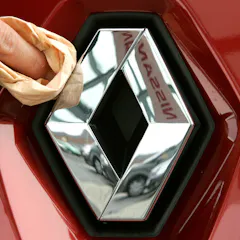
After years of turmoil, Renault and Nissan hope to rebalance their partnership to take on Europe’s booming electric car market.
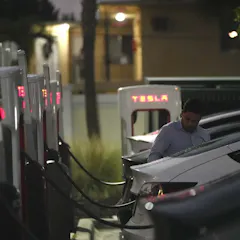
Canada’s zero-emissions vehicle sales target will need hundreds of thousands of EV charging points to be installed in homes, workplaces, retail spaces and along highway corridors in the coming years.
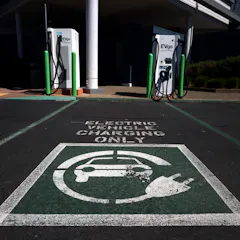
If the EV transition focuses exclusively on drivers in privately owned cars, it won’t meet many Americans’ mobility needs, particularly in underserved communities.

The UK needs an industrial strategy to counter the rise of EU battery manufacturing.
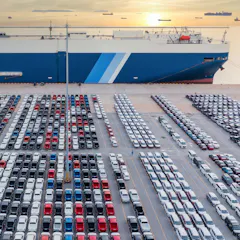
Known as parallel importing, importing goods directly from overseas suppliers lowers costs and increases supply, which is what Australia’s electric vehicle market needs to catch up with the world.
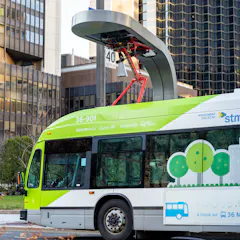
Rather than promoting individual electric vehicles for lower-income consumers, governments should fund electric public transit instead.
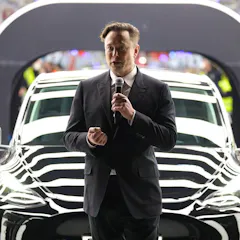
Some believe Musk’s attentions have been divided since he bought Twitter in 2022.
Top contributors
-

Professor of Transport Technology and Sustainability, Swinburne University of Technology
-
Senior Lecturer in Operations and Supply Chain Management, Anglia Ruskin University
-
E-Mobility Research Fellow, The University of Queensland
-
Professor, School of Economics, The University of Queensland
-
Professorial Fellow, University of Canberra
-
Adjunct Professor of Transport, University of Technology Sydney
-
Lecturer, School of Electrical Engneering and Computer Science, The University of Queensland; The University of Western Australia
-
Professor of Sustainability, Curtin University
-
Senior Lecturer, Griffith Business School, Griffith University
-
Senior Research Fellow, Collaboration on Energy and Environmental Markets, UNSW
-
Research Associate, Institute of Coding, Coventry University
-
Professor of Business and Sustainability, Cardiff University
-
Professor in Supply Chain and Freight Innovation, Swinburne University of Technology
-
Professor of Civil and Environmental Engineering, Rice University
-
Associate Professor and Principal Fellow in Urban Risk and Resilience, The University of Melbourne