
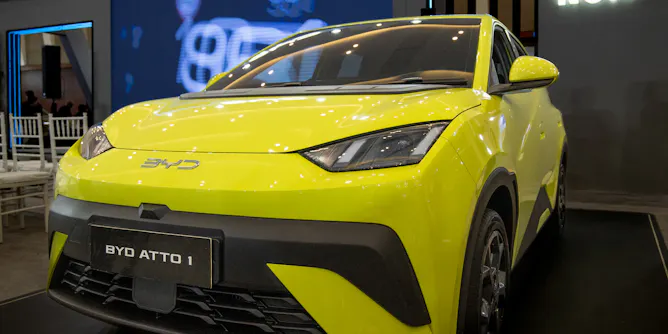
Chinese EVs are approaching the price of older used petrol vehicles. That could disrupt a whole support industry, from gas stations to mechanics and dealers.
Articles on Electric vehicle policies
Displaying 1 - 20 of 46 articles
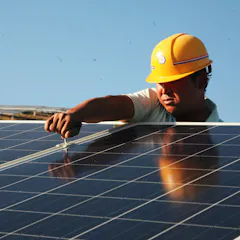
Australia has built millions of mini power stations on detached homes. The next challenge is ensuring people in apartments, units and townhouses can benefit too.

Africa doesn’t need a technological breakthrough to scale EV adoption. It needs cheaper capital and supportive policy environments.

Electric vehicles are a fast-growing share of auto sales in many countries, and Chinese automakers are benefiting as the US industry pulls back.

An analysis finds that fewer electric vehicles will also mean less investment to clean up the electricity sector.

Should Canada pull back on its EV ambitions, or double down to secure its position in the global market?

Reduced government incentives, the spreading of myths and concerns about used car values and fires have stalled what had been an increasingly rapid uptake of electric vehicles.

Whether it’s electric two-wheelers or trucks, buses or bicycles, electric vehicles in India are hard to miss.
There’s a risk that the belief that electric vehicles are much greener results in owners driving more often or faster, or using cars instead of public transport.
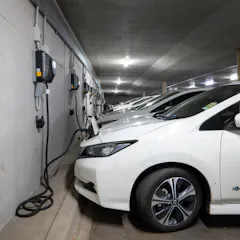
On the day of a blackout, a trial of vehicle-to-grid technology proved both the capacity of electric vehicles to support grid stability and the importance of exactly when vehicles are charged.
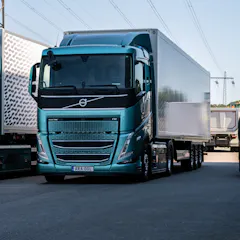
Modelling shows a shift to electric trucks is the better, faster option for cutting transport emissions under most plausible scenarios in Australia’s energy transition.
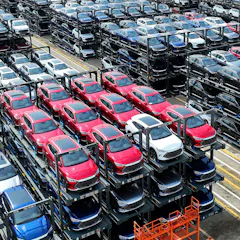
The early timing of Biden’s move, changing supply chains and national security fears suggest the tariffs might work this time, at least for a while.

Support for road-user charging strengthens when people are assured that revenue goes into reducing traffic congestion, maintaining transport infrastructure, improving public transport.

For developing countries, such as Kenya, there is no template for moving to a low-carbon future while accelerating economic growth and development.

The International Energy Agency moved up the date when it expects oil demand to peak to before 2030. Electric vehicle growth is a big part of the reason.
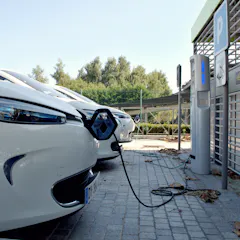
There is already a blueprint for a reliable network of charging stations. The industry can learn a lot from the petrol station giants – plus its chargers can harness the powers of digital technology.
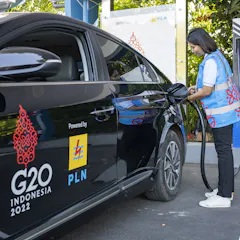
The Indonesian president’s visit to Australia could lead to closer co-operation on the energy transition, with Australia supplying lithium for Indonesia’s electric vehicle and battery production.
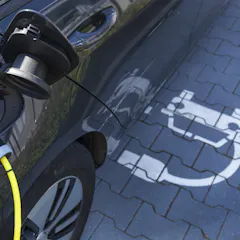
Illinois passed the latest law requiring new apartment buildings to be wired for EV chargers. Now apartment communities are figuring out the best ways to make shared charging work for everyone.
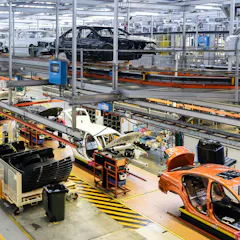
Soaring electric vehicle production is giving new life to old manufacturing plants that were all but written off in the United States. Australia is also in a position to revive its carmaking industry.
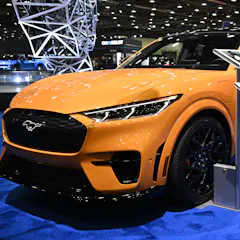
An EV industry expert offers five reasons to be optimistic that the government’s ambitious proposed rules to clean up auto emissions can succeed.
Top contributors
-

Professor of Transport Technology and Sustainability, Swinburne University of Technology
-
Professor in Supply Chain and Freight Innovation, Swinburne University of Technology
-
E-Mobility Research Fellow, The University of Queensland
-
Professor, School of Economics, The University of Queensland
-
Lecturer, School of Electrical Engneering and Computer Science, The University of Queensland; The University of Western Australia
-
Associate Professor and Principal Fellow in Urban Risk and Resilience, The University of Melbourne
-
Professor of History, La Trobe University
-
Professional Researcher, Electric Vehicle Research Center, University of California, Davis
-
E-Mobility Doctoral Researcher, The University of Queensland
-
Associate Professor of Civil and Environmental Engineering, University of California, Davis
-
Programme Leader, Energy and Climate Change, Stockholm Environment Institute
-
Senior Research Fellow, Collaboration on Energy and Environmental Markets, UNSW
-
Associate professor, Deakin University
-
Honorary Principal Fellow, University of Wollongong
-
Professor, University of Canberra