
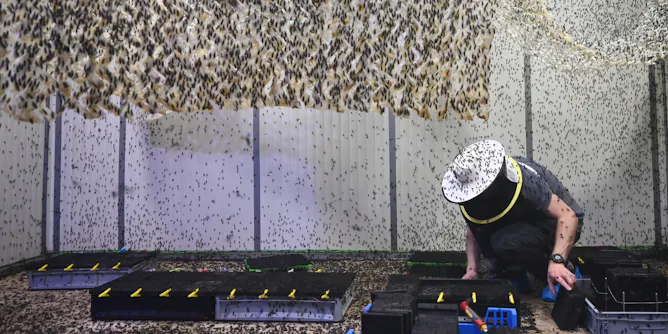
Considering how easily bird flu swept through chicken farms, it’s clear that domestication has downsides. Lessons from the past paired with modern genomic technology can help with farming insects.
Articles on Eating insects
Displaying 1 - 20 of 25 articles
The UK and EU moved in lockstep over edible insect regulation until Brexit, but that has changed in recent years.
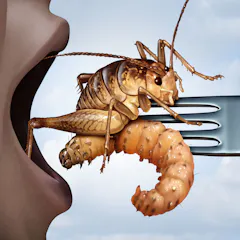
To limit our impact on the planet, one solution could be to replace meat with insects. Children could set an example.
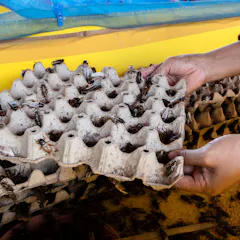
Eating insects can carry a much lower environmental footprint than conventional meat. Should western cultures be incorporating more of them into their diets?
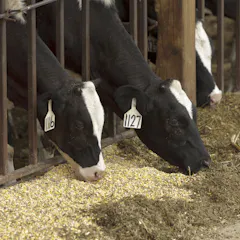
Feeding insects instead of grain to animals is an inexpensive, sustainable way to increase the world food supply. An animal scientist explains what’s involved in developing insect feed for cattle.
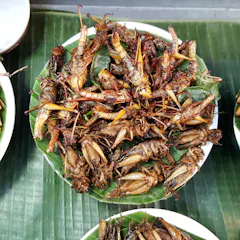
Insects have long been identified as a protein-rich and nutritious food, and are eaten across various cultures outside the West – including across Africa, Asia, and Latin America.
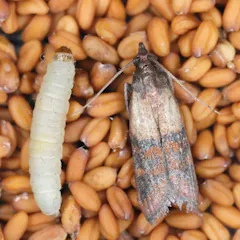
Unfortunately, it’s likely you brought them home yourself. Most pantry moth infestations probably start when we inadvertently bring home eggs and caterpillars in our dried foods.
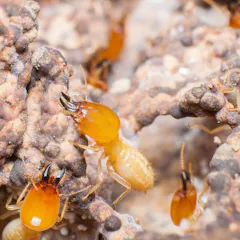
Staple diets in Nigeria can be improved by the addition of insect powders, rather than serving recognisable forms of insects.
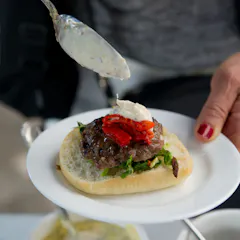
Insect farming is growing in popularity as an alternative to traditional livestock and feed production. A scholar evaluates what that means in terms of trillions of insect lives.
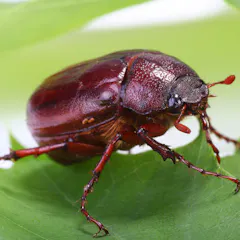
There is much more to these chunky beetles of early summer than what first meets the eye.
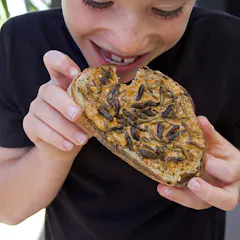
Two billion people already eat ‘prawns of the land’, so why don’t many Australians? A new CSIRO industry roadmap on edible insects explains why we should bring bugs into mainstream diets.
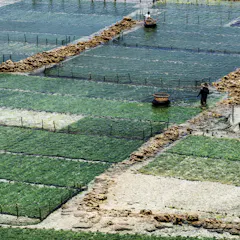
Awareness is increasing about foods like lab-grown meat, insects and seaweed. These foods may help address environmental challenges, but it’s important to be aware of both the costs and benefits.
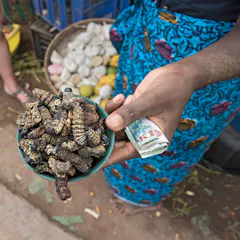
There needs to be more awareness of the benefits of insects as food, and support for farming and markets.
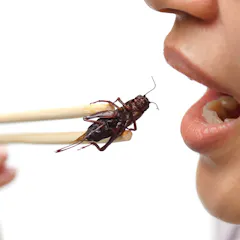
Insects are high in protein and rich in other nutrients and, unlike beef and other livestock, have little impact on climate.
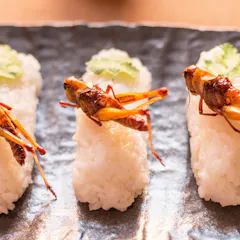
Because insects are an affordable and local food source rich in protein, they can be used as a meat replacement.
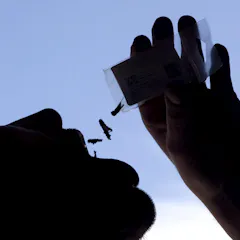
Canadians are increasingly looking to alternatives to meat to get their protein. Pulses like lentils and chickpeas are becoming more popular. Will insects find a way onto our plates too?
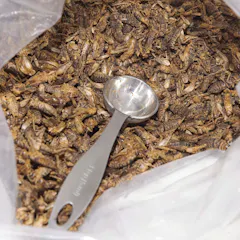
Canada’s biggest grocery chain is now selling cricket flour under its revered private label. Here’s what that says about contemporary eating habits.
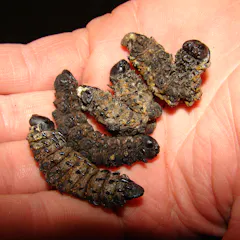
Insects have often been described with words like “disgusting” and the idea of eating them horrifies some people. But this needs to change as they can be an important food source.
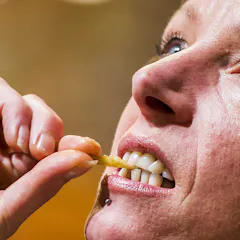
If bug-based foods are so good for the planet, why isn’t everyone eating them?
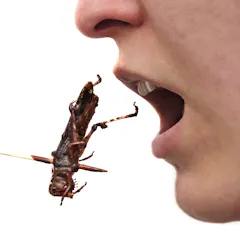
Humans have eaten insects for centuries, but western diets seem to have lost the taste for them.
Top contributors
-

Senior Lecturer in Insect Diversity, Stellenbosch University
-
Head of Technology Transfer Unit, International Centre of Insect Physiology and Ecology ICIPE, International Centre of Insect Physiology and Ecology
-
Professor, School of BioSciences and Bio21 Institute, The University of Melbourne
-
Researcher, Andong National University
-
Principal Scientist and Head of the Plant Health Theme, International Centre of Insect Physiology and Ecology
-
Tropical agronomist and manager, Research Center for Biodiversity Management, University d'Abomey-Calavi de Bénin
-
Research Associate, Community Ecology, University of Oxford
-
Lecturer in Sociology of Consumption, Wageningen University
-
Retired nutritionist, Defence Science and Technology Organisation
-
Associate Professor of Entomology, National Taiwan University
-
Assistant Professor in Sustainable Innovation, University of Nottingham
-
Associate Professor of Entomology in the Department of Crop Science and Post-Harvest Technology, Chinhoyi University of Technology
-
Professor, Dept of Food, Agricultural and Resource Economics, University of Guelph
-
Associate Professor in Entomology, University of Sydney
-
Director, Agri-Food Analytics Lab, Professor in Food Distribution and Policy, Dalhousie University