
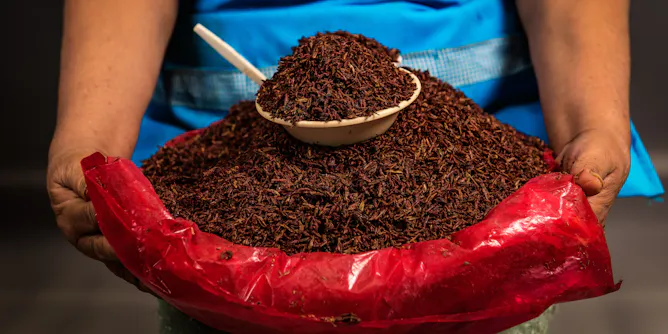
Long stereotyped as food for the poor, the local delicacy’s gastronomical stature has grown as foodies flock to Oaxaca, Mexico, to sample the crunchy snack.
Articles on Grasshoppers
Displaying all articles

In the wake of Melbourne’s spectacular cricket swarm, we asked the author of Australia’s Guide to Crickets why insects gather in such large numbers and how to keep them out of our homes.

Invertebrates underpin Earth’s ecosystems – so if their numbers decline, the ecological damage will be felt far and wide.
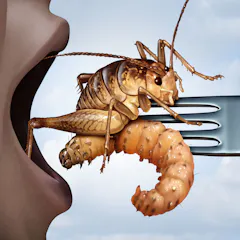
To limit our impact on the planet, one solution could be to replace meat with insects. Children could set an example.

Humans are ‘noisy neighbours’ whose behaviour has long lasting ecological and evolutionary effects on other species.
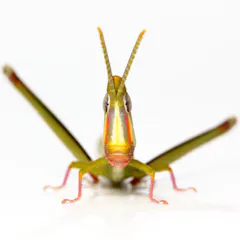
Few animals have babies without sex, so biologists assumed asexual reproduction must have evolutionary drawbacks. But a self-cloning Australian grasshopper shows things might be more complicated.
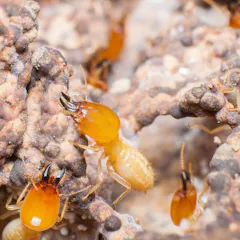
Staple diets in Nigeria can be improved by the addition of insect powders, rather than serving recognisable forms of insects.
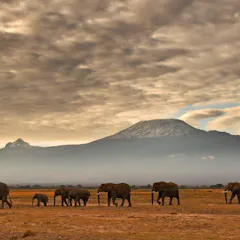
When natural habitats are isolated it means species are less able to migrate, leading to less genetic variation and species diversity.

Insect populations are falling as what they eat becomes more like iceberg lettuce and less like kale.
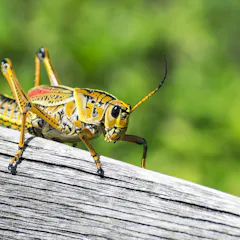
They’re just one of many insects facing dramatic population decline.

Small animals are the fabric of the world around us. Without them everything would crumble.
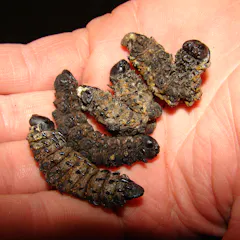
Insects have often been described with words like “disgusting” and the idea of eating them horrifies some people. But this needs to change as they can be an important food source.
Top contributors
-

Lecturer in Animal Biology, University of Leeds
-
Principal Scientist and Head of the Plant Health Theme, International Centre of Insect Physiology and Ecology
-
Head of Technology Transfer Unit, International Centre of Insect Physiology and Ecology ICIPE, International Centre of Insect Physiology and Ecology
-
Professor, Conservation Ecology & Entomology, Stellenbosch University
-
Professeur des Universités en Sciences de Gestion, IAE Nantes, NANTES Université, Nantes Université
-
Research Ecologist, Great Plains Science Program, Smithsonian Institution
-
Executive Manager, Biocultural Landscapes at Taungurung Land and Waters Council, Indigenous Knowledge
-
Adjunct Professorial Research Fellow, School of Marine and Tropical Biology, James Cook University
-
Professeur des universités en science de gestion, Université d’Angers
-
Senior Lecturer, University of the Western Cape
-
Associate Professor in Zoology, Western Sydney University
-
Researcher, Osun State University
-
Research associate, Bayreuth University
-
Professor, School of BioSciences and Bio21 Institute, The University of Melbourne
-
Research Associate Plant Systematics, Bayreuth University