

Lord Byron’s drank vinegar for weight loss, with catastrophic health effects. His eating disorders were reflected across 18th century Europe.
Articles on Eating disorders
Displaying 41 - 60 of 133 articles

Real-world examples suggest we need to be careful using AI for frontline work.

With our faces seemingly everywhere − from Zoom meetings to selfies − more people are developing anxieties about how they appear online.

The series should be praised for recognising that it’s not just white, middle-class girls who experience eating disorders.

Thinking about food all day, feeling guilty when you eat, not knowing when you’re actually hungry: these could be signs you need to work on your relationship with food.

Although under represented in research, about one third of people with an eating disorder are male. Netflix show Heartstopper explores this in season two.

When it comes to treating people with eating disorders, we may need to look more widely than what studies tell us work.

It’s important to establish regular and adequate eating so your body and brain are well-fuelled and you can make sensible decisions around the food you consume.

We analysed the primary care records of more than 9 million young patients across the UK.

Research shows that social media, with it endless promotion of unrealistic standards of beauty, has had a negative impact on millions of young people.

Many studies show that consistent meditation practice lowers depression, anxiety and self-criticism.

Eating disorders in teens are common and dangerous, and parents and loved ones play a crucial role in helping to both identify concerning behaviors and promote healthy ones.
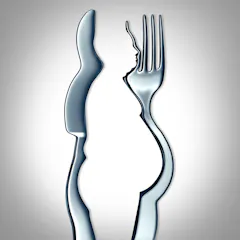
Older adults find it hard to get help for eating disorders.
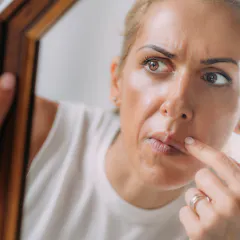
About a quarter of those with body dysmorphic disorder attempt suicide or struggle with ideas of suicide. Fortunately, medication and therapy have proved highly effective at treating the disorder.
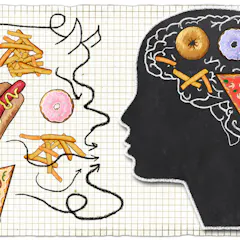
The mortality rate of people with eating disorders is six times higher than the general population, and they are five times more likely to attempt suicide. However, few people seek treatment.

An estimated 1-5% of people globally suffer from avoidant restrictive food intake disorder.

Detox diets and cleanses supposedly clear the body of allegedly toxic substances. But the evidence suggests otherwise.

By only discussing fatphobia in the context of eating disorders, Taylor Swift illustrates how deeply individualized and depoliticized white feminism is.

Television personality Jonathan Van Ness is the latest celebrity to speak candidly about their struggles with the condition.

What’s the connection between #EatWithMe videos and mukbang? And what are we to make of claims they could help people overcome a fear of eating?
Top contributors
-

Clinical Psychologist and Senior Lecturer in Psychology, University of Canberra
-
Assistant Professor of Psychiatry, University of Colorado Anschutz
-
Professor, Head of Body Image, Eating and Weight Disorders Research, Adelaide University
-
Professor of Psychology, Flinders University
-
Senior Lecturer in Clinical Psychology, University of the Sunshine Coast
-
Senior Lecturer in Clinical Psychology, University of the Sunshine Coast
-
Research Fellow, School of Psychological Sciences, Monash University
-
Associate Professor in Health and Physical Education, Victoria University
-
Assistant Professor of Pediatrics, University of Virginia
-
Associate Professor of Clinical Psychology, University of Reading
-
Assistant Professor of Pediatrics, University of Virginia
-
Professor of TV Studies, University of East Anglia
-
Senior Lecturer, Psychology, Bournemouth University
-
Senior Research Fellow, The University of Melbourne
-
Professor of Health Psychology, University of Surrey