

Children need physical play to develop their strength, coordination, and motor skills.
Articles on Early years
Displaying 1 - 20 of 58 articles
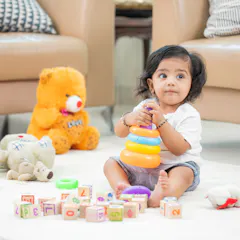
Peer support can help parents build secure relationships and grow in confidence bringing up their children.
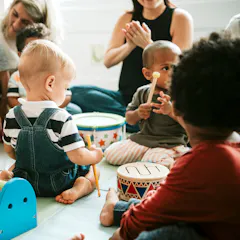
The Best Start initiative draws from the success of Sure Start, launched in 1999.

Throughout the preschool years, children’s early numeracy skills were lower if their parents were more anxious about maths.
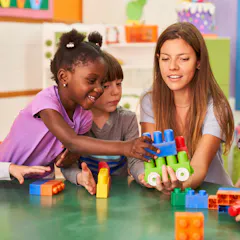
How ready a child is to start school is strongly influenced by their family’s wealth.

If your child tells you about any anxieties or worries, don’t dismiss them or avoid the subject.

I worked with Sure Start and saw the good it brought to communities.

Children are bearing the brunt of austerity. From obesity to infant mortality, child health is affected by sustained under-investment. What can be done to reverse the decline?

Tooth decay is the most common reason why young children aged from five to ten are admitted to hospital.

The advantages and disadvantages of summer-born children entering school outside their peer group.
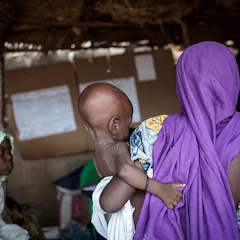
Nutrition for kids is key to achieving economic development.

Accessing “knowledge-rich” content assumes language and literacy competencies that take time for children to develop. Childhood cannot be rushed.
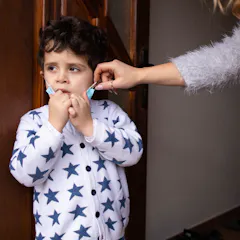
Particularly after the devastation of COVID-19, evidence is mounting for the economic argument of reinvesting in high-quality early childhood education.

Developmental language disorder affects more than seven per cent of children, yet is not well known. If your child struggles in school, social interactions or reading, the underlying issue may be DLD.

The pandemic response has put the long-term health and well-being of children and adolescents at risk, with the possibility of seismic shifts in population health if we do not act.
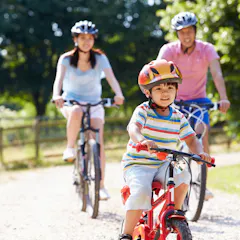
When young children are active, their brains and bodies develop the ABCs of “physical literacy,” a key developmental foundation. A new program from University of Winnipeg can help.

Math is not primarily about numbers, but about thinking. It all begins with parent-child conversations about mathematical ideas.
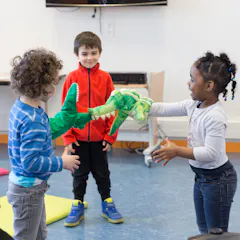
Student assessments help children develop self-regulation skills, but teachers don’t have the time when class sizes are large.

Kids in the UK grow up with some of the highest levels of educational inequality.
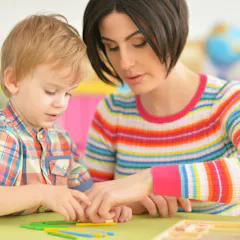
Children aged three to five don’t need to do formal academic assignments in early childhood education to hit their milestones.
Top contributors
-

Honorary Research Fellow, Department of Education, University of Oxford
-
Associate Professor Leeds University Business School, University of Leeds
-
Professor of Developmental Language & Communication Disorders, UCL
-
Strategic Lead for Early Years and Director of the Early Years Community Research Centre, Sheffield Hallam University
-
Professor of Speech & Language Sciences, Newcastle University
-
Associate professor, University of Oxford
-
Compton Foundation Centennial Professor of Social Work for the Prevention of Children's and Youth Problems, Columbia University
-
Lecturer in Education, University of Huddersfield
-
Postdoctoral Research Associate, University of Liverpool
-
Professor of Epidemiology, University of York
-
Associate Professor in Developmental Psychology, University of Salford
-
Senior Lecturer in Psychology & Education, University of Cambridge
-
Lecturer in the Neurobiology of Personality, King's College London
-
Professor of Early Childhood, School of Education and Communities, University of East London
-
Ailsa McKay Postdoctoral Fellow in Economics, Glasgow Caledonian University