

How might we, and our nation’s roads and highways, need to change as autonomous vehicles become more ubiquitous? We know a lot of the answers, but not all of them.
Articles on Driverless cars
Displaying 81 - 100 of 140 articles
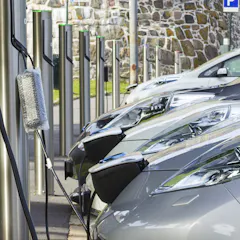
Shifting to plug-in cars wouldn’t be enough to max out global oil consumption by 2040. But it could help make that happen if cities pitch in and ride-sharing doesn’t crowd out public transportation.

Political and community leaders must act now to preserve the American middle class and adapt the US economy for the 21st century.
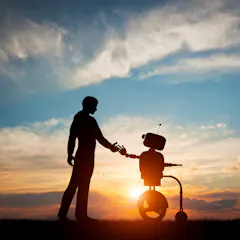
Not everyone agrees on how artificial intelligence will change the way we live. But it’s not all doom and gloom either.
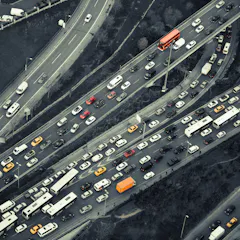
Self-driving vehicles will need to communicate and work together.

While there is currently interest interest in artificial intelligence, it offers limited achievements, such as the autonomous car. Tomorrow, machines will learn alone and forge solutions.

Driverless cars and drones will require pinpoint location accuracy, which means our methods for measuring the Earth’s centre need an overhaul.
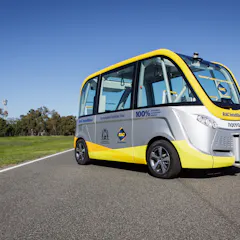
There’s every chance that, if mismanaged, driverless vehicle technologies will entrench the ills of car dependency.
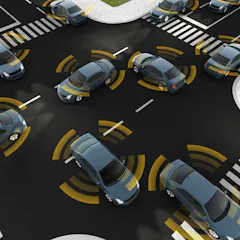
We should all learn from mistakes. Driverless cars must do the same when it comes to any accidents they’ve been involved in on our roads, no matter who was to blame.
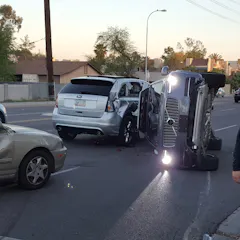
Driverless cars may cut the number of traffic offences but they could open up a whole new area of litigation - who’s responsible for any crash?
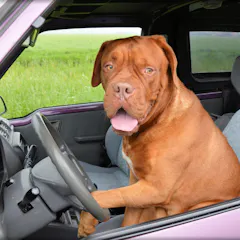
A former animal trainer explains how we might usefully think about the limitations of artificial intelligence systems.
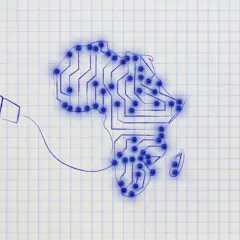
The new Internet of Things has the potential to compensate for Africa’s legacies of underdevelopment.
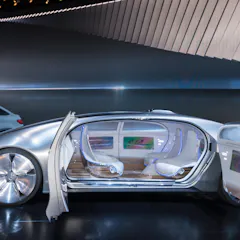
When you don’t need a human to drive a car there are plenty of things you can do with such a vehicle.

We have the potential to liberate the workforce to do the one thing that machines can’t do – improve ourselves and the emotional lives of others.
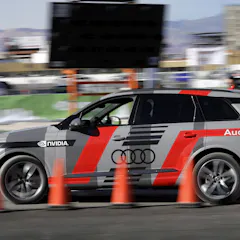
Together, three recent events mark a crucial turning point in the development of autonomous cars: They are both safer and more advanced than ever before.

The ethics and psychology of trust suggest ways we might learn to understand self-driving cars, but also show why doing so might be more challenging than we expect.

From the discovery of gravitational waves, to the Pokémon Go phenomenon to the Census debacle, it’s been a big year in science and technology.
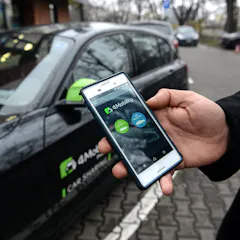
Roads versus public transport: for decades, these have been the battle lines in debates over transport in our cities. But a revolution in mobility is under way that will transform our thinking.
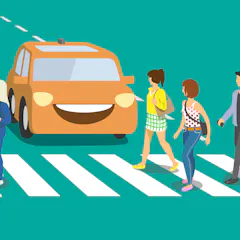
As self-driving cars proliferate, we need a system to handle difficult situations.
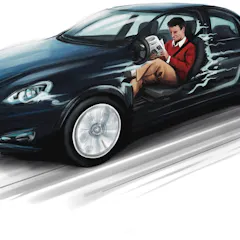
Apple has pulled back from challenging the car industry with a new vehicle.
Top contributors
-

Professor, Director of the Centre for Robotics, Queensland University of Technology
-
Associate Professor, Human Systems Labs, University of Windsor
-
Honorary Professor of Planning, The University of Queensland
-
Professor of Sustainability, Curtin University
-
Professor in Robotics, Queensland University of Technology
-
Professor of Advanced Technology Transitions, Arizona State University
-
Senior Research Scientist, Texas A&M Transportation Institute, Texas A&M University
-
Associate Professor in Urban Planning, The University of Queensland
-
Director, Assuring Autonomy International Programme, University of York
-
Honorary Professor of Transport Studies
-
Associate Professor, University of Leeds
-
Professor of Transport Technology and Sustainability, Swinburne University of Technology
-
Professor of Human Geography, The University of Queensland
-
Associate Professor in Urban Planning, The University of Melbourne
-
Professor of Systems Security, Coventry University