

Pedestrians are wary of autonomous cars, but they trust traffic lights. Researchers suggest driverless cars could communicate directly with the signals to make their own actions more predictable.
Articles on Driverless cars
Displaying 21 - 40 of 140 articles

Driverless vehicles rely heavily on sensors to navigate the world. They’re vulnerable to attack if bad actors trick them into ‘seeing’ things that aren’t there, potentially leading to deadly crashes.

After Theresa May passed the buck, her successor has put pragmatism first.
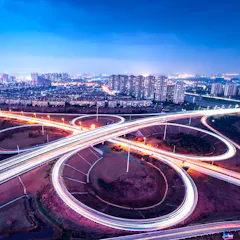
The sweeping introduction of driverless cars could see more vehicles on the road, driving longer distances. But smart planning could solve some of transit-associated environmental and social problems.
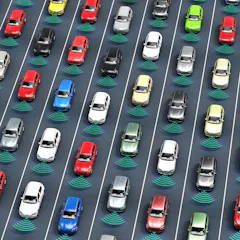
Self-driving vehicles that constantly roam the streets looking for passengers could overwhelm cities. But, if kept in check, these vehicles could be useful for improving urban transport.
Uber’s London licence has been a political football for several years, but that’s not really the point.
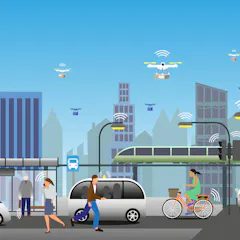
A whole range of social and technological changes could revolutionise how we travel in the coming decades.
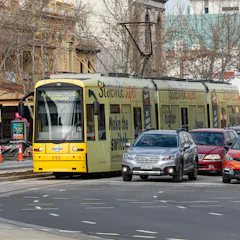
Scenarios based on a survey of Adelaide commuters and analyses of traffic flows show it’s possible the congestion could get worse in the transition to driverless vehicles.
Planes, trains and automobiles produced a step-change in the speed of travel – driverless and electric cars simply cannot deliver such radical improvements.
Could Knight Rider’s KITT finally be on the horizon?
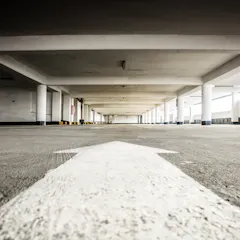
Self-driving cars may someday drop off their owners downtown and then leave to find free parking. What would that mean for cities of the future?
Academic experts on how the humble car could evolve to become an unlikely hero in the global fight against climate change.
When computers take the wheel, the emotive aspect of driving will change significantly.

Driverless cars will form a fast, efficient transport network, which will make car ownership redundant. But they could also spell the end of public transport.
The real ethical challenge of driverless cars is not deciding how they respond in emergencies – it’s facing up to the failings of human drivers.

How will people respond once they realise they can rely on autonomous vehicles to stop whenever someone steps out in front of them? Human behaviour might stand in the way of the promised ‘autopia’.
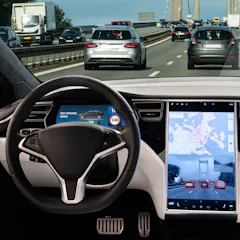
More manufactured cars are integrating assisted-driving technologies such as parking support and networked dashboards. But what should a consumer look for?
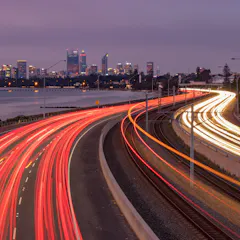
Autonomous mass transit vehicles like ‘trackless trams’ are a better bet than autonomous cars to give us people-friendly cities that capture the value created by infrastructure for the common good.

Using driverless cars to get from A to B in the future will mean more free time to do other activities – but will people really use it productively?
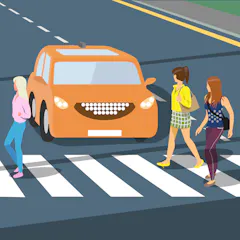
Can we really expect vehicles to make the moral decisions we can’t?
Top contributors
-

Professor, Director of the Centre for Robotics, Queensland University of Technology
-
Associate Professor, Human Systems Labs, University of Windsor
-
Honorary Professor of Planning, The University of Queensland
-
Professor of Sustainability, Curtin University
-
Professor in Robotics, Queensland University of Technology
-
Professor of Advanced Technology Transitions, Arizona State University
-
Senior Research Scientist, Texas A&M Transportation Institute, Texas A&M University
-
Associate Professor in Urban Planning, The University of Queensland
-
Director, Assuring Autonomy International Programme, University of York
-
Honorary Professor of Transport Studies
-
Associate Professor, University of Leeds
-
Professor of Transport Technology and Sustainability, Swinburne University of Technology
-
Professor of Human Geography, The University of Queensland
-
Associate Professor in Urban Planning, The University of Melbourne
-
Professor of Systems Security, Coventry University