
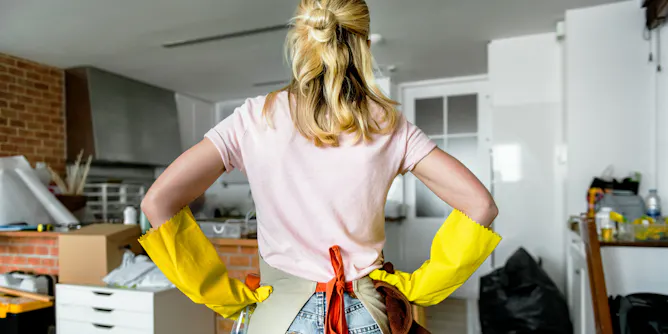
New research highlights that the career outcomes of both women with and without children are negatively impacted by engaging in unpaid labour.
Articles on Division of labor
Displaying all articles
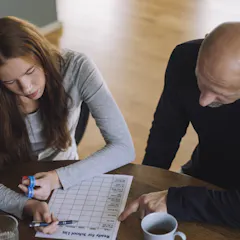
Moms execute more household tasks. But they’re also family executives, doing more of the thinking ahead and assigning that are part of all those chores – bad news for their mental health.
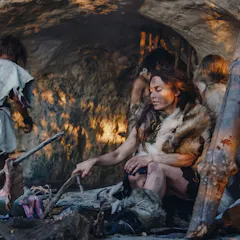
Female bodies have an advantage in endurance ability that means Paleolithic women likely hunted game, not just gathered plants. The story is written in living and ancient human bodies.
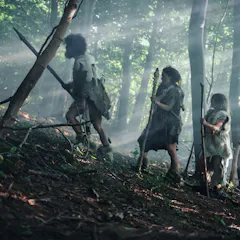
If hunter-gatherers went beyond nose-to-tail eating to include the undigested plant matter in a prey animal’s stomach, assumptions about gendered division of labor start to fall apart.
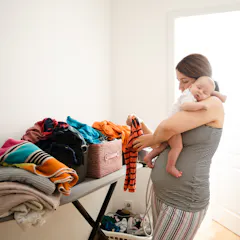
We must redress the challenges of unpaid domestic work and the mental load on women’s physical, mental and economic health and well-being.

On this Mother’s Day, keep your cash and give your wonderful mother gifts that will actually have a long-term impact on her health and well-being.
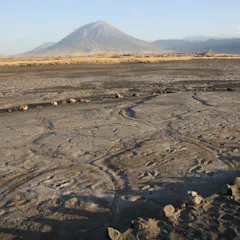
The footprints of over 20 different prehistoric people, pressed into volcanic ash thousands of years ago in Tanzania, show possible evidence for sexual division of labor in this ancient community.
Top contributors
-

Professor of Sociology and Founding Director of The Future of Work Lab, Podcast at MissPerceived, The University of Melbourne
-
Assistant Professor of Anthropology, University of Delaware
-
Ph.D. Candidate in Psychology, University of Southern California
-
Research Scientist and Museum Educator, Smithsonian Institution
-
Associate Professor of Anthropology, University of Michigan
-
Professor of Psychology, USC Dornsife College of Letters, Arts and Sciences
-
Research Associate, Division of Paleontology, American Museum of Natural History, and Associate Professor in Anthropology, Lehman College, CUNY
-
Associate Professor of Human Resource Management, York University, Canada
-
Professor of Organisation Studies, University of Oxford; York University, Canada
-
PhD candidate in Organization Studies, York University, Canada
-
Assistant Professor of Anthropology, University of Notre Dame
-
Associate Professor of Organization Studies, York University, Canada