
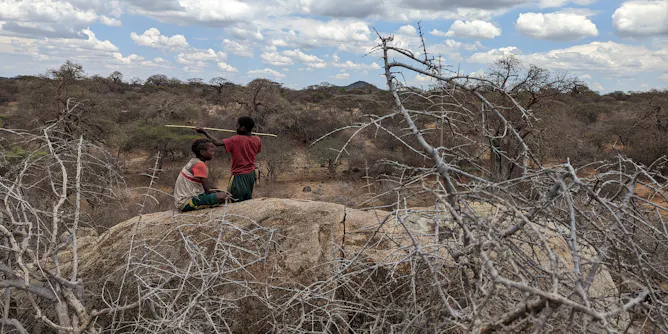
Hunter-gatherers do not always seek total equality, but that doesn’t mean they aren’t egalitarian.
Articles on Hunter-gatherers
Displaying 1 - 20 of 45 articles
Eight hours isn’t necessarily the magic number for sleep. Your age, body clock and individual needs all matter.
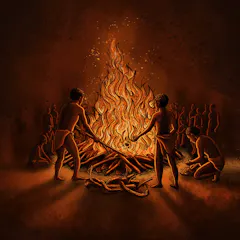
An ancient cremation would have been a community spectacle in a place returned to and reignited over many generations. What was behind this unexpected funeral ritual?

Studying ancient genes can tell us more about the evolution of humans’ anatomy, behaviour and thinking.
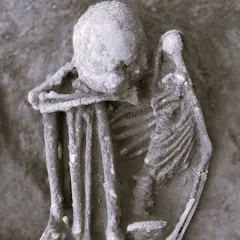
New research shows a tradition of smoke-drying human remains persisted for thousands of years across southern Asia and beyond – even into the modern day.
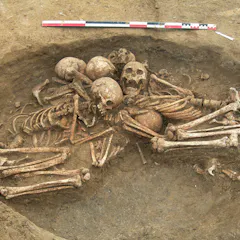
A new study reveals the final stage in the formation of the European genome, which is still present in many people today.
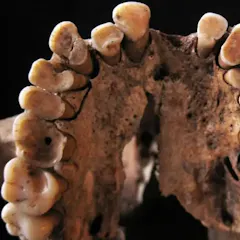
Findings from a new study challenge the traditional view that a heavy reliance on plant-based diets started only with the advent of agriculture.
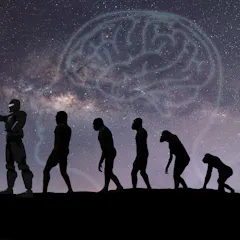
Human culture has changed too fast for evolution to keep up.

Cassava’s many assets would seem to make it the ideal crop, except for one drawback: It’s highly poisonous. Human ingenuity has made cassava edible for millennia.
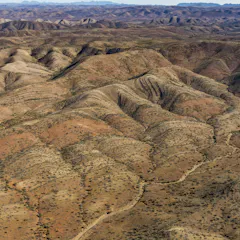
By detailing the landscape at the time of first humans’ migration into Australia, we can better understand how people travelled and where they settled.
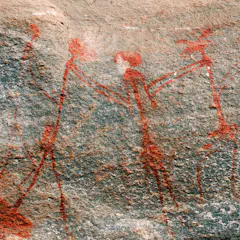
Neanderthals and humans may have been equally smart and skilled, but some evidence points to humans living in larger groups.

Out of Darkness attempts at historical accuracy are a welcome surprise, and what’s more, it is fun to watch.
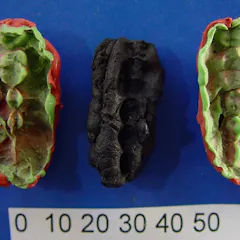
Genetic analysis reveals one of the teenagers probably had advanced gum disease.

Making just a few small changes in our daily lives can help improve our health and help us live more aligned with how we evolved.
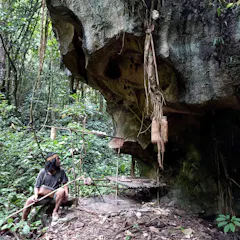
The Punan Batu is one of the most active nomadic hunter-gatherer groups still existing in the world. They have unique characteristics that are different from other groups in Borneo.
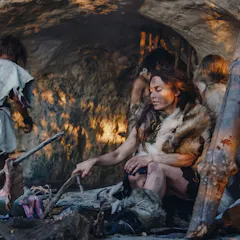
Female bodies have an advantage in endurance ability that means Paleolithic women likely hunted game, not just gathered plants. The story is written in living and ancient human bodies.

For a decade, debate has raged over Dark Emu’s account of Aboriginal agriculture. But ancient food production in Australia is more complex than labels like farming or hunter-gathering suggest.
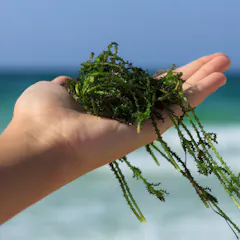
The decline of seaweed as part of the staple diet in Europe remains a mystery.
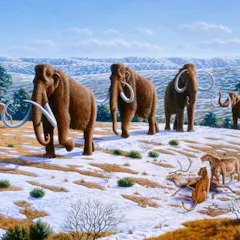
A forensic technique more often used at modern crime scenes identified blood residue from large extinct animals on spearpoints and stone tools used by people who lived in the Carolinas millennia ago.
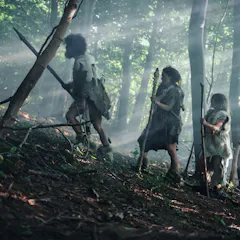
If hunter-gatherers went beyond nose-to-tail eating to include the undigested plant matter in a prey animal’s stomach, assumptions about gendered division of labor start to fall apart.
Top contributors
-

Curator of Human Evolution of the Cleveland Museum of Natural History and Research Assistant Professor of Anthropology, Stony Brook University (The State University of New York)
-
Assistant Professor of Anthropology, Yale University
-
Assistant Professor of Anthropology and Archaeology, University of Calgary
-
Professor of Genetic Epidemiology, King's College London
-
Visiting Research Fellow, King's College London
-
Postdoctoral fellow, Australian National University
-
Postdoctoral research fellow, Mochtar Riady Institute for Nanotechnology
-
Associate Professor of Anthropology, Rice University
-
Professor of Biology, Grand Valley State University
-
Professor of Prehistoric Archaeology, University of Glasgow
-
Assistant Professor in Sport and Exercise Sciences & Fellow of the Wolfson Research Institute for Health and Wellbeing, Durham University
-
PhD Candidate, Université Grenoble Alpes (UGA)
-
Professor with Research Focus in Stone Age Archaeology, Palaeo-Research Institute, University of Johannesburg
-
Professor of Archaeology, Durham University
-
Professor in Geochronology and Geochemistry, Southern Cross University