

We finally have more detail on how Thriving Kids will work. But families of kids with autism and developmental delay may still be wary.
Articles on Disability
Displaying 41 - 60 of 668 articles

Rehabilitation from stroke has traditionally focused on improving the function of the most severely affected arm. But training the other arm might actually lead to more gains.

Many of the issues disabled people encounter in society will result from political decision making.

For the first time, countries now have a shared way to understand whether the world is actually improving at adapting to climate impacts.
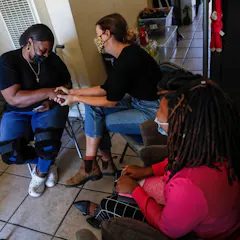
Medical sociology examines how social, cultural, political and economic factors shape health in ways that medicine alone cannot treat.
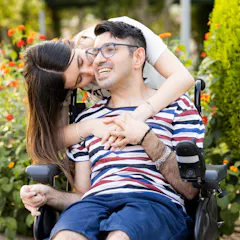
Young people with life-shortening conditions want full lives, including relationships, but support around sex and intimacy is still lacking.

If this is where retail security is headed, it could have unwelcome, unintended consequences for millions of Australians.
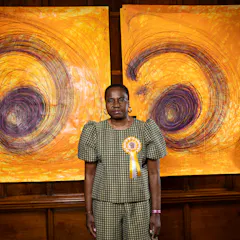
Nnena Kalu’s win shows how contemporary art can be more inclusive if more facilitation, like that provided by ActionSpace, can be supported.

A new survey shows parents and carers have strong ideas about how a program for kids with disability could be designed.

A new Grattan Institute report shows how Australia can build a national system of psychosocial supports within five years without spending any more money.

The narratives embedded in disability policy influence everything from budget priorities to program eligibility and institutional cultures. They also shape how disabled people imagine their futures.

Longer than a magazine piece but shorter than a book, Quarterly Essay shapes our public culture in significant ways.
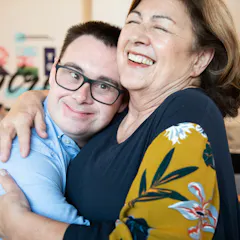
A new study offers the first clear evidence of how the NDIS may ease pressure on some health services.
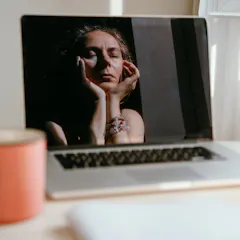
It’s difficult to manage the stressors of work if you’re struggling with your mental health. Here are some recommendations for how to seek support.

Personalized role-play simulations, grounded in student experiences, can pave the way for more equitable, empowering education.

For decades, various kinds of disability have been used as ‘scary’ metaphors in horror. But a new wave of filmmakers is challenging this problematic framing.

ADHD symptoms occur on a continuum and can fluctuate dramatically based on life circumstances such as transitions to middle school, stress levels and even sleep.
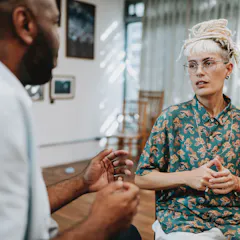
Instead of collecting evidence and submitting reports, participants will have an interview with an assessor that lasts up to three hours.

Increasing awareness can help close the gap on the number of people signed up for emergency alerts, but that won’t happen without increased accessibility.

Ableist microaggressions are made by able-bodied people who don’t understand the realities of living with a disability.
Top contributors
-

Professor, Public Service Research, UNSW
-
Professor, University of Sydney; RMIT University
-
Adjunct Professor, Summer Disability Research Centre, La Trobe University
-
Professor, Rehabilitation, Ageing and Independent Living Research Centre and Occupational Therapy Department, School of Primary and Allied Healthcare, Monash University
-
Professor of Social Inclusion - UTS Business School - Co-Lead UTS Disability Research Network - Australian Centre for Olympic and Sport Studies - Centre for Sport, Business and Society, University of Technology Sydney
-
Senior Research Fellow, Crawford School of Public Policy, Australian National University
-
Professor, Social Policy Research Centre, UNSW
-
Professor in Internet Studies, Curtin University
-
Senior Lecturer of Wellbeing Science, The University of Melbourne
-
Professorial Fellow, University of Canberra
-
Professor of Sociology, University of Alberta
-
Associate Professor, Sociology, University of Toronto
-
Lecturer, Australian Catholic University
-
Adjunct Associate Professor, Murdoch University
-
Professor, Director, Griffith Inclusive Futures, Griffith University, Griffith University