
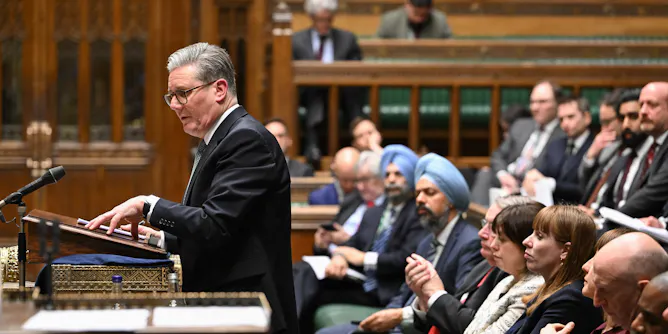
The public isn’t enthusiastic about increasing disability benefit spending – but they’re by no means in favour of cuts either.
Articles on Disability
Displaying 81 - 100 of 668 articles
Listen to disability surveillance expert Amy Gaeta on The Conversation Weekly podcast.
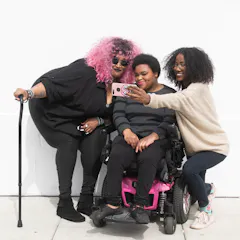
People with disability are more likely to die from cancer than the overall population. Here’s how we can shift this striking inequity.

Parents of autistic children have much higher levels of stress than parents of children with other disabilities. And it’s not just about the autism itself.
Part of a eugenic logic is the ongoing belief that erasing disability and people with disabilities is a desirable and commonsense objective.

Through my reconnection with nature, I’ve reframed my experience of illness.
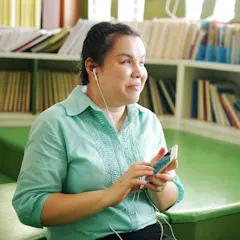
For AI to be beneficial in accessibility tech, the people who use it must be involved in its development.
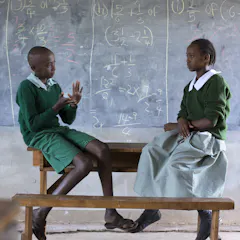
Kenya’s institutions, communities and leaders need to make the new law work for those it was designed to serve.
When people with lived experience contribute to the design and delivery of health care and research, it means services are used more and fairer outcomes achieved.
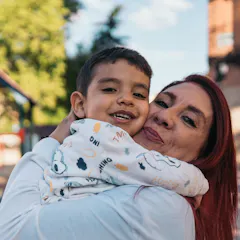
A new strengths checklist aims to help parents, carers and clinicians more easily identify a child’s skills, talents and positive qualities.

Higher living costs, more barriers to work and a large disability pay gap all increase the risk of poverty. Cutting benefits is not a solution.

The famous blind couple, Amadou & Mariam, helped take Mali’s rich musical traditions to a new global audience.

All children have support needs. But some require more than is typical for their age.
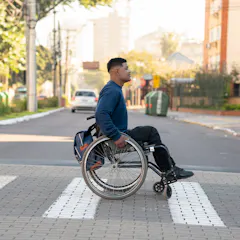
Inclusive design can not only improve the physical well-being of people with disabilities but also improve social interactions and trust in mobility aids.
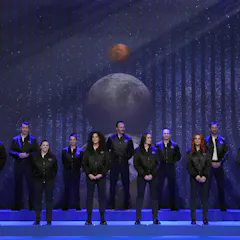
Figuring out how to make spacecraft more accessible to astronauts with physical disabilities can also make them safer for long-duration missions.

Students with disabilities should receive dignified educational and vocational preparation for work where they are paid for labour without prejudice.

Factors like age, gender and where you live can make it more likely an applicant will be rejected.

A lack of accessibility can have a serious impact on a person’s quality of life. Universities should teach students to develop creative solutions that make urban environments more inclusive.

Ultimately, Take My Hand misses the mark in representing the complexity of living with multiple sclerosis – but its depictions of care are worth talking about.

The strategy’s success will depend on maintaining a clear focus on implementation, equity and inclusion.
Top contributors
-

Professor, Public Service Research, UNSW
-
Professor, University of Sydney; RMIT University
-
Adjunct Professor, Summer Disability Research Centre, La Trobe University
-
Professor, Rehabilitation, Ageing and Independent Living Research Centre and Occupational Therapy Department, School of Primary and Allied Healthcare, Monash University
-
Professor of Social Inclusion - UTS Business School - Co-Lead UTS Disability Research Network - Australian Centre for Olympic and Sport Studies - Centre for Sport, Business and Society, University of Technology Sydney
-
Senior Research Fellow, Crawford School of Public Policy, Australian National University
-
Professor, Social Policy Research Centre, UNSW
-
Professor in Internet Studies, Curtin University
-
Senior Lecturer of Wellbeing Science, The University of Melbourne
-
Professorial Fellow, University of Canberra
-
Professor of Sociology, University of Alberta
-
Associate Professor, Sociology, University of Toronto
-
Lecturer, Australian Catholic University
-
Adjunct Associate Professor, Murdoch University
-
Professor, Director, Griffith Inclusive Futures, Griffith University, Griffith University