
Health investments raise worker productivity, but firms may not observe changes in worker effort. Technology that measures physical activity demonstrates these potential gains.
Articles on Developing countries
Displaying 81 - 100 of 115 articles

According to the UN, world hunger is rising for the first time in 15 years. The answer is not only growing more food, but also buffering small-scale farmers against climate change and armed conflicts.
The increase in cases of non-communicable diseases in developing countries has led to an emerging pattern of high levels of multimorbidity.
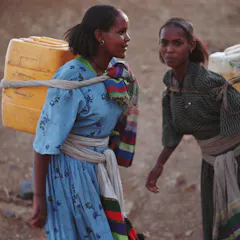
According to a new UN report, more than two billion people around the world do not have access to clean, safe water in their homes. Most of the work of getting water falls to women and girls.

Infection of wounds for surgery patients is on the rise in developing countries. A shorter dose of antibiotics is appropriate.
New research shows that importing goods from low-wage countries has helped US manufacturers shift production to less-polluting industries, produce less waste and spend less on pollution control.
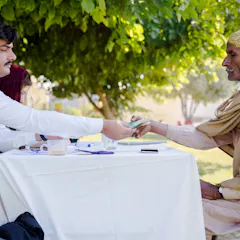
Already becoming a darling of Wall Street, blockchain technology’s biggest real benefits could come to the world’s poorest people. Here’s how.
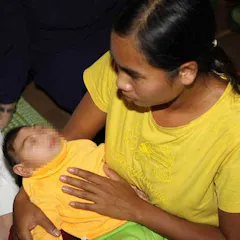
The World Health Organisation no longer sees Zika as a health emergency. But what does this downgrade mean for the health of mothers and babies?

New research finds higher property prices are associated with higher household income and spending inequality.

Scientists from the developing world perceive current visa rules as a major impediment to professional travel. They miss out on opportunities to collaborate globally.

Economic models suggest that South Africa’s GDP would fall, inequality would deepen and unemployment would rise if university graduates don’t enter the labour market in 2017.

The lack of service integration and the paucity of welfare services make poor people’s task of caring for their familes much harder. A small monthly cash transfer can’t solve all their challenges.
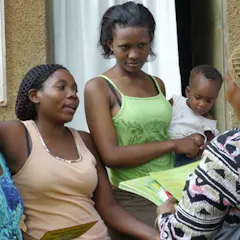
Many women across the world feel unable to refuse sex or request condom use. Empowering them could help bring down HIV rates.

Millions of people live without access to electricity. Now it’s a battle between coal and renewables to bring cheap power.
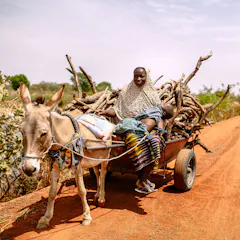
Climate justice is becoming an increasingly important part of climate action.
Big new investors such as the Asian Infrastructure Development Bank are key players in a worldwide infrastructure, and that could be bad news for the environment.

More developing countries are getting out of bilateral investment treaties that favour investors, seeking a framework that allows host states to regulate investment in line with their public policies.

Developing countries, specifically in sub-Saharan Africa, are urbanising without industrialising, a trajectory that leaves them with relatively higher poverty rates and share of slums.
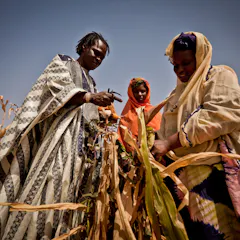
The countries that have contributed the least to climate change will experience the worst of its effects.

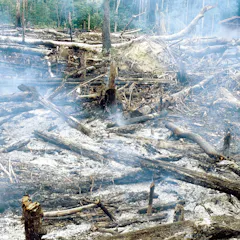
New data have revealed a disturbing trend in forest loss: the hearts of the world’s forests are disappearing. To stop them bleeding out, we’ll have to say ‘no’ to some developments.
Top contributors
-

Professor of Practice in Climate Policy, University of Oxford
-
Distinguished Research Professor and Australian Laureate, James Cook University
-
Professor of Management, University of North Carolina – Greensboro
-
Emeritus Professor of Law, University of Auckland, Waipapa Taumata Rau
-
Professor of Economics, University of Copenhagen
-
Associate Science Editor & Co-Host of The Conversation Weekly Podcast, The Conversation
-
Professor, Crawford School of Public Policy and Director, Centre for Climate and Energy Policy, Australian National University
-
Honorary Research Fellow, City Political Economy Research Centre, City St George's, University of London
-
Professor and Distinguished Research Chair, Globalization and Health Equity, L’Université d’Ottawa/University of Ottawa
-
Professor and Chair, Southwestern Environmental Science and Policy, Northern Arizona University
-
Assistant Professor of Economics and International Affairs, George Washington University
-
Professor of Law, Northeastern University
-
Senior Research Fellow, The University of Queensland
-
Professor of Economics, University of Pretoria
-
Global Health Clinical Research Fellow Imperial College London and Honorary Research Officer, University of Cape Town