

Emily Brontë’s novel celebrates the head-spinning, hair-raising, all-consuming experience of falling in love.
Articles on Death
Displaying 21 - 40 of 441 articles

Griefbots fundamentally change the process of mourning.

The respectful return in death, like the festive Christmas return of migrants, reinforces ties between generations.

Lethal domestic violence is persistent, despite a statewide decline in overall homicides.
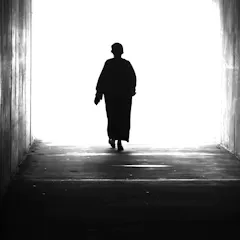
Studies show psilocybin therapy can rapidly reduce anxiety and depression in terminally ill patients, but UK regulations make access nearly impossible.
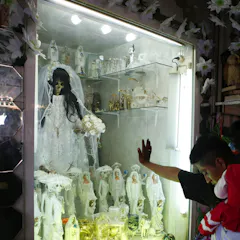
Since appearing as a public shrine in 2001, the female death deity’s popularity has exploded and is a frequent sight in public ceremonies such as the Day of the Dead.
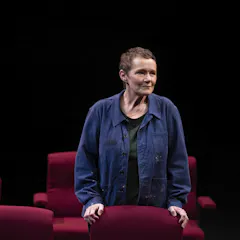
Cory Taylor’s 2016 book Dying: A Memoir spoke of her cancer diagnosis and impending death. Now it’s on stage with the Melbourne Theatre Company.
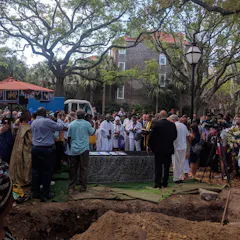
The movement to protect the long-obscured sites allows communities to reckon with painful histories through healing, remembrance and ancestral connection.

Dylan Southern’s film is a sharply crafted adaptation of Max Porter’s poignant book, grounded in powerful performances.

The Northern Territory is unique for so many reasons. That’s why voluntary assisted dying in the NT can’t be imported from elsewhere.

Students in this literature course read a range of novels, short stories and more on grave robbing, murder, terror and grief.

In a polarized environment, the elevation of a figure into a saint does more than honor the individual. It turns a political struggle into a sacred one.

New innovations in understanding how a dead body breaks down can be scaled globally.
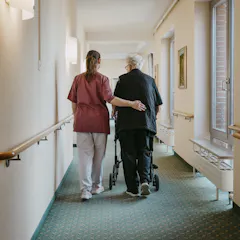
Aged-care workers often form bonds with residents over months or years. So they may experience feelings of grief and loss when someone in their care dies.

What the psychedelic DMT can tell us about near death experiences.
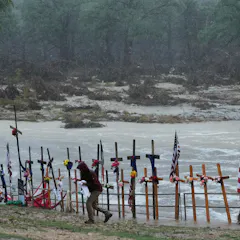
Contrary to popular belief, grief doesn’t unfold in 5 neat stages. Yet, when loss is traumatic, it can take a heavy emotional and physical toll, leaving mourners and their supporters overwhelmed and unsure how to help.
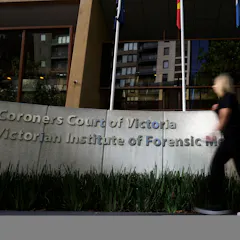
Coroners are in charge of finding out the who, what, when, where, why and how in the case of an unnatural death. Here’s how this part of the legal system works.

“Don’t rush the tears. Let go of the stages. Make the offer specific.” A psychologist and grief therapist shares what really helps someone who’s grieving.

Environmental activism, corruption and technological invasion are all threaded through the story, representing fears about identity, society and the human condition.

The Disney film offers powerful lessons about helping children who are navigating grief.
Top contributors
-

Associate Professor of Philosophy, Deakin University
-
Distinguished Professor, Professor of End-of-Life Law and Regulation, Australian Centre for Health Law Research, Queensland University of Technology
-
Professor Emeritus of Death Studies, University of Bath
-
Professor, Social Work, University of Waterloo
-
Reader in Education with Psychology and Centre for Death and Society, University of Bath
-
Professor of Law, Australian Centre for Health Law Research, Queensland University of Technology
-
Professor of Law, Wake Forest University
-
Professor of Social Work, CQUniversity Australia
-
Associate Professor, Music Industry, RMIT University
-
Research Fellow, Coventry University
-
Professor of Property Law and Death Studies, Queen's University Belfast
-
Senior Lecturer, Criminology, University of York
-
Chen Su Lan Centennial Professor in Medical Ethics, National University of Singapore; Distinguished Visiting Professor in Law, University of Melbourne; Uehiro Chair in Practical Ethics, The University of Melbourne
-
Reader in Sociology, University of Bath
-
Reader of Health Psychology, Queen's University Belfast