
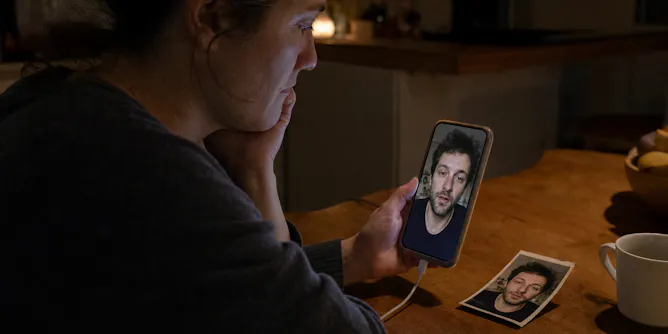
Two researchers navigate the mind-boggling and often sinister, parallel universe that is known as the digital afterlife industry and chatbots specifically designed to help people grieve.
Articles on Mourning
Displaying 1 - 20 of 56 articles

Each year, millions of Shiite Muslims walk to Karbala to honor Husayn, the prophet’s grandson, whose death continues to shape their faith.
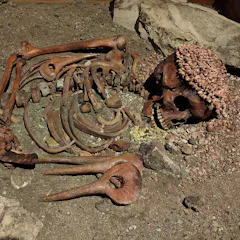
Prehistoric humans were emotionally and socially sophisticated in how they handled death, and the archaelogical evidence at Arene Candide proves it.

Mourning black has never been considered a natural part of Anzac Day history and tradition. But 110 years ago it was a stark reminder of death in war.
The people I spoke to were worried they had failed to arrive at the elusive destination of ‘acceptance’.

Grief can inspire concrete acts of loyalty and generosity.

When a pet dies, your world can unravel as you lose your best friend and anchor in a shifting world.

Griefbots fundamentally change the process of mourning.
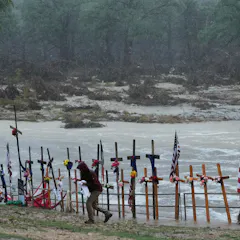
Contrary to popular belief, grief doesn’t unfold in 5 neat stages. Yet, when loss is traumatic, it can take a heavy emotional and physical toll, leaving mourners and their supporters overwhelmed and unsure how to help.
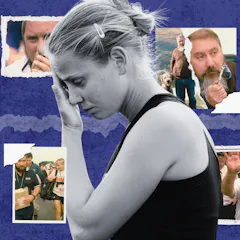
Not all of us get to grieve a stable and warm relationship. We may feel complicated emotions beyond sadness.

Pope Francis had expressed the desire to be buried in the Basilica of Santa Maria Maggiore, a fifth-century church in Rome dedicated to the Virgin Mary.

Grief is not about building a new life without the person you’ve lost but about finding new ways of incorporating them into your ongoing reality.
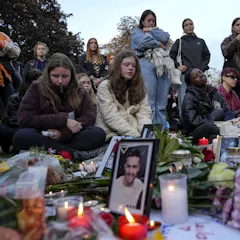
Fan communities coping with a celebrity loss do several things that help their members feel supported and connected.
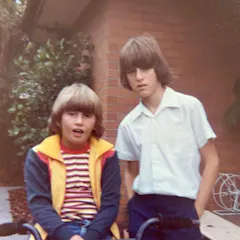
Decades after losing seventeen-year-old Jaz, Gideon Haigh reflects on the event and its aftermath.
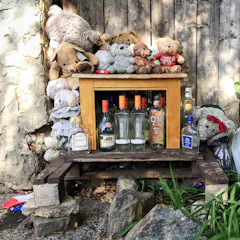
Makeshift memorials are public expressions of private mourning in response to trauma and tragedy.
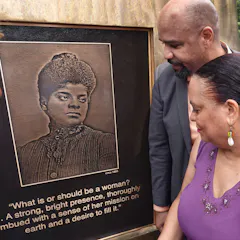
Historically, women have been less likely to be the subject of obituaries. Their obituaries tend to be shorter, with biased words and images.
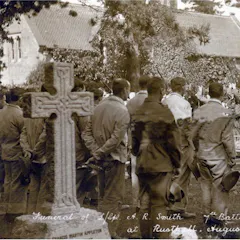
With so many people grieving, the notion of doing so in public was seen as tasteless and vulgar. Funerals became smaller, people put on a brave face in public and fewer people wore black.

Novelist Mary Shelley kept the heart of her deceased husband, the poet Percy Shelley, in her desk drawer.

News about the growing ecological crisis may cause people to feel grief and fear. It is understandable to seek relief from these feelings and look for good news. But what if grief is the good news?

Across cultures, death rituals give mourners a chance to grieve. But they also offer one last opportunity to help the deceased as they transition to the next stage of existence.
Top contributors
-

Professor of Social Work, CQUniversity Australia
-
Professor of Classical Studies, Brandeis University
-
Associate Professor of Anthropology and Psychological Sciences, University of Connecticut
-
Lecturer in Sociology, Deputy Director of the Centre for Ageing and the Life Course, University of Liverpool
-
Reader in Education with Psychology and Centre for Death and Society, University of Bath
-
Lecturer in Global Media Management, University of Southampton
-
Lecturer of Folklore, Indiana University
-
Honorary Research Fellow in the School of Culture and Communication, University of Melbourne, The University of Melbourne
-
Associate Professor of Sociology, Purdue University
-
Professor, English and Cultural Studies; Director, Centre for Global Peace, Justice and Health, McMaster University
-
Associate Professor in Psychology, University of East Anglia
-
PhD student, School of Public Health Sciences, University of Waterloo
-
Professor of Media Studies, University of Virginia
-
Senior Lecturer in Psychology, University of East Anglia
-
PhD student at Centre for Death and Society (CDAS), University of Bath