
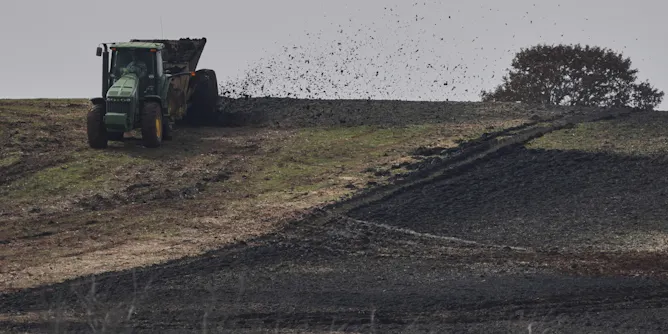
Plants need phosphorus, and other nutrients, to grow. But soil tests can’t tell if there’s too much.
Articles on Dead zones
Displaying all articles
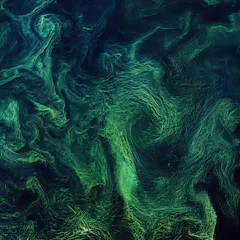
Some methods being tried to counter climate change shift the ocean’s biology or chemistry. Others would deflect solar radiation. All have consequences for marine life.
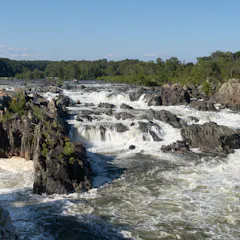
When water warms, it holds less oxygen, and this can harm aquatic life and degrade water quality. A new study finds that climate change is driving oxygen loss in hundreds of US and European rivers.
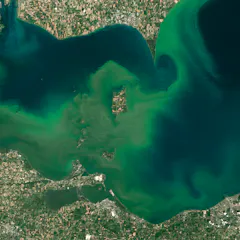
Nutrient pollution fouls lakes and bays with algae, killing fish and threatening public health. Progress curbing it has been slow, mainly because of farm pollution.
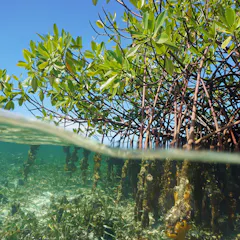
Nitrous oxide is a potent greenhouse gas, 300 times more powerful than carbon dioxide. Global emissions of N2O are on the rise as a result of human activities — and their impact on ocean ecosystems.

It’s possible to feed the world’s 7.8 billion people with more environmentally friendly farming practices. Here’s how.

New research shows that one-third of yearly nitrogen runoff from Midwest farms to the Gulf of Mexico occurs during a few heavy rainstorms. New fertilizing schedules could reduce nitrogen pollution.

The consequences of a massively connected globe are real — and not limited to disease pandemics.

Scientists are predicting major algae blooms in Lake Erie and large dead zones in the Chesapeake Bay and Gulf of Mexico this summer. Nutrient pollution from industrial corn farming is a major driver.

Fertilizer is a key source of nitrogen pollution which fouls air and water worldwide. Current regulations target farmers, but focusing on producers could spur them to develop greener products.
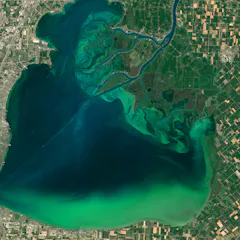
Scientists have mapped a huge dead zone in the Gulf of Oman, without enough oxygen in the water to support life. This Speed Read explains why dead zones form in waters around the world.

Nitrogen and phosphorus are polluting US waters, creating algae blooms and dead zones. New research confirms that voluntary steps are failing in the Gulf of Mexico and unlikely to work in Lake Erie.

Excess nutrients from farm fields cause widespread water pollution across the U.S. Bioreactors – essentially, ditches filled with wood chips – are emerging as a way to reduce nutrient pollution.

Too much fertiliser can kill all life in parts of the ocean. It has happened before – and could do so again.

The same conditions – ultimately tied to nutrient runoff – that created the damaging toxic blooms and dead zones in US waterways of recent years are forecast to return this year.
Top contributors
-

Professor Emeritus of Environment and Sustainability, University of Michigan
-
Research Assistant Professor of Crop Sciences, University of Illinois Urbana-Champaign
-
Associate Professor of Environmental Studies, New York University
-
Professor of Biogeochemistry, Director of the Cabot Institute, University of Bristol
-
Full Professor, Biology, University of Guelph
-
Professor of Marine Science, University of Maryland Center for Environmental Science
-
Assistant Professor of Earth and Atmospheric Sciences, Cornell University
-
Professor of Agricultural Economics, Purdue University
-
ARC DECRA Fellow/Senior Lecturer, IMAS, University of Tasmania
-
Post-Doctoral Scholar in Marine Ecology, Cornell University; UMass Dartmouth
-
Associate Professor of Marine Sciences, University of California, Santa Barbara
-
Professor of Civil and Environmental Engineering, Penn State
-
Assistant Professor of Ecology, Evolution and Organismal Biology, Iowa State University
-
Postdoctoral Associate in Soil, Water and Ecosystem Sciences, University of Florida
-
PhD Candidate in Biological Oceanography , University of Victoria