
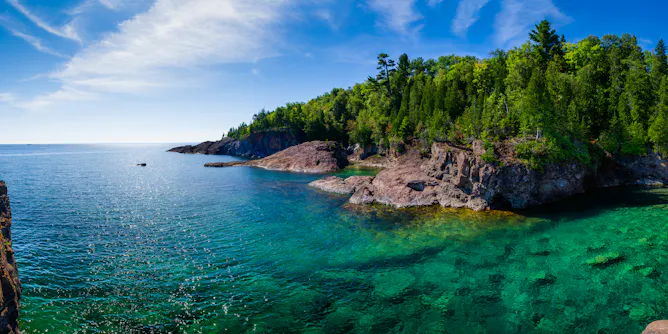
Some of these ‘forever chemicals’ are toxic at very low levels. They can get into water systems and bioaccumulate in fish, ultimately posing risks to people.
Articles on Lake Erie
Displaying all articles

The Erie Canal solidified New York’s reputation as the Empire State, but it also opened up an expressway for invasive species to reach the Great Lakes.
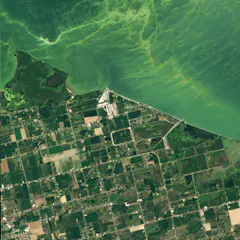
The blooms have become an annual problem in the Great Lakes. DNA studies show what’s growing there and why it’s dangerous.

Algal blooms are typically associated with summer weather but warmer winters caused by climate change are resulting in blooms appearing more frequently, and for longer periods.

The spectacular landscapes and pristine waters of the north shore of Lake Superior, which once provided inspiration for the Group of Seven, are now vulnerable to algal blooms.

The growing environmental and health risks posed by microplastics can only be addressed by reducing the amount of plastic produced and ensuring that all of it is recycled.

In winter 2023-24, the Great Lakes’ ice cover was near record lows, peaking at just 16%. Researchers explain how diminishing ice could have consequences for fisheries, and how species are evolving.

Increasing awareness of the dangers ‘forever chemical’ road salts pose to our fresh water systems highlights the urgent importance of finding new approaches to de-icing our roads.

Images of the 2011 tsunami did not look as I had expected, and pointed to the sublime, when experience exceeds our frameworks of understanding. My exhibit ‘Salients’ treats this theme.
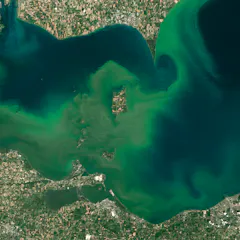
Nutrient pollution fouls lakes and bays with algae, killing fish and threatening public health. Progress curbing it has been slow, mainly because of farm pollution.
Cleaning up the Great Lakes was a big job when the US and Canada undertook it in 1972. Today it’s far more challenging.
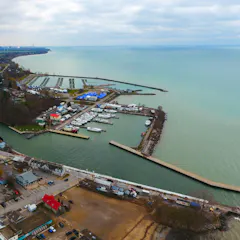
Working waterfronts are a key link between consumers and seafood, but are increasingly threatened by developers. Policies need to ensure that waterfronts remain accessible to seafood harvesters.

A networked array of sensors could warn drinking water utilities in real time of harmful algal blooms and prevent public health crises.

All the Great Lakes are at, or close to, record highs. But it is us, not the water, that needs to move out of the way.
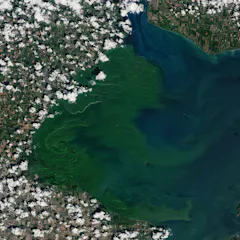
Should lakes, rivers and other resources have legal rights? New Zealand, Ecuador and other countries have taken this step. Now Toledo, Ohio is a US test case.

Scientists are predicting major algae blooms in Lake Erie and large dead zones in the Chesapeake Bay and Gulf of Mexico this summer. Nutrient pollution from industrial corn farming is a major driver.
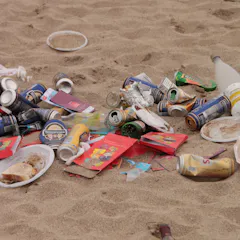
What would you pay to keep trash off your favorite beach, or pollution away from a national park? Economists can tease these values out of our travel choices and use the numbers to help make policy.
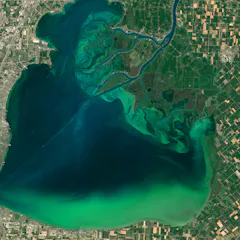
Scientists have mapped a huge dead zone in the Gulf of Oman, without enough oxygen in the water to support life. This Speed Read explains why dead zones form in waters around the world.

Nitrogen and phosphorus are polluting US waters, creating algae blooms and dead zones. New research confirms that voluntary steps are failing in the Gulf of Mexico and unlikely to work in Lake Erie.

The same conditions – ultimately tied to nutrient runoff – that created the damaging toxic blooms and dead zones in US waterways of recent years are forecast to return this year.
Top contributors
-

Professor Emeritus of Environment and Sustainability, University of Michigan
-
Knowledge Mobilization Specialist, Water Institute, University of Waterloo
-
Director and Professor, Great Lakes Institute for Environmental Research, University of Windsor
-
Professor of Biogeochemistry and Canada Excellence Research Chair Laureate in Ecohydrology, University of Waterloo
-
Research Associate Professor, Department of Earth & Environmental Sciences, University of Waterloo
-
Associate Professor of Environment and Sustainability, Western Michigan University
-
Professor of Marine Science, University of Maryland Center for Environmental Science
-
Distinguished Research Professor and Director, Great Lakes Center for Fresh Waters and Human Health, Bowling Green State University
-
Professor of International Studies, University of San Francisco
-
Postdoctoral Fellow, Ecohydrology Research Group, University of Waterloo
-
Research Biogeochemist, University of Waterloo
-
Postdoctoral Researcher in Microbiology, University of Tennessee
-
Professor of Microbiology, University of Tennessee
-
PhD Student in Earth and Environmental Sciences, University of Waterloo
-
Associate Professor, Communication Studies & Media Arts, McMaster University