
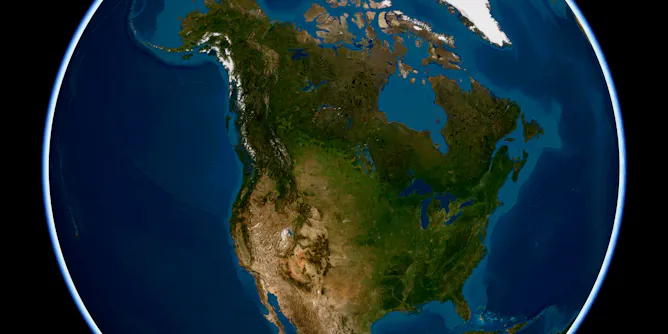
State lines are one way to picture the US, but natural history provides another – one that shows the ancient and living connections running across the landscape.
Articles on Chesapeake Bay
Displaying all articles
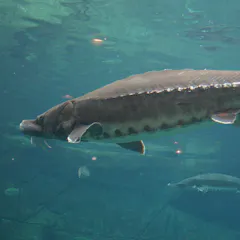
Research that combined archaeology, history and ecology provides a nuanced understanding of the past that could help conservationists better plan for the future.
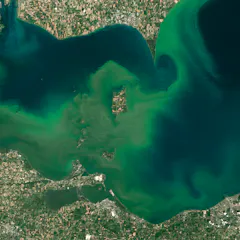
Nutrient pollution fouls lakes and bays with algae, killing fish and threatening public health. Progress curbing it has been slow, mainly because of farm pollution.

Scientists are predicting major algae blooms in Lake Erie and large dead zones in the Chesapeake Bay and Gulf of Mexico this summer. Nutrient pollution from industrial corn farming is a major driver.
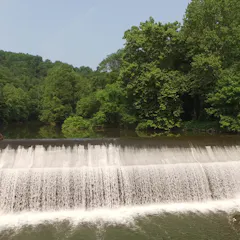
When a dam comes down this fall, a team of scientists will be there to track the environmental changes.
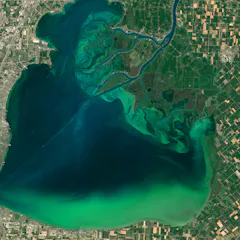
Scientists have mapped a huge dead zone in the Gulf of Oman, without enough oxygen in the water to support life. This Speed Read explains why dead zones form in waters around the world.
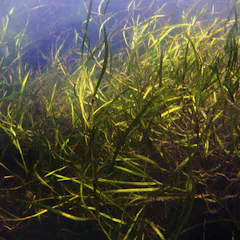
An ambitious plan to cut the flow of nutrients into the Chesapeake Bay has produced historic regrowth of underwater seagrasses. These results offer hope for other polluted water bodies.

Nitrogen and phosphorus are polluting US waters, creating algae blooms and dead zones. New research confirms that voluntary steps are failing in the Gulf of Mexico and unlikely to work in Lake Erie.
Top contributors
-

Professor Emeritus of Environment and Sustainability, University of Michigan
-
Professor of Marine Science and Vice President for Science Applications, University of Maryland Center for Environmental Science
-
Emeritus Professor of Marine Science, Virginia Institute of Marine Science
-
Professor of Geography and Environmental Systems, University of Maryland, Baltimore County
-
Professor of Marine Science, University of Maryland Center for Environmental Science
-
Research Associate in Archaeogenomics, National Museum of Natural History, Smithsonian Institution
-
Curator of Archaeobotany and Archaeogenomics, National Museum of Natural History, Smithsonian Institution
-
Research Geologist and Curator of Paleobiology, Smithsonian Institution
-
Curator of North American Archaeology, Smithsonian Institution