
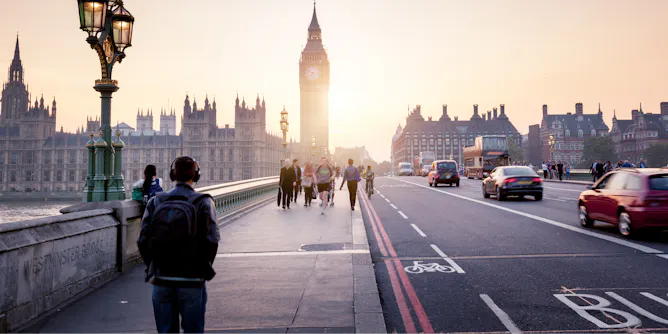
The clock change’s impact on commuter numbers highlights the need to use street lighting more effectively.
Articles on Daylight saving time
Displaying 41 - 48 of 48 articles

Lighter mornings set off a vital biological chain reaction that sets you up for the day.

Gaining a better sense of what genes are involved in regulating circadian clocks could put us on a path to find better treatments and therapies to help people adjust to time shifts.

Daylight saving time advocates say it conserves energy and wins wars. But studies show that injuries and illnesses rise when we switch the clocks. One solution: staying on DST year-round.

The clocks going back hold the tantalising promise of an extra hour in bed. But the modern attitude towards that champion of indolence, the sloth, shows that sloth is still very much a deadly sin.

How daylight savings time could be harming us.

South Australia is considering a permanent change of time zone. Of the several changes proposed, the main contender is to align the state to Eastern time.

Daylight saving time ends this weekend in most states and territories (barring Queensland, Western Australia and the Northern Territory), meaning we’ll turn our clocks back by one hour on Sunday morning…
Top contributors
-

Professor of Neurology and Pediatrics, Vanderbilt University
-
Director of the Pediatric Sleep Evaluation Center, UPMC Children’s Hospital of Pittsburgh, University of Pittsburgh
-
Vice Chair, Department of Neurology, University of Florida
-
Assistant Professor of Economics, Claremont McKenna College
-
Co-Director Pediatric Sleep Evaluation Center and Associate Professor of Pediatrics, University of Pittsburgh
-
Associate Professor of Neurology, University of Pittsburgh
-
Professor of Law, University of Washington
-
Emeritus Professor of Psychology, Adelaide Institute for Sleep Health, Flinders University
-
Professor, School of Medicine, University of Connecticut
-
Senior Lecturer in Psychology, Psychophysiology, Stress, Well-being, University of Westminster
-
Professor of Psychology, Iowa State University
-
Professor of Finance, University of Toronto
-
Senior lecturer, The University of Melbourne
-
Associate Professor of Neurology, Northwestern University
-
Associate professor of economics, Queensland University of Technology