
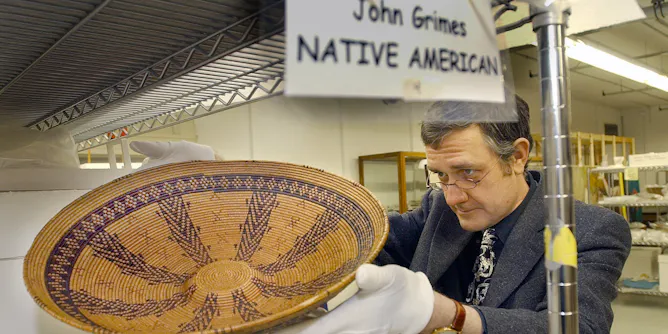
Congress passed a law in 1990 mandating the return of all Native American items that federally funded institutions took without consent. Progress since then has been slow.
Articles on Cultural policy
Displaying 1 - 20 of 46 articles
It’s the first time the MCA will be charging a general entry fee since 2000. The move reflects a global trend of museums facing financial pressure.
How would an official poet laureate “speak” to the spoken word, slam or hip-hop communities, or to bush poets, or to songwriters?
In a recent two-week tour of China, I was aware of just one major exhibition of foreign art. What does this mean for Australian artists in China?

Any policy interventions from Creative Australia to support visual and craft artists’ incomes will need to take a sector-wide approach.

The huge gathering of policymakers focused on culture’s crucial role in sustainable development.
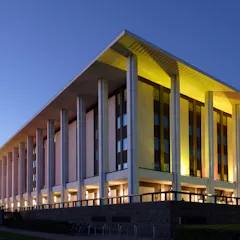
There is not a single historian, publisher or archivist on the review panels whose feedback will help shape Australia’s new cultural policy
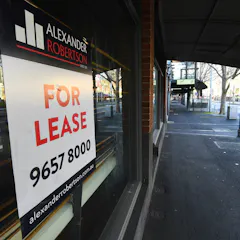
City centres have been hit hard by lockdown measures - but can artists and entrepreneurs really breathe life into the space?

Urban planning and cultural policies often neglect electronic dance music. Now the pandemic is forcing the EDM world to come up with new strategies to survive.

Literature funding has been cut brutally in recent years and writers’ incomes are disastrously low. Yet books shape our national identity, forming an often invisible bedrock for the wider economy.
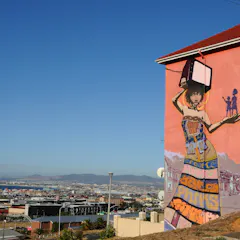
There aren’t a lot of studies on South Africa’s cultural economy. A new one finds a cluster of creative firms in Cape Town with high levels of innovation.
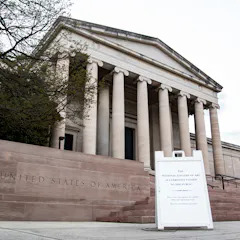
The COVID-19 pandemic has closed museums and cultural sites worldwide. Meanwhile, curators are already working hard to preserve the current moment so that future generations may understand it.

A new report by the cultural think tank A New Approach establishes some useful baselines for Australia’s cultural debate.

Cinema is the most popular firm of cultural participation, but rising ticket prices threaten that.

The Coalition government’s approach to arts and culture policy has been one of ad hocism and neglect. Perhaps most serious has been the damage done to the Australia Council and the ABC.
At a time when even accountants are looking for a more compelling understanding of value, it is imperative that the arts – where individual experience is central – resist the evangelical call of quantification.

The loss of creative spaces to development is pricing Sydney artists out of the city. But they could be encouraged back with new cultural policies.
A new approach to arts advocacy and research could be the breath of fresh air the sector needs - or just more of the same.

Sports and the arts are now separated, but it wasn’t always like this.

The notion of the creative sector driving fulfilling work as cities shed old industries has worn thin. But those creatives might be delivering value of a different kind, offering a more human future.
Top contributors
-

Professor of Creative Arts, Griffith University
-
Professor of Economics, RMIT University
-
Senior Lecturer in Cultural Policy, Goldsmiths, University of London
-
Professor, Head of Department of Management, UTS Business School, University of Technology Sydney
-
Professor of Cultural Economy, Adelaide University
-
Emeritus Professor of Cultural Research, Institute for Culture and Society, Western Sydney University
-
Professor of Cultural Engagement; Director of the Centre for Cultural Value, University of Leeds
-
Professor of Cultural Policy, University of Glasgow
-
Lecturer in Arts Management and Human Resources, The University of Melbourne
-
Researcher, University of Sydney
-
Associate Professor, Cultural Policy and Creative Industries, Adelaide University
-
Artist, Curator, Producer, RMIT University
-
Affiliate Researcher in the Scottish Centre for Crime and Justice Research, University of Glasgow
-
Economist, UNSW
-
Professor of Social Inclusion - UTS Business School - Co-Lead UTS Disability Research Network - Australian Centre for Olympic and Sport Studies - Centre for Sport, Business and Society, University of Technology Sydney