
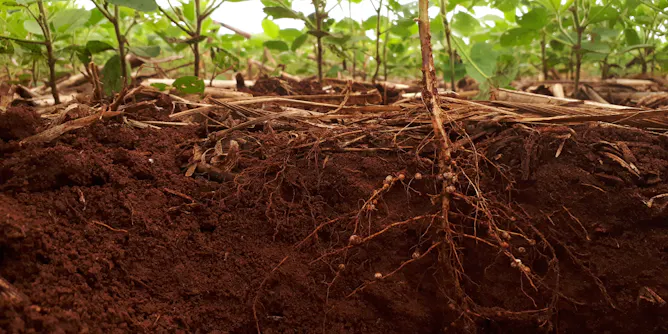
Researchers have unearthed a ‘biological switch’ which could boost crop yield worldwide.
Articles on Crops
Displaying 81 - 100 of 177 articles
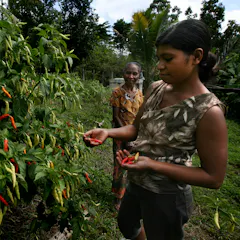
How Indigenous communities and a Timor-Leste NGO are reviving food sovereignty in one of Asia’s poorest countries.
If rolled out worldwide, our method could replace a quarter of all the synthetic nitrogen fertiliser used in agriculture.
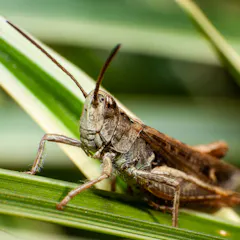
Locust outbreaks are driven by unusual climatic conditions.
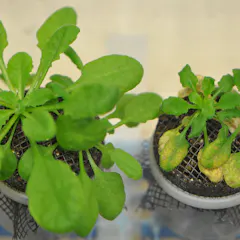
Just as humans can suffer from an imbalance of microbes in their gut, plants can suffer a similar syndrome in their leaves. This finding opens up new possibilities for improving food security.
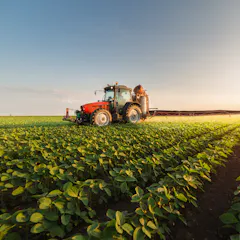
Reducing our intake of discretionary foods such as cakes, biscuits, pizza and hot chips is the best way we can make our diets more sustainable.
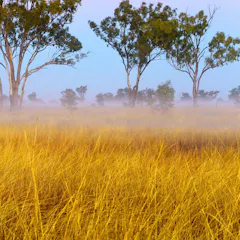
Aboriginal people once used native grasses to produce bread. So let’s resurrect Australia’s ancient breadmaking tradition.
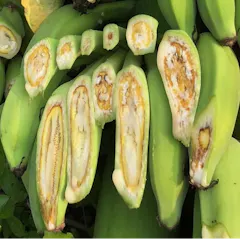
Fungi and other organisms called oomycetes are
highly adaptable. That’s bad news for the global food supply.
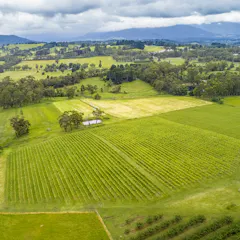
We must stop using biosolids for farmlands immediately, especially when alternative ways to recycle wastewater sludge already exist.
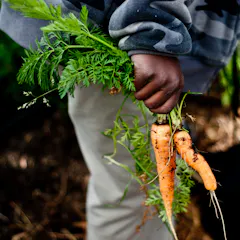
Victory gardens were popular during wartime, and have made a comeback during the current pandemic.

And why development funders should listen to smallholder farmers
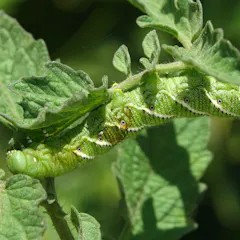
Plants have evolved techniques for protecting themselves from heat and insect attacks – but when both these stresses happen at once, one defense may neutralize the other.
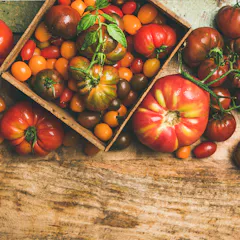
Through genetic detective work, scientists have identified missing links in the tomato’s evolution from a wild blueberry-sized fruit in South America to the larger modern tomato of today.
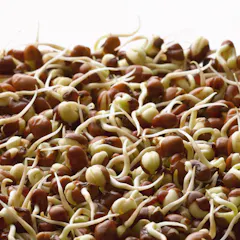
Nigeria recently approved the world’s first GM cowpea, which provides full protection against the pod-borer Maruca, a major problem for this important crop.
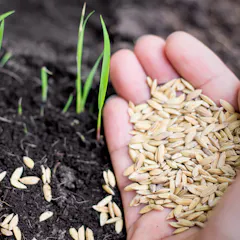
New research shows even brief hot spells can damage seed quality.
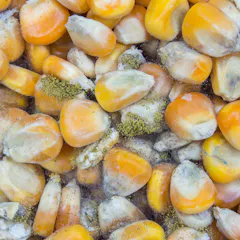
Most of the maize consumed in Kenya is never even tested for aflatoxin.
CC BY-NC-ND4.79 MB (download)
Combining and fermenting indigenous African grains can help counter malnutrition on the continent.
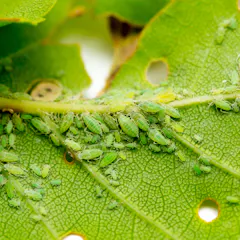
Certain wasps and flies which lay their eggs in specific species such as aphids could be a sustainable form of pest control.
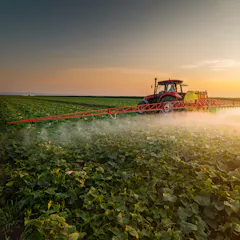
Pesticides have become almost essential for agriculture, but their misuse can have negative effects on crops too.
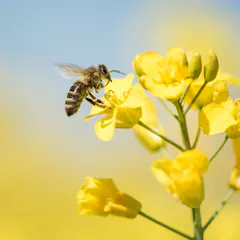
It’s unlikely that all species of bees will go extinct anytime soon – but current losses could still have a terrible impact on food supplies and ecosystems.
Top contributors
-

Associate Professor, Department of Entomology; African-American Studies, University of Illinois Urbana-Champaign
-
Professor of Plant Sciences, University of Nottingham
-
CEO, Crops for the Future Research Centre and Professor of Global Food Security, University of Nottingham
-
Associate professor, food chemistry, University of Pretoria
-
Professor in Plant Biology, La Trobe University
-
Associate Professor in Wildlife Conservation, Edith Cowan University
-
Senior Fellow, Department of Agricultural Economics, Stellenbosch University
-
Ph.D. Student in the School of Plant and Environmental Science, Virginia Tech
-
Research scientist at Plant Breeding Institute, University of Sydney, University of Sydney
-
Special Professor of Phytopathology, Wageningen University
-
Senior Principal Research Scientist, Farming Systems, CSIRO
-
Professor of Sociology and Associate Dean for Research & Graduate Affairs, College of Liberal Arts, Colorado State University
-
Professor of Ecology, University of Cambridge
-
Professor of Agriculture and Food Sciences, The University of Queensland
-
CSIRO