

That’s a huge change from 2019, when remote work accounted for only 7% of the nation’s paid workdays, even if it’s a big decline from 2020.
Articles on COVID-19
Displaying 161 - 180 of 8250 articles

For those on the brink of forming new relationships, lockdown stalled romantic development entirely.
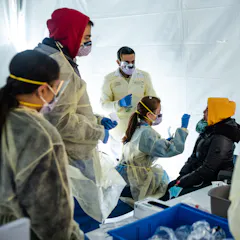
More than a century ago, the US learned what happens when there is no national response to a major health crisis.

COVID-19 highlighted the need to plan for medical emergencies, but most people still avoid the issue.

Our research has found that most pandemic-born children have been remarkably resilient to the disruptions caused by COVID.

It’s more than likely we’ll face another pandemic in the future. So what can we learn from COVID?

The next big thing will probably be a virus we haven’t come across before.

Five years ago, at the start of 2020, I was looking forward to the publication of my book, Terraformed: Young Black Lives in the Inner City and eagerly anticipating a long-awaited holiday to Jamaica. But…

Why COVID’s legacy is more than just medical data.
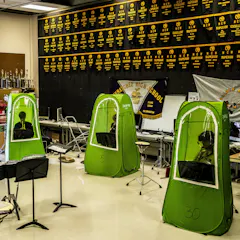
Public school access to high-quality teachers is shrinking, while teen reports of feeling unsafe at school are on the rise.

Even after the pandemic lockdowns were lifted, out-of-home activities and travel remained substantially depressed, far below 2019 levels.

For 50% of people I surveyed, poetry had helped with anxiety and depression during COVID.
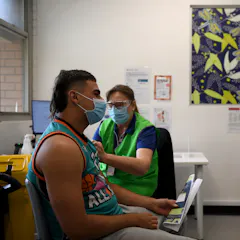
A recent study explored COVID experiences among Indigenous adults in WA. Here’s what we must learn for the next pandemic.
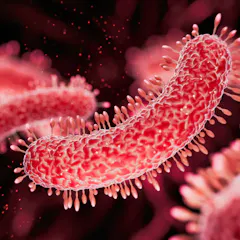
Reports of TB date back to the time of Hippocrates, but the Kansas outbreak shows that the ancient disease is very much a modern-day scourge.
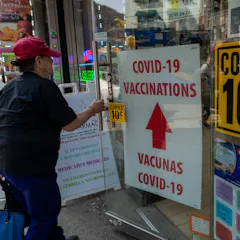
Scientific discoveries are necessary to eliminate epidemic diseases. But addressing socioeconomic factors is just as essential in the fight against diseases such as syphilis, AIDS and TB.
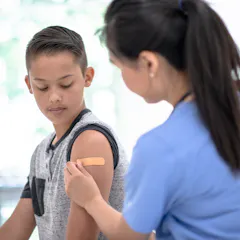
So far, fewer than half of US children and older adults have been vaccinated during this year’s high-severity flu season.

Pathogens are constantly evolving to become resistant to treatment in the perpetual battle between humans and infectious diseases.
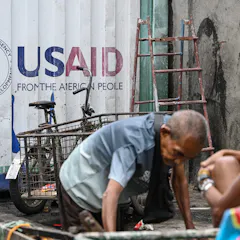
USAID has a decades-long history of fighting smallpox, polio, malaria, tuberculosis and HIV.

The origins of SARS-CoV-2 have been the subject of debate. While many scientists support the theory of a natural spillover event, recent U.S. intelligence assessments suggest a different source.
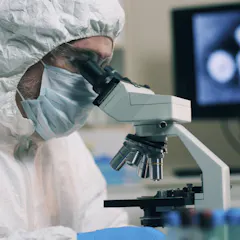
The CDC was instrumental in eradicating smallpox, identifying the causes of HIV and encouraging Americans to get the COVID-19 shot.
Top contributors
-

Professorial Fellow, University of Canberra
-
Associate Professor, Epidemiology, Deakin University
-
Professor of Biostatistics and Epidemiology, Adelaide University
-
Professor of Global Biosecurity, NHMRC L3 Research Fellow, Head, Biosecurity Program, Kirby Institute, UNSW
-
Scientia Professor of Economics, UNSW
-
Chair in Epidemiology, Deakin University
-
Honorary Enterprise Professor, School of Population and Global Health, and Department of General Practice and Primary Care, The University of Melbourne
-
Visiting Fellow, Crawford School of Public Policy, Australian National University
-
Dean Faculty of Health Sciences and Professor of Vaccinology at University of the Witwatersrand; and Director of the SAMRC Vaccines and Infectious Diseases Analytics Research Unit, University of the Witwatersrand
-
Senior Research Fellow in Global Health, University of Southampton
-
Professor of Medicine, University of East Anglia
-
Professor, School of Population Health, UNSW
-
Professor of Research Ethics, University of Portsmouth
-
Professor of Medicine, University of Virginia
-
Professor of Public Health, University of Sheffield