

Our ability to adapt to changing circumstances plays an important part in our health decisions. New research suggests health education campaigns need to take this into account.
Articles on COVID-19
Displaying 221 - 240 of 8250 articles

The $33 billion that African countries received under the IMF’s special drawing rights after COVID didn’t add to their debt, came without conditions and didn’t cost donors a cent.

Infectious disease control in neonatal units is often reactive, only after several babies fall ill at the same time. Proactive genome sequencing provides an early-warning system to prevent outbreaks.

Most schools are only ventilated using windows, which are often closed. Installing high-filtration air conditioning would cut the spread of airborne viruses and save more than $1 billion per year.
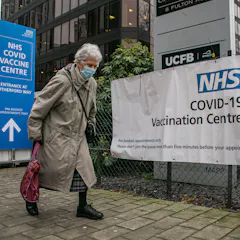
COVID booster shots had little effect in preventing deaths in care homes in England, new study shows.

From the vaccine rollout, to hotel quarantine, to understanding the science of the virus, a range of experts look back at how Australia fared.

With cold and flu season on the horizon, it’s time for a flu shot. It takes about two weeks after vaccination for immunity to take effect, which is why it’s recommended to get the jab in the fall.

To get maximum benefits from using social media for teaching in South Africa schools, many things should be put in place.

A fever and a nasty cough can be symptoms of a range of respiratory illnesses. An antigen test that narrows down the culprits can speed up diagnosis and recovery.

Here’s how the symptoms differ – and what to do about them.

One of the cornerstones of being prepared for the next pandemic is being in the best position possible to design and deploy a suitable vaccine.
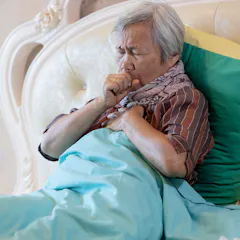
COVID antivirals are recommended for people aged over 70 and those at risk of severe illness. But many older Australians are missing out. Here’s why – and how to fix this problem.
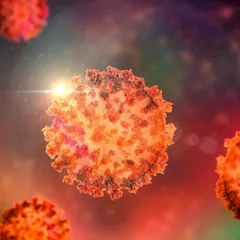
XEC is a recombinant variant, meaning it’s a hybrid of two previously existing variants. Genomic data suggests it’s making up around 5% of cases in Australia – but it may grow.

Our research found clarity and consistency of information were key features of effective public health communication throughout the COVID pandemic.
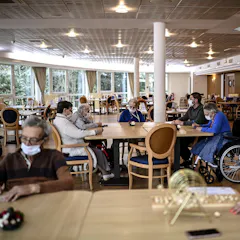
New research looks at how people perceived the most prominent restrictions and how these perceptions impacted their health.

Tailored messaging, repeated exposure, and false grassroots campaigns are classic propaganda techniques, now used widely by state-back trolls.

The COVID-19 pandemic is over, though of course the virus is still with us. Looking back, how should we judge the government response? What did we do right, and what could be done better?

A new report offers valuable advice on how to support people to find the right job – something the UK needs if it wants to achieve economic growth.

The COVID pandemic is ongoing, but scientists are on alert for any pathogen that might lead to another global outbreak of disease.

For many of us, COVID has become just a bad memory, despite its lasting and mixed legacies. While the media have largely lost interest in COVID, and people are now rather blase about it, the disease is still taking a toll.
Top contributors
-

Professorial Fellow, University of Canberra
-
Associate Professor, Epidemiology, Deakin University
-
Scientia Professor of Economics, UNSW
-
Professor of Biostatistics and Epidemiology, Adelaide University
-
Professor of Global Biosecurity, NHMRC L3 Research Fellow, Head, Biosecurity Program, Kirby Institute, UNSW
-
Chair in Epidemiology, Deakin University
-
Honorary Enterprise Professor, School of Population and Global Health, and Department of General Practice and Primary Care, The University of Melbourne
-
Visiting Fellow, Crawford School of Public Policy, Australian National University
-
Dean Faculty of Health Sciences and Professor of Vaccinology at University of the Witwatersrand; and Director of the SAMRC Vaccines and Infectious Diseases Analytics Research Unit, University of the Witwatersrand
-
Senior Research Fellow in Global Health, University of Southampton
-
Professor of Medicine, University of East Anglia
-
Professor, School of Population Health, UNSW
-
Professor of Public Health, University of Sheffield
-
Professor of Medicine, University of Virginia
-
Associate Professor and Research Leader in Virology and Infectious Disease, Griffith University