
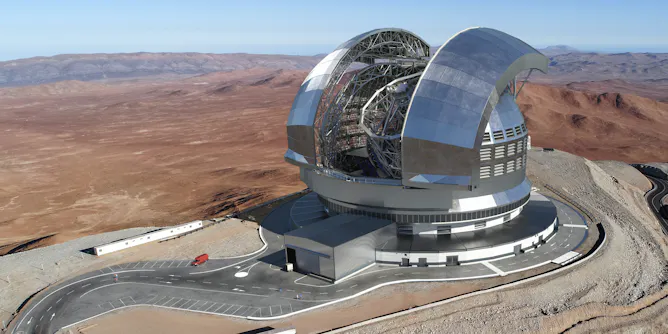
Cosmology could be transformed by a new wave of telescopes – both on the ground and in space.
Articles on Cosmology
Displaying 21 - 40 of 168 articles
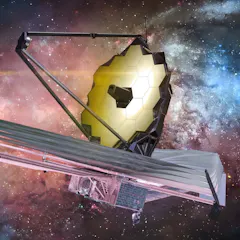
Some of the earliest galaxies found with JWST are also the brightest. That’s a problem for our ideas about the universe.
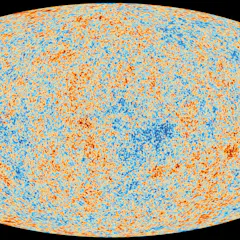
We may be on the cusp of finally breaking the standard model of cosmology.

The Hubble tension has been described as a “crisis” for cosmology. Can it be resolved?
A new series delves into the big questions surrounding the nature of our universe.
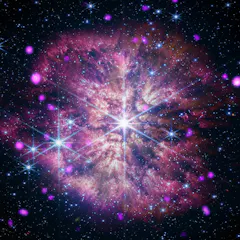
Right now, it looks like cosmology is at a tipping point.

The latest results from the LZ dark matter experiment have drawn a blank – but the elusive particles are running out of places to hide.

Structures aligned with solar events served various purposes: science, farming, religion and even politics.
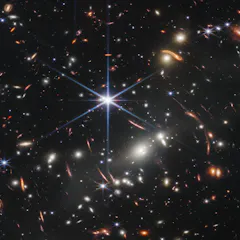
Astronomers Vicent Martínez and Bernard Jones explain the mystery of the Hubble tension, and why it matters so much for our understanding of the universe, on The Conversation Weekly podcast.

While some opposition is to be expected, indications are that the general Zimbabwean public will take the government’s lead on abolition.
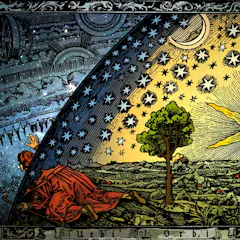
Back when Henk Hoekstra started his PhD, atmosphere turbulence and optical imperfections prevented us from accurately observing dark matter. He tells us why Euclid is a game changer.
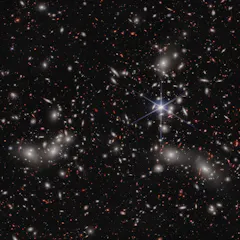
With the help of a magnifying glass 4 million lightyears wide, astronomers may have solved the riddle of what burned away the hydrogen fog that pervaded the early universe.
Projects under NASA’s CLPS program – including the Odysseus lander that made it to the lunar surface – will probe unexplored questions about the universe’s formation.
After a decade studying thousands of supernovae, astronomers are still perplexed by the enigma that led Einstein to his ‘greatest mistake’.
Sixty years ago, philosopher Hannah Arendt argued an interplanetary perspective may be bad news for humanity as we know it.
If we lived in a cosmic area with below average density, it would explain recent contradictory measurements of the universe’s expansion.
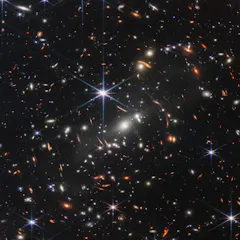
The universe is expanding faster than physicists would expect. To figure out what processes underlie this fast expansion rate, some researchers are first trying to rule out what processes can’t.

To the ǀXam and San people, being in the world as a person includes “the sky’s things” - an understanding of and deep connection with the cosmos.
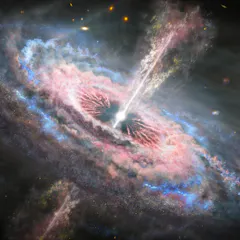
Bright, flickering galaxies called quasars were thought to pose a problem for our understanding of the cosmos – but new research shows Einstein was right yet again.
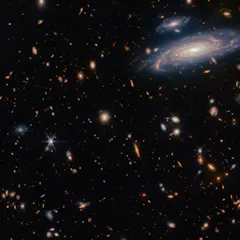
The darkness of the night sky seems so obvious as to need no explanation – yet it has intrigued and baffled scientists for centuries.
Top contributors
-

Professor of Astrophysics, University of Sydney
-
Pro Vice-Chancellor Flagship Initiatives, Swinburne University of Technology
-
Associate Professor in Astronomy, Monash University
-
Reader in Astrophysics, UCL
-
Lecturer and ARC DECRA Fellow, Queensland University of Technology
-
Cosmologist, University of Tasmania
-
John Curtin Distinguished Professor (Radio Astronomy), Curtin University
-
Professor (Astrophysics), University of Southern Queensland
-
Associate Professor in Archaeology and Space Studies, Flinders University
-
Pro-vice-chancellor, Professor, University of Birmingham
-
Australian Government Women in STEM Ambassador, Professor of Practice, UNSW
-
Emeritus Professor, ARC Centre of Excellence for Gravitational Wave Discovery, OzGrav, The University of Western Australia
-
Researcher at Research School of Astronomy and Astrophysics and the Research School of Earth Sciences, Australian National University
-
ARC Laureate Fellow, Swinburne University of Technology
-
Head of Research Data & Software, Macquarie University