
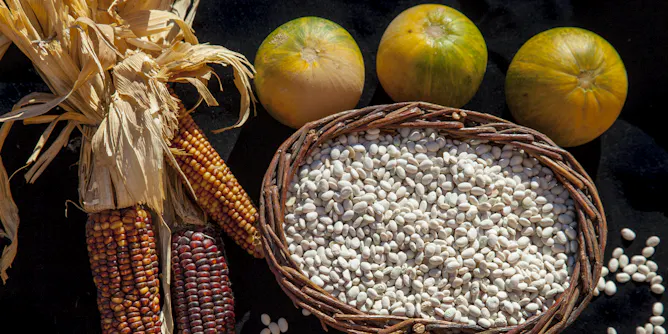
For centuries Native Americans intercropped corn, beans and squash because the plants thrived together. A new initiative is measuring health and social benefits from reuniting the “three sisters.”
Articles on Corn
Displaying 21 - 31 of 31 articles
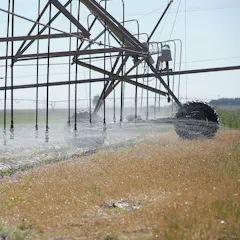
An invisible crisis is brewing in US farm country as the overpumped Ogallala-High Plains Aquifer drains. The key drivers are federal farm subsidies and the tax code.

New research shows that one-third of yearly nitrogen runoff from Midwest farms to the Gulf of Mexico occurs during a few heavy rainstorms. New fertilizing schedules could reduce nitrogen pollution.
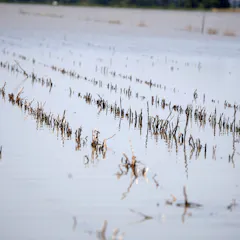
As climate change alters temperature and rainfall patterns, yields of some crops are increasing while others decline. The net result: less food, especially where it’s most needed.

US farmers are planting more and more acres with seeds coated with neonicotinoid pesticides. An ecologist explains why this approach is overkill and may be doing more harm than good.
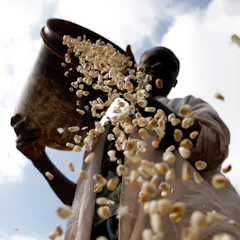
Kenya’s government responded with subsidies to tend to the 2017 maize crisis to ensure that it remained affordable. However, the country needs long term solutions to this perennial challenge.
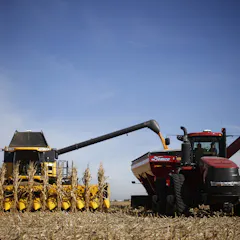
If the United States withdraws from or significantly alters NAFTA, Mexico has more options than it thinks — and potentially less to lose than its northern neighbour.
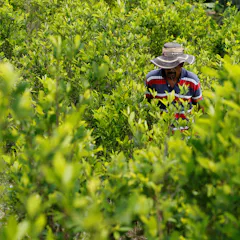
Colombia’s plan to turn coca-leaf farmers into coffee growers has a fatal flaw: the market.
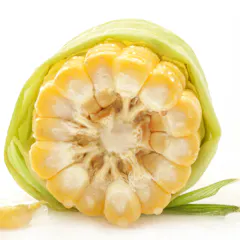
A gene controlling cell identity in corn kernels is the same one that controls progression to specific cancers in humans. Here’s why.
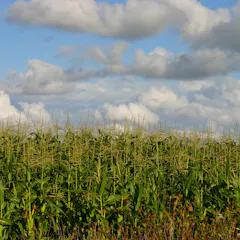
Continued use of pesticides will lower diversity of beneficial insects, costing corn farmers more money over time.
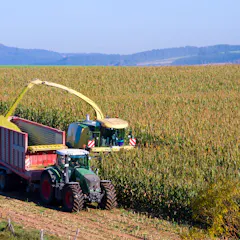
A law signed into effect last week seeks to reduce fertilizer runoff that causes toxic algae blooms. But to really address the problem requires taking a hard look at how America farms.
Top contributors
-

Professor of Entomology and Extension Specialist, Penn State
-
Executive Director, Swette Center for Sustainable Food Systems, Arizona State University
-
Professor, University of Minnesota
-
Professor of Horticultural Sciences and Plant Molecular and Cellular Biology, University of Florida
-
Distinguished visiting professor, University of Glasgow
-
Professor in Practice on Environmental Innovation, School of Social and Environmental Sustainability, University of Glasgow, UK, National University of Singapore
-
Professor Emeritus of Environment and Sustainability, University of Michigan
-
Professor of Agricultural and Resource Economics, University of California, Davis
-
Associate Professor of Economics, University of Sydney
-
Assistant Professor of Ecology, Evolution and Organismal Biology, Iowa State University
-
Professor of Chemistry and Biochemistry, Miami University
-
Lecturer in Food Industry Management, Nottingham Trent University
-
Professor of Economics, South Dakota State University
-
Research Fellow, Tegemeo Institute, Egerton University
-
Professor and Researcher, Drug Policy Program, Social Sciences Faculty, Universidad Central de Chile