
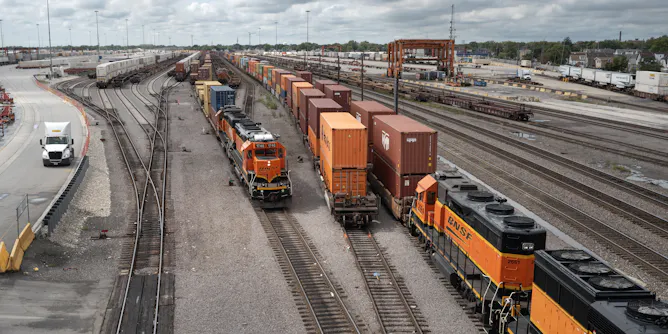
There’s not much diesel fuel lying around, and lots of people want to buy what is available, as well as what little is produced each day. It’s all a matter of supply and demand.
Articles on US agriculture
Displaying 1 - 20 of 43 articles

The country, and the world, have been losing diesel refining capacity for many years and can’t just ramp up production to fill the shortages.
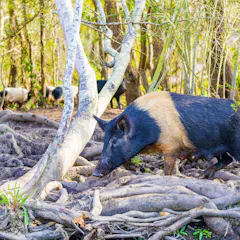
Teaming groups of private landowners with federal efforts yielded measurable success, at least in terms of defending cornfields.
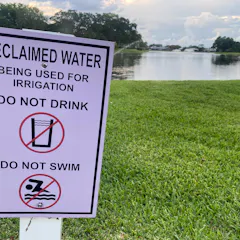
US sewage treatment plants likely don’t get rid of all the disease-causing protozoa, and monitoring discharged wastewater for it is difficult.

Long before synthetic fertilizers, the global guano trade reshaped farming, fueled American expansion and exposed the hidden human costs of feeding the modern world.
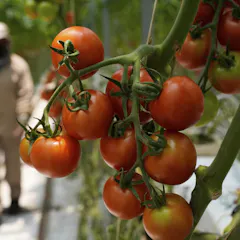
US shoppers are seeing higher fruit and vegetable prices thanks to trade tensions, extreme weather and geopolitics, just to name a few reasons.

Decades of farmers using more fertilizer than they needed have quietly built up large reserves of nutrients in the soil.

A statewide survey finds majorities in farm country at odds with the deportation push reshaping their workforce.
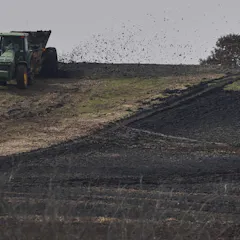
Plants need phosphorus, and other nutrients, to grow. But soil tests can’t tell if there’s too much.
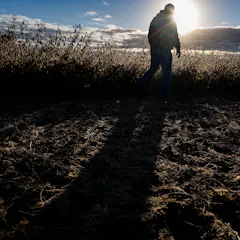
The US government used to have American farmers’ backs, but that support has been dwindling for decades. New subsidies signal big changes for farmers.
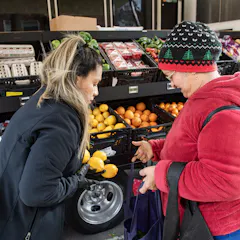
Farm bills – famously complex legislative and spending balances between farm subsidies, food assistance, conservation and more – have tended to be passed about every five years since 1933.

A trove of century-old belongings − from farm tools to pillowcases − tells the story of Filipinos who migrated to California to build a new life, a journey now honored in a Smithsonian exhibition.
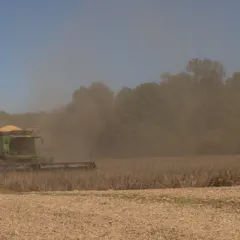
In the past, farmers have balanced their political beliefs against market logic. How much pressure can farmers endure?

Just a few years ago, agricultural drones were expensive, small and difficult to use, limiting their appeal to farmers. No longer.
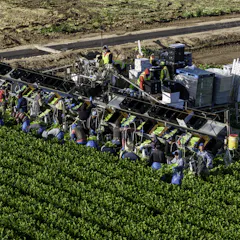
Historically, farm work in the United States has been carefully constructed to appear natural, including the racism and labor exploitation that characterizes it, a scholar writes.
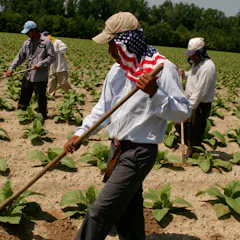
The number of farmworkers in the US with H-2A visas has tripled since 2013.
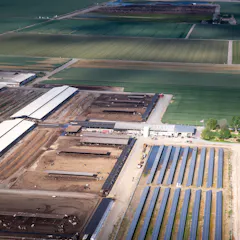
Solar is helping farmers in California save water and secure reliable income in the face of drought and economic pressure.

While immigrants without legal authorization make up about 5% of the U.S. workforce, these workers are concentrated in particular industries, including agriculture.
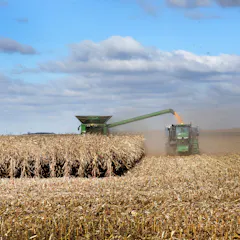
The USDA oversees food production and much more. However, it has little direct power to reduce food prices – a centerpiece of President Trump’s campaign.
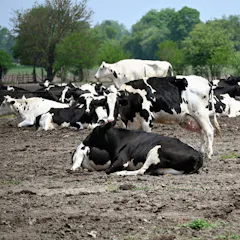
Raw milk can carry many dangerous germs − now including the H5N1 virus that causes avian flu.
Top contributors
-

Executive Director, Swette Center for Sustainable Food Systems, Arizona State University
-
Associate Research Professor of Food Science, Penn State
-
Extension Agent, University of Florida
-
Professor of Rural Sociology and Science, Technology, and Society, Penn State
-
Research Investigator, Department of Epidemiology, University of Michigan
-
Ph.D. Candidate in Genetics and Genomics, Texas A&M University
-
Distinguished Professor of Engineering, University of California, Merced
-
Curator of Asian Pacific American History, Smithsonian Institution
-
Ph.D. Candidate in Rural Sociology & International Agriculture and Development, Penn State
-
Research Affiliate in Human Ecology, University of California, Davis
-
Deputy Director, Swette Center for Sustainable Food Systems, Arizona State University
-
Professor of Forestry, Wildlife and Fisheries and Director, Center for Native Grasslands Management, University of Tennessee
-
Assistant Director of the Program in Community Action, Connecticut College
-
Associate Professor of Tropical Plants & Soil Sciences, University of Hawaii
-
Professor of History and History Education, Kennesaw State University