

Young people worry about climate change. But the impact on their mental health is more than anxiety about the future. Increasing heat and other effects are already influencing poor mental health.
Articles on COP29
Displaying 41 - 60 of 69 articles
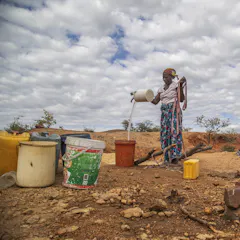
This week, nations are hashing out new goals for climate finance at the COP29 talks. Loss and damage is finally on the agenda – but the chance of major new funding is low
The time has come to develop Canada’s participation in international carbon markets.
It’s the government’s job to make it easier and cheaper for people to change their lives.
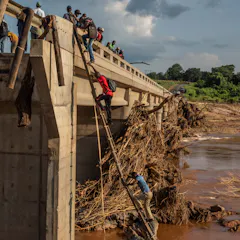
Getting aid to countries before the storm or drought hits is one response increasingly being used to limit the damage.
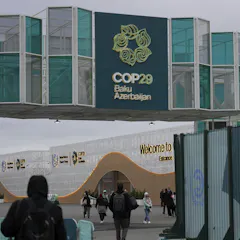
Centring climate justice in our global efforts against climate change could bring myriad benefits for us all. COP29 in Baku must make this dream a reality.
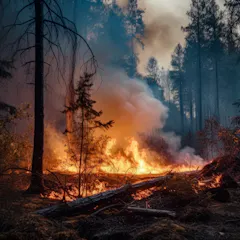
Removing enough carbon to offset emissions would require vast tracts of inhabited land.
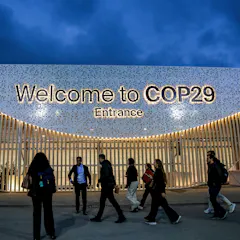
An expert spells out how companies seek to influence climate policy at Cop29 and beyond.
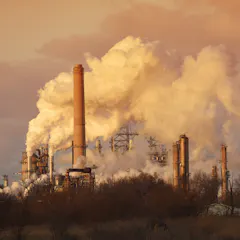
As world leaders gather at COP29 to consider reducing emissions, the latest global carbon budget shows CO₂ emissions from fossil fuels are still going up, not down, despite some promising signs.
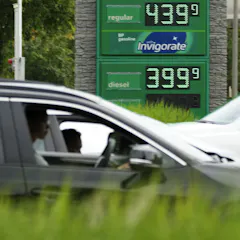
Countries have promised to reduce their fossil fuel subsidies to fight climate change, but that’s harder to do than it sounds, as an energy law expert explains.
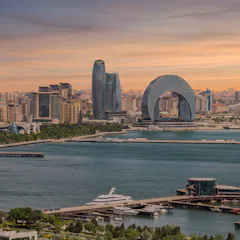
The succession of authoritarian fossil fuel producers hosting international climate negotiations is a concern. We must pay attention to political influences on the talks and beware of greenwashing.
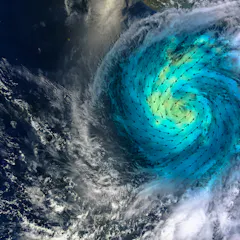
Extreme weather is already costing vulnerable island nations US$141 billion each year. How should rich nations contribute and who should pay the most?

A deep dive into 866 public companies and 1,413 carbon projects reveals some twists in who relies on cheap offsets and who chooses to cut their own emissions instead.
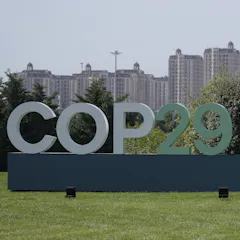
The central focus of COP29 negotiations is on a bigger target for climate finance – the money rich nations provide poor nations to help with their energy transition and climate resilience.
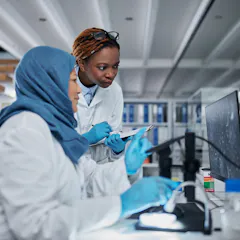
The green talent in short supply includes wind and solar farm technicians and engineers, solar panel installers, green energy auditors, hydrogen fuel cell specialists, and data scientists.
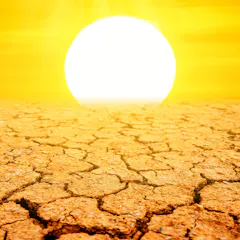
Climate scientists call for global leaders to double down on efforts to cut emissions with their full attention and unwavering commitment at the UN’s climate summit, Cop29.
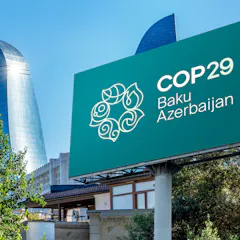
A finance deal at Baku that delivers meaningful climate action for developing countries seems a long way off.
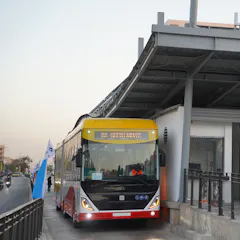
Sub-Saharan Africa is lagging behind in the transition to electric cars and motorbikes. Investment in local manufacturing, renewable energy and storage systems to supply charging stations is needed.
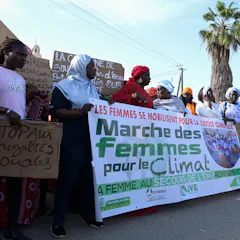
The media must do more to create awareness about the role communities can play in adapting to climate change.
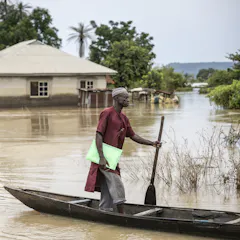
Nigeria’s representative at COP29 must realise that an unimpressive outing will leave citizens more at the mercy of climate change impacts.
Top contributors
-

Professorial Fellow, University of Canberra
-
Senior Research Fellow, School of Geography, Earth and Atmospheric Sciences, The University of Melbourne
-
Ph.D. Candidate in Philosophy, Political Studies, and Sociology, Université du Québec à Montréal (UQAM)
-
Visiting Professor of Contemporary History and Human Rights, Kingston University
-
Professor, Keevil Institute of Mining Engineering, University of British Columbia
-
Distinguished Professor and Director, Trophic Cascades Program, Oregon State University
-
Professor of Environmental Science, University of South Africa
-
Associate Professor, Global Ecology, University of Sydney
-
Associate professor, Cape Peninsula University of Technology
-
Professor at the Nelson Mandela School of Public Governance, University of Cape Town
-
Lecturer (Political Science), University of Lagos
-
Professor in Engineering, Stellenbosch University
-
Post-doctoral Fellow: Centre for Research on Evaluation, Science and Technology, Stellenbosch University
-
Professor of Industrial Engineering, Stellenbosch University
-
Ph.D. Candidate in International Relations (Global Environmental Governance and Diplomacy), McGill University