
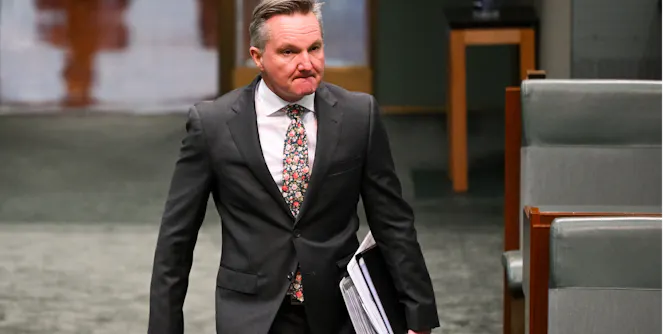
New emissions projections bode well for Australia’s climate efforts – but our fossil fuel exports continue apace.
Articles on COP28
Displaying 61 - 80 of 90 articles
Australia’s clean energy transition cannot succeed unless the government opens debate and decision-making to many more voices.

Industry is a leading climate polluter: Our road map shows what’s needed to cut industrial emissions in fast-growing countries.
The latest round of climate negotiations are due to start in Dubai. Here’s what you need to know.
A COP regular worries about a conflicted host and a lack of trust.
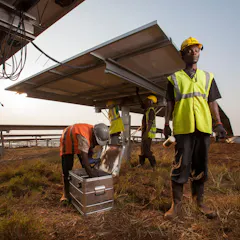
Climate finance can help developing countries adapt to climate change and phase out their emissions.
COP28 gives Nigeria another chance to fight for financing it needs to adapt to climate change.
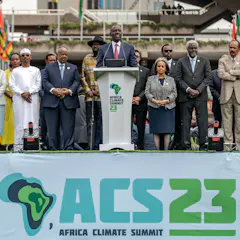
There were three important moments in Africa this year which highlight a mix of progress, priorities and potential pitfalls in the fight against climate change.
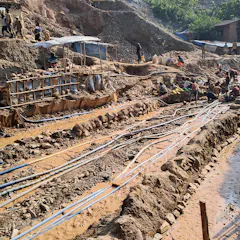
Climate and investment laws must align for the global south to get climate justice and achieve net-zero emissions.
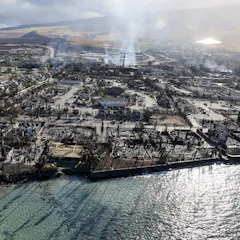
Fed Chair Jerome Powell bristles at talk of managing climate change, but the damage it is doing the US economy is hard to ignore, as the latest National Climate Assessment shows.
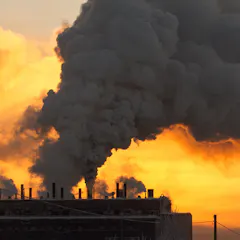
Temperature records are tumbling – how much progress is really being made towards tackling climate change?
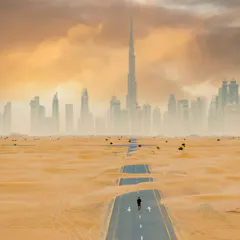
In what’s likely to be the hottest year on record, nations are gathering to try and hash out faster action on climate change. Here are the three main issues facing negotiators.
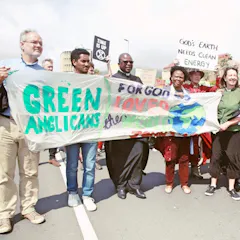
Faith communities can use their influence and large following to fight climate change.
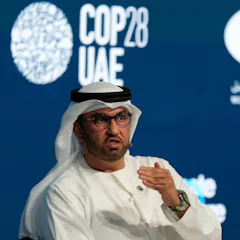
UAE will preside over talks to limit climate change – despite revelations it plans oil deals.
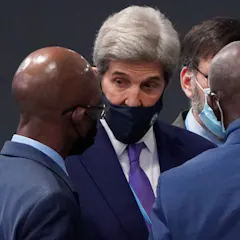
Negotiating global progress on climate change involves walking a fine line, as a former UN official explains.

Getting climate funds to frontline communities may require rich countries and the UN easing control over how the money is spent.
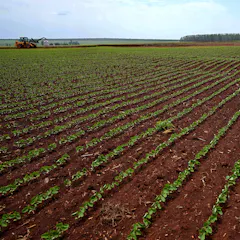
Diminishing forests reduces the capacity of the Amazon and Cerrado to regulate rainfall patterns. That’s bad for communities, but also bad for business and global food security.
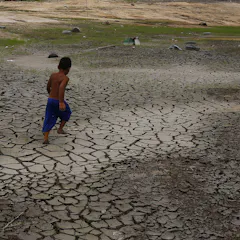
The drought is expected to affect the region until mid-2024 at the earliest. Signs of its severity include the lowest water levels in the city of Manaus in 121 years.
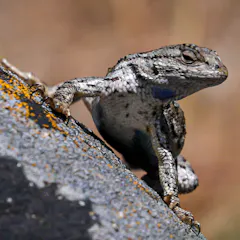
From dark dragonflies becoming paler to plants flowering earlier, some species are slowly evolving with the climate. Evolutionary biologists explain why few will evolve fast enough.

Climate change is seeing more of us with mental health problems and harmful substance use. So we need to start planning now.
Top contributors
-

Research Associate, Institute for Climate Risk and Response, UNSW
-
Lecturer in Climate Change, Politics and Society, University of Bristol
-
Ph.D. Candidate in Philosophy, Political Studies, and Sociology, Université du Québec à Montréal (UQAM)
-
Professor of Energy Systems, UCL
-
Professor of Infrastructure Engineering and International Development, UCL
-
Professor of Practice in Climate Policy, University of Oxford
-
Ph.D. Candidate in International Relations (Global Environmental Governance and Diplomacy), McGill University
-
Lecturer (Political Science), University of Lagos
-
Professor of International Relations, The University of Queensland
-
Professor of Earth System Science, UCL
-
Associate Professor in Political Theory and Public Policy, UCL
-
Associate Professor & Purdy Crawford Chair in Business Law, Dalhousie University
-
Senior Lecturer in Climate Justice, University of Bristol
-
Senior Lecturer in Chemical Engineering and Renewable Energy, Queen Mary University of London
-
Lecturer in International Development, UCL