
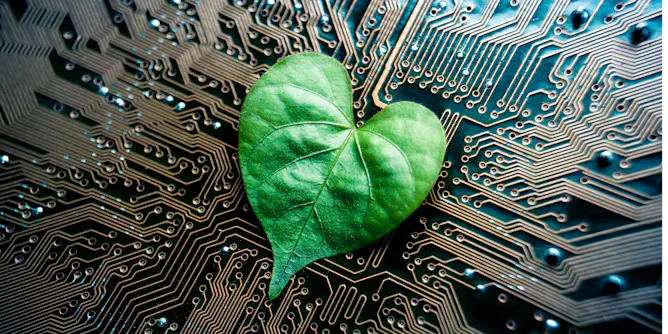
We must develop the capability to meet our computing needs while using much less power and producing negligible heat waste.
Articles on Computing
Displaying 61 - 80 of 101 articles

CC BY-ND39 MB (download)
This episode is all about bitcoin. Will it be the currency of the future? Who’s trying to capitalise on the legal loopholes of cryptocurrencies? And is it possible to make mining them more green.

Maths and science featured strongly in the 2018 Australian of the Year Awards. Along with physicist Michelle Simmons, maths teacher Eddie Woo and biologist Graham Farquhar were recognised.

One of the challenges for quantum computing is knowing how to detect and correct errors that may occur in the data. And we can do that without even knowing what the data says.
As companies make quantum computers available through their cloud services, take a look at what it means for computing to move beyond classical mechanics and into quantum physics.
Despite claims of scientific differences, the real reason behind the lack of women in computing is cultural, not biological.
If AI research is only about profit, we should all be afraid … very afraid.

An obsession with coding is turning students off computing.
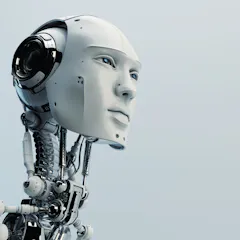
What do we need to learn today to work with the robots of tomorrow?
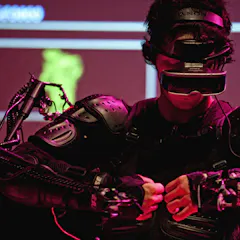
The defining characteristics of our species will make us and our labour relevant in a new era.

How the geek effect and a sexist games industry is putting girls off a career in computing.

Could reservoir computing be a future alternative to silicon chips?
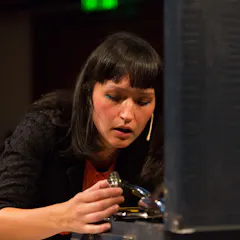
Lovelace showed great insight into her subject and for that she’s still a hero to others.

This year marks the 30th birthday of .au domains. We’ve come a long way but there’s big change ahead.

David Glance sits down with Apple co-founder and inventor of the Apple 1 computer, Steve Wozniak, to talk about his life, his thoughts on Apple then and now and how technology is changing the world.

A year after its launch, Windows 10 continues to evolve and improve upon its predecessor. However, the privacy concerns still haven’t gone away.
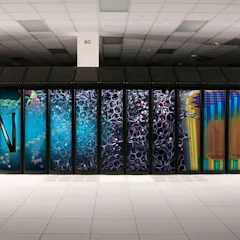
Developing new technologies requires time-consuming, expensive and even dangerous experiments. But now we can carry out many experiments entirely on computers using modelling.

New research shows how adding memory to bacterial circuits could help us harness their computing power.
Much of the current research in quantum computing involves work at close to absolute zero. A simple breakthough with an everyday material could see them work at more acceptable temperatures.

Sounds scary … so should we be worried?
Top contributors
-

Associate Professor of Intelligent Systems and Data Science, Anglia Ruskin University
-
Emeritus Professor, University of Nottingham, (currently Vice-Chancellor at MILA University, Malaysia), University of Nottingham
-
Research fellow, University of the Arts London
-
Adjunct Professor of Mathematics, Prince George's Community College
-
Professor of Electrical Engineering, Chemistry, and Physics and Astronomy, University of Southern California
-
Senior Lecturer in Computing and Information Systems, Cardiff Metropolitan University
-
Professor of Education (Innovation in Schooling & Educational Technology), University of Newcastle
-
Professor of Condensed Matter Physics, University of Leeds
-
Professor of Cyber Security Practice, Edith Cowan University
-
Research Fellow, University of Sydney
-
Professor of International Finance and Commodities, Trinity College Dublin
-
Professor in Computing and Information Systems, Edge Hill University
-
PhD Student in Non-Standard Computation, York Center for Complex Systems Analysis, University of York
-
Senior Lecturer in Networking, The Open University
-
Sessional lecturer in ICT, Macquarie University