

As the pandemic pushes healthcare online, it’s time to stop overlooking the environmental impacts.
Articles on Computing
Displaying 41 - 60 of 101 articles

Calculating pi with unprecedented accuracy has zero scientific usefulness. But as a show of computing muscle and a mathematical curiosity, it’s endlessly intriguing.

The traveling salesperson problem is so difficult that practical solutions can never be perfect – only good enough. The challenge is coming up with the best approximations.
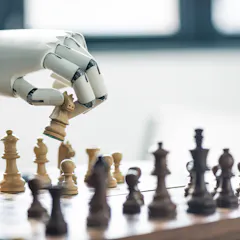
Humans often stumble when they encounter the unexpected, but they tend to adapt and move on. Artificial intelligence systems, not so much.
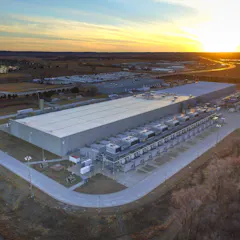
Training neural networks burns through a lot of energy. As the AI field grows, it’s working to keep its carbon foot print from growing with it.

A close look at how you decide what clothes to put on in the morning can help you understand how computers work.

The gender gap in computing performance has dramatically narrowed, but a confidence gap remains.
Nobody expected that allowing more communication would make computational problems more reliable.

How a bunch of wizards and goblins drove a 25-fold explosion in the share price.
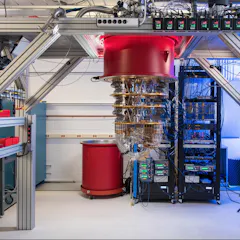
Quantum computers aren’t about to take over, but this is an important milestone.
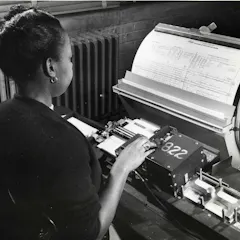
As the country grew, each census required greater effort than the last. That problem led to the invention of the punched card.
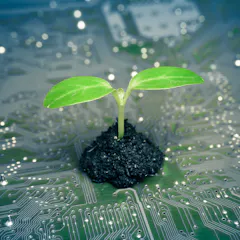
Innovation in digital technology is accelerating – it has massive untapped potential for tackling the climate crisis.

The idea of a phone that can do everything is hardly new. But the premium pricing of Apple’s iPhone 11 begs the question of how far this trend can realistically be taken.
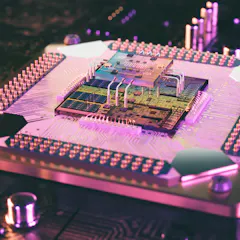
Manufacturing quantum computers would be a lot easier with existing technology than the exotic components currently used to build them.

Mobile phones and tablets are basically mini computers – and to a computer, everything is a number.
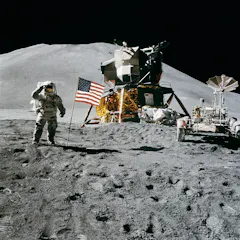
Here is how our mobile phones compare with the computer that landed man on the moon in 1969.

Mathematicians have known how to solve something called an S-unit equation for several years. However, the process is so convoluted that few can actually use it to tackle their problems.

CC BY-ND28.3 MB (download)
It's been 50 years since the first prototype for the mouse was demonstrated in San Francisco. This the story of how it changed Silicon Valley – and the world.

The energy required to power the massive, factory-sized data centres that computers rely on already consumes 5% of global electricity. And that energy load is doubling every decade.

The Internet of Things is contributing to climate change. Innovation in computer design could help mitigate the problem.
Top contributors
-

Associate Professor of Intelligent Systems and Data Science, Anglia Ruskin University
-
Emeritus Professor, University of Nottingham, (currently Vice-Chancellor at MILA University, Malaysia), University of Nottingham
-
Research fellow, University of the Arts London
-
Adjunct Professor of Mathematics, Prince George's Community College
-
Professor of Electrical Engineering, Chemistry, and Physics and Astronomy, University of Southern California
-
Senior Lecturer in Computing and Information Systems, Cardiff Metropolitan University
-
Professor of Education (Innovation in Schooling & Educational Technology), University of Newcastle
-
Professor of Condensed Matter Physics, University of Leeds
-
Professor of Cyber Security Practice, Edith Cowan University
-
Research Fellow, University of Sydney
-
Professor of International Finance and Commodities, Trinity College Dublin
-
Professor in Computing and Information Systems, Edge Hill University
-
PhD Student in Non-Standard Computation, York Center for Complex Systems Analysis, University of York
-
Senior Lecturer in Networking, The Open University
-
Sessional lecturer in ICT, Macquarie University