
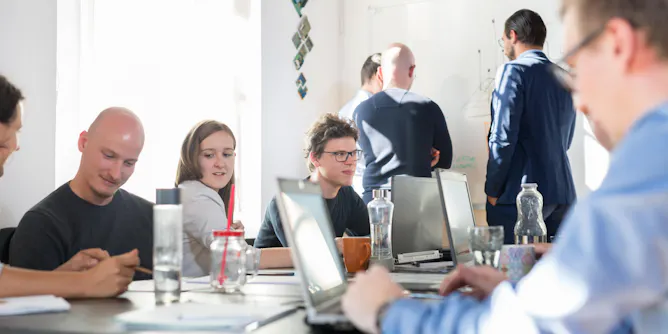
Microsoft Copilot can summarise meetings and even formulate arguments. But as good as that sounds, we shouldn’t blindly trust its accuracy.
Articles on Computing
Displaying 21 - 40 of 101 articles
Generative AI has changed the ways we work, study and even pray. Here are some highlights of an astonishing year of change – and what we can expect next.
Neuromorphic computers aim to one day replicate the amazing efficiency of the brain.
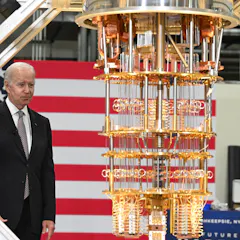
Several companies have made quantum computers, but these early models have yet to demonstrate quantum advantage: the ability to outstrip ordinary supercomputers.

Prolific and highly profitable, LockBit provides ransomware as a service. Aspiring cybercriminals sign up to the scheme, and the group takes a cut. Here’s how it works.
If we decide that AI helps us think freely, we may need to give it rights too.

Conventional agriculture offers farmers few choices about which crops to grow or how to raise them. A new approach uses computing to construct better strategies with lower environmental impacts.

In the future, our computer may be able to produce long-term forecasts in areas such as climate change, bushfires and financial markets – while being cheaper and more accessible than supercomputers.
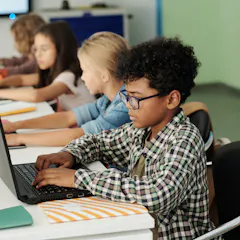
Integrated computing enables teachers to incorporate basic programming skills into K-12 students’ regular math, science and language arts classes.
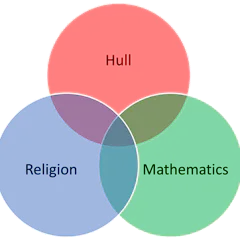
Venn diagrams have helped the development of logic and computing.
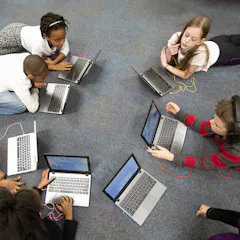
Almost everybody uses the internet just about every day. But do you really know what the internet is?

In the age of AI, people might wonder if there’s anything computers can’t do. The answer is yes. In fact, there are numerous problems that are beyond the reach of even the most powerful computers.

From ChatGPT to Lensa, it feels like AI is here to take over. But despite some impressive results, such systems still have plenty of limitations.
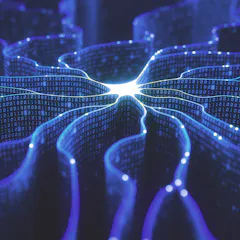
Artificial intelligence has arrived. But what is it, exactly – and what’s behind some of the most splashy AIs we have encountered to date?
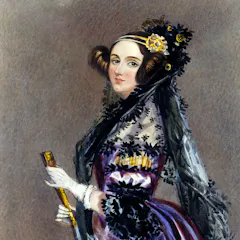
Lovelace was a prodigious math talent who learned from the giants of her time, but her linguistic and creative abilities were also important in her invention of computer programming.

To capture the information that a brain contains, you need to cut it into billions and billions of slices.

A digital twin is to a computer model as live video is to a still photo. These virtual replicas can be used to understand and make predictions about a wide range of complex systems, including people.

This sort of precision complements health experts’ efforts, helping humans to be more precise and communicate more precisely.
If virtual characters can be as smart as humans, having free will, can we kill or harm them?

As the country grew, each census required greater effort than the last. That problem led to the invention of the punched card – and the birth of an industry.
Top contributors
-

Associate Professor of Intelligent Systems and Data Science, Anglia Ruskin University
-
Emeritus Professor, University of Nottingham, (currently Vice-Chancellor at MILA University, Malaysia), University of Nottingham
-
Research fellow, University of the Arts London
-
Adjunct Professor of Mathematics, Prince George's Community College
-
Professor of Electrical Engineering, Chemistry, and Physics and Astronomy, University of Southern California
-
Senior Lecturer in Computing and Information Systems, Cardiff Metropolitan University
-
Professor of Education (Innovation in Schooling & Educational Technology), University of Newcastle
-
Professor of Condensed Matter Physics, University of Leeds
-
Professor of Cyber Security Practice, Edith Cowan University
-
Research Fellow, University of Sydney
-
Professor of International Finance and Commodities, Trinity College Dublin
-
Professor in Computing and Information Systems, Edge Hill University
-
PhD Student in Non-Standard Computation, York Center for Complex Systems Analysis, University of York
-
Senior Lecturer in Networking, The Open University
-
Sessional lecturer in ICT, Macquarie University